

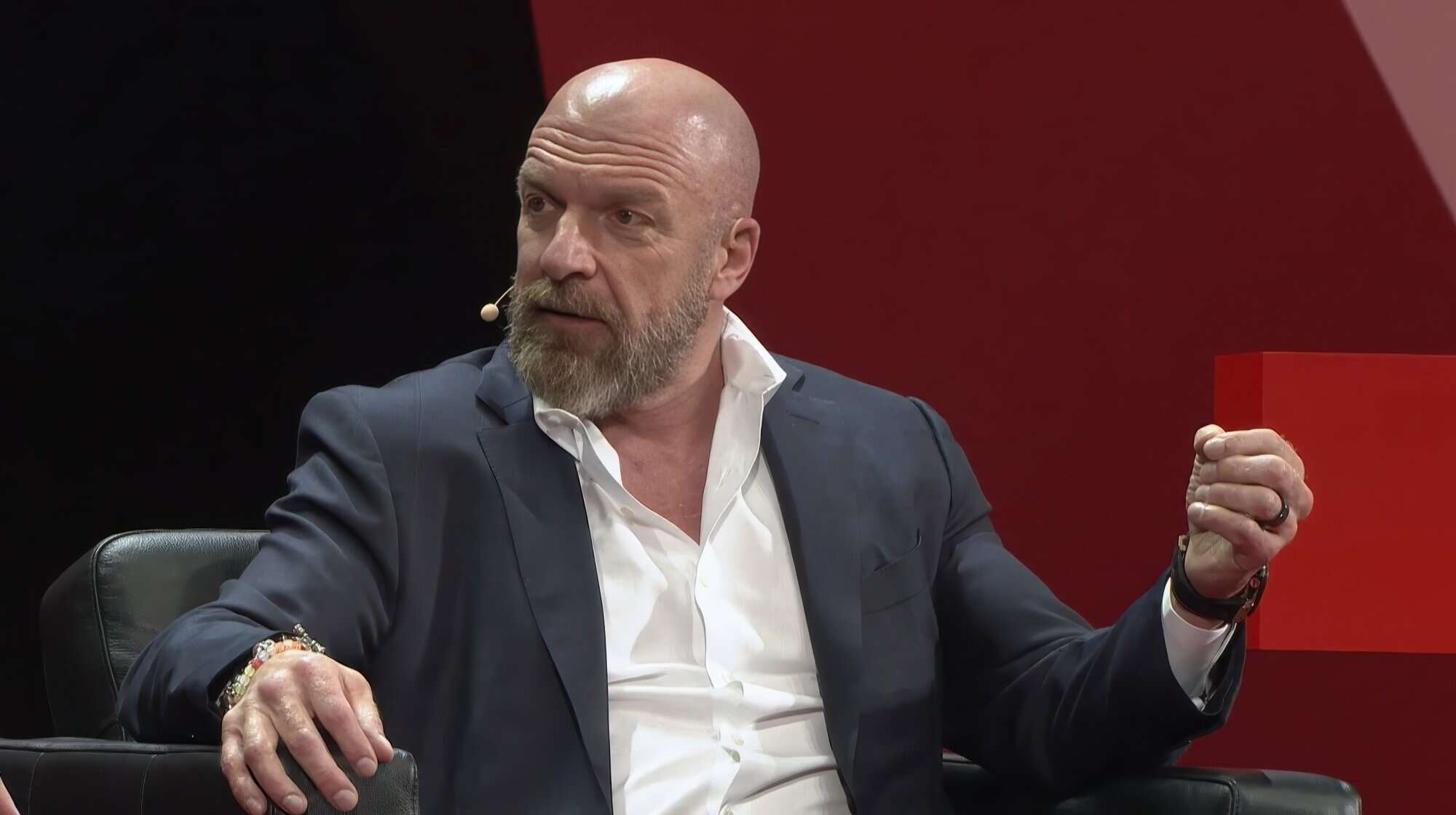
WWE Chief Content Officer Paul “Triple H” Levesque recently sat for an in-depth interview at the TEDSports Indianapolis 2025 event, hosted by co-chair Patrick Talty. Levesque discussed a wide range of topics, including his personal philosophy on family, WWE’s long-term creative strategy, the art of character development, and the company’s new partnership with ESPN.
On Family and the “Lie” of Work-Life Balance
When asked about his wife, Stephanie McMahon, Levesque called her “my rock” and shared his belief on the importance of choosing a life partner. “The most important decision you’ll ever make in your life is your spouse,” he said. He explained how his own health issues a few years ago reinforced his priorities. “At the end of the day, your family, your wife, your kids, whatever that is for you, that’s the most important stuff in your life.”
This led to a discussion of his philosophy on balancing a demanding career with personal life, a concept he believes is often misunderstood.
“I get asked a lot because of our schedule about work-life balance. And I tell people all the time, work-life balance is a lie. It doesn’t exist,” Levesque stated. “It’s not this thing where it’s, ‘Oh, if I just did this, it would be perfect.’… The only thing that you can do to have some semblance of balance is be present. When you’re at work, be present at work. Focus on that. When you’re home, you’re with your kids, focus on that… It’s not the quantity of time you spend with your kids or your family or anything else. It’s the quality of it.”
The “North Star” Creative Process
Levesque peeled back the curtain on WWE’s long-term creative process, using an analogy to describe how the company plans its storylines months and even years in advance.
“I often say creative is like creating a North Star. We look at where we want to get to,” he explained. “Probably my North Star would be WrestleMania in April. And I would say, where do we want to get to, to get to April? What are our biggest characters, our biggest storylines, and how do we want them to pay off at WrestleMania?” He stressed that because WWE is a live product, the ability to adapt is crucial. “There are injuries, there are sickness, there are family problems… your great creative along the way gets shut down… Something changes. We pivot. And I think that’s what WWE does incredibly well, is pivot at any point in time.”
Blurring the Lines of Reality to Create “Magic”
When asked about what makes the best WWE characters, Levesque explained the power of blending fiction with reality. He contrasted a pure character like The Undertaker with someone like CM Punk, where the line between the performer (Phil Brooks) and the character is difficult to see.
“When you can blur those lines of reality, and people think, ‘Well, that might be scripted, but I think those two guys really don’t like each other’… that is when it gets really interesting for us,” Levesque said. “There are multiple sides to every character we have: their character, their real-life story, and then what the internet believes is really happening. And blending those three together sometimes can make magic.” He also compared WWE’s storytelling style to cinema. “We are, if you said we’re a combat sport, we’re less boxing, more Rocky. We’re the movie.”
WWE’s Mainstream Push with ESPN
Levesque also commented on the company’s new media rights deal, which brings premium live events like tomorrow’s Wrestlepalooza to ESPN. He believes the partnership helps to further normalize WWE within the mainstream sports conversation, much as it did for the UFC.
“When Monday Night Raw gets done and you flip to SportsCenter that night, there’s a recap of Monday Night Raw happening… just like if we were an NFL game, an NBA game, anything else,” he said. “It’s an easy conversation now because it’s sitting there with the NFL, with the NBA, with Major League Baseball… seen in the light that it truly should be seen in.”
If you use any portion of the quotes from this article please credit TEDSports with a h/t to WrestlingNews.co for the transcription.