


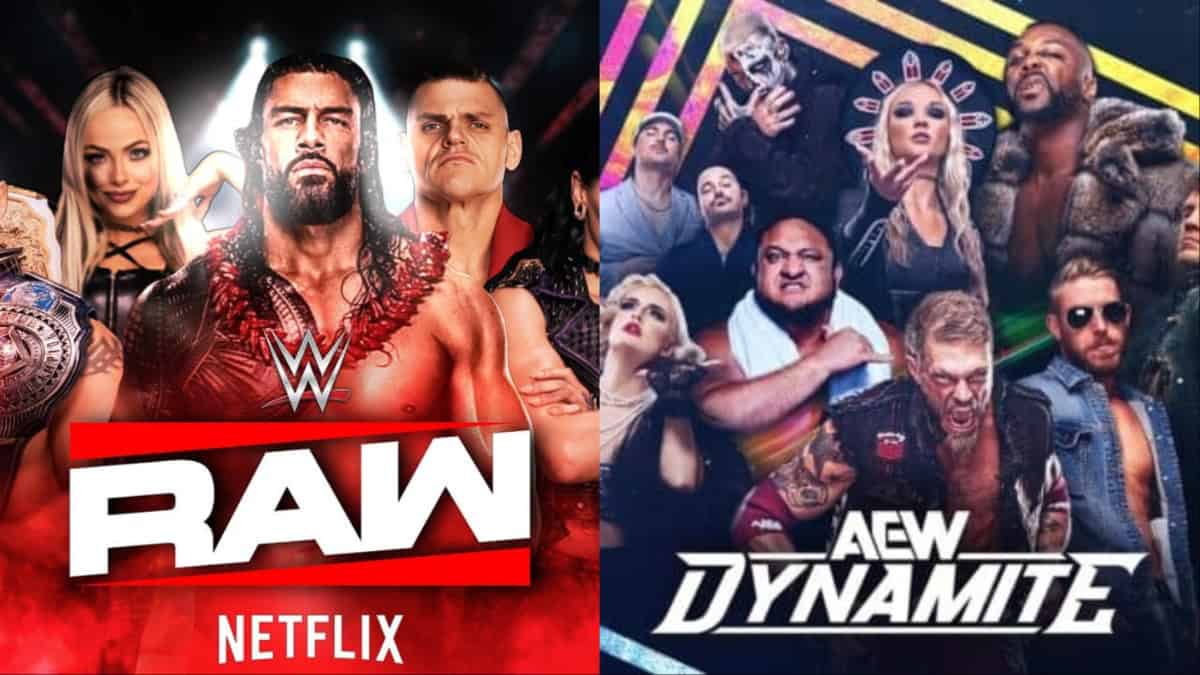
In an excerpt from the new book, ‘BEYOND NITRO’ by Guy Evans, media analysts and executives from Warner Bros. Discovery (WBD) break down the complex reasons why professional wrestling programs command massive media rights fees, even with a smaller total audience than in previous eras. The discussion provides context on wrestling’s value in the modern television landscape and poses the question of what WCW might have been worth if it had survived past 2001.
Brandon Thurston of the Wrestlenomics website explains that wrestling’s value is no longer measured solely by the total number of viewers, but by its performance relative to other programming. “The reason why they’re getting huge TV rights fees is because they’re still among the most watched TV programs in a given week,” Thurston states in the book. “If you look at all the TV programs that air each week, what you’ll find is that Smackdown, [AEW] Dynamite [and so forth] all rank really highly – especially in the [key] 18-49 demographic. So it’s really just about the ‘rank’.”
Eric Fleischer, the Senior Director for DTC Research at Warner Bros. Discovery, adds that wrestling’s status as live programming is a key factor for networks. “It’s a no-brainer for me,” he says. “One of the big things right now is that it’s live programming…so you have the benefit of sport, but you have both the ‘safety’ and the scripted excitement of scripted programming.”
Fleischer explains that unlike a traditional sporting event, which could be a blowout, a wrestling show can be structured to deliver consistent engagement. “Pro wrestling has sort of done away with happenstance, and [in that sense], it can really guarantee an exciting live product. So live, I think, is key,” he notes. This makes it ideal for creating “appointment” viewing for networks and streaming services.
Another major benefit, according to Fleischer, is the dedicated and valuable nature of the wrestling fanbase. “The pro wrestling audience is predisposed to supporting the advertisers that support the business,” he says. “The WWE fans do that virtually more than any other fans on the planet.”
He continues, “The pro wrestling fan is also predisposed to just…spending money! One of the reasons why Peacock grew so much is because the WWE fan – who was predisposed to spending $50-plus dollars-a-month on pay-per-views – could then spend $9.99-a-month… Those are really, really valuable consumers.”
Michael Capretta, the former Vice President of Global Research and Insights for WBD, points to the sheer volume of content that wrestling provides. In an era where producing original programming is expensive, wrestling offers a cost-effective solution to fill a network’s schedule year-round.
“Here comes wrestling that’s going to rack up 100 original series hours a year,” Capretta says. “It kind of helps fill gaps in your schedule – and gives your sales team something to sell – every quarter of the year. It’s really attractive…now.”
This modern media landscape is vastly different from the one in which WCW existed. Thurston notes that in 2001, there “wasn’t the guaranteed money that might have justified WCW surviving.” The insights from these executives suggest that if WCW were around today, its value as a televised property would be immensely different.
The preceding insights are from an excerpt of the new book, ‘BEYOND NITRO’, written by Guy Evans. The book offers a deep dive into the business of professional wrestling and the modern media landscape. It is available now on Amazon and wherever books are sold.