

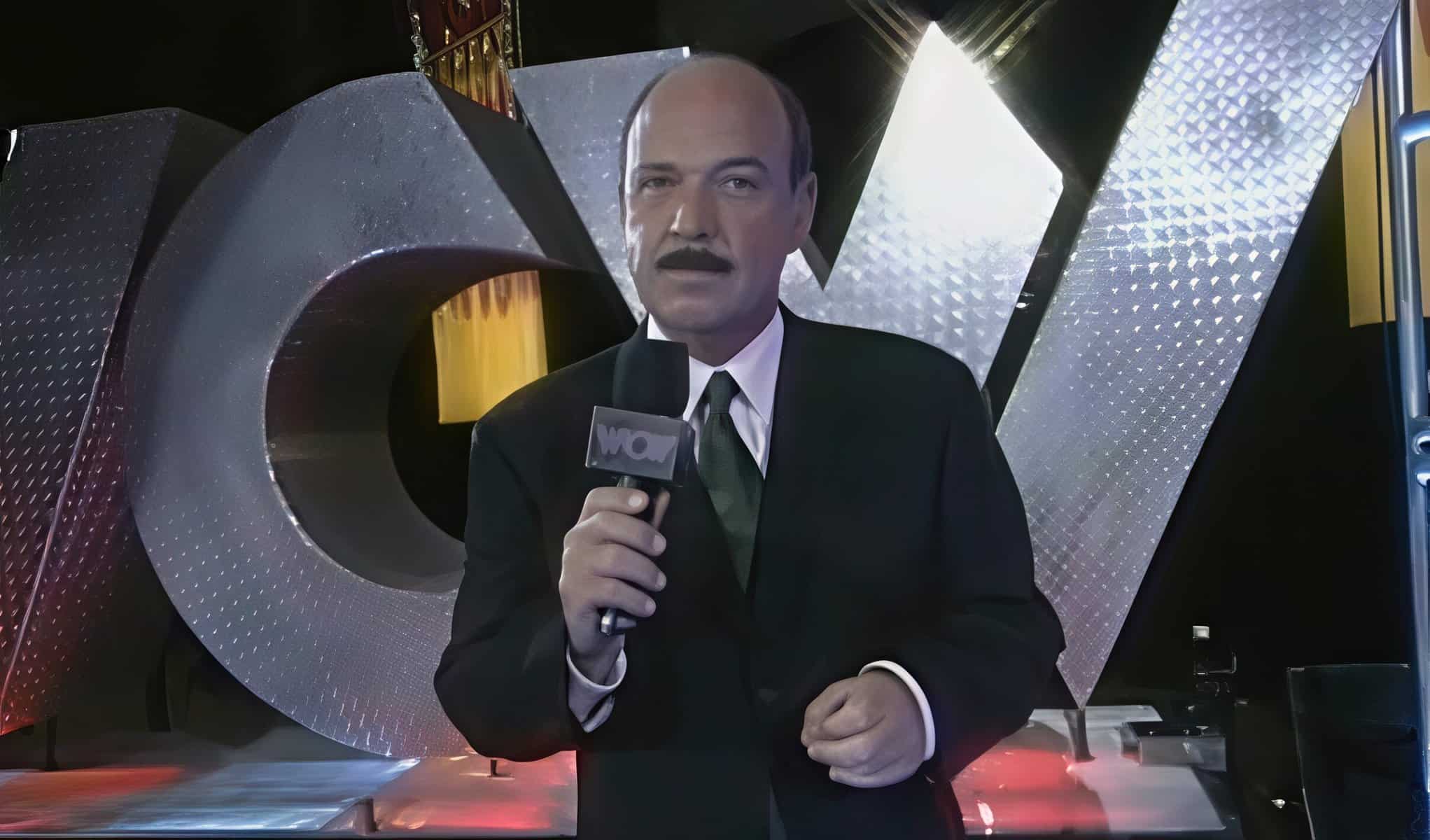
On a recent episode of the 83 Weeks podcast, former WCW President Eric Bischoff shed light on the business arrangement behind the highly successful “Mean Gene” WCW Hotline. Responding to long-standing rumors, Bischoff confirmed that Gene Okerlund had a significant, percentage-based deal for the 1-900 number, and he detailed the circumstances that made him willing to give Okerlund such a favorable contract. For those of you old enough to remember, the number was 1-900-909-9900.
When co-host Conrad Thompson asked about the structure of the deal, Bischoff explained that it was unique because Okerlund brought more than just his on-air talent to the table. “What made it easy for me to do a favorable deal for Gene is that he wasn’t just coming in and hosting the 900 line,” Bischoff said. “Gene came in with a plan. He had ideas, and he brought them in. The 900 line was one of them. And Gene really wanted to manage the process. He didn’t want to just be the host. He wanted to build that line of revenue.”
Bischoff credited Okerlund’s background in the radio industry, where he had been a General Manager, for his business acumen. “Gene Okerlund really grew up in the business of radio,” Bischoff explained. “He wanted to take the knowledge and the experience he had in radio and find ways to modify or use that experience to help build a revenue model for WCW.” Because Okerlund presented a fully-formed business plan and had the passion to execute it, Bischoff was comfortable giving him a substantial cut. While Bischoff couldn’t recall the exact split, he confirmed it “was significant” and could have been as high as 50/50.
A key factor in the lucrative deal was that the hotline represented an entirely new stream of income for the company. “It was found revenue,” Bischoff stated. “It’s not like I’m sharing an existing line of revenue… In this case, he was coming in with a line of revenue that didn’t previously exist. I’m much, much more willing to share that.”
The revenue generated by the hotline was particularly crucial in the early-to-mid 1990s, a period when Bischoff was aggressively cutting costs to stop the company from losing millions of dollars a year. “What was very incremental revenue by 1996 or 97 was very important revenue in 1994,” Bischoff recalled. “It was very significant at the time, especially because it was a new revenue stream. It went right to the bottom line.” He added, “At one point in time, that hotline was the talk of the town at WCW.”
Bischoff also clarified that other personalities who appeared on the hotline, such as Mark Madden and Mike Tenay, were not part of the revenue-sharing agreement. He explained that their participation was more about gaining exposure and the opportunity to work alongside a legend. “Who didn’t want to work with Gene Okerlund, right?” Bischoff said. “If you’re an announcer and you’re a wrestling fan and Gene calls you and says, ‘Hey, I’m doing this 900 line, you mind sitting in for an episode?’ Who’s going to say no to that?”
For more insights from Eric Bischoff and Conrad Thompson on the history of WCW, check out the 83 Weeks podcast every week on all major podcast platforms and at 83weeks.com.