


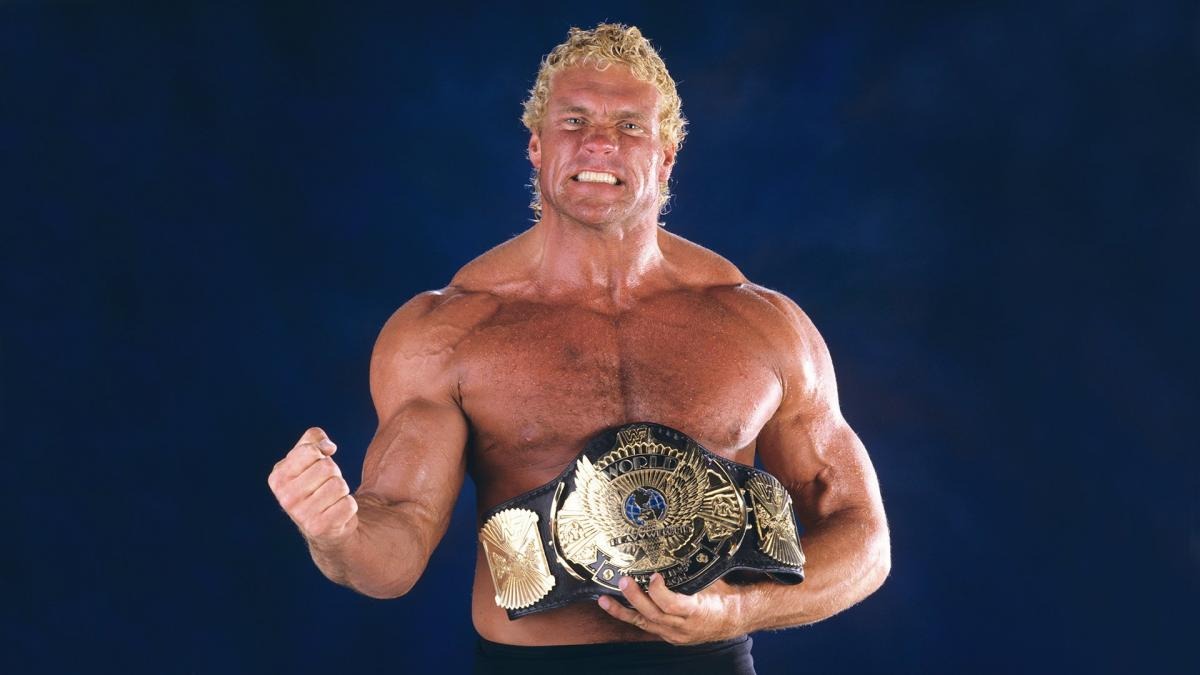
On January 14, 2001, World Championship Wrestling (WCW) presented a pay-per-view titled Sin from the Conseco Fieldhouse in Indianapolis, Indiana. The name would prove ironically fitting, as many critics and fans would later view the events of the main event not just as an accident, but as a sin of management negligence.
When Sid jumped from the middle turnbuckle, his left leg did not just break; it snapped in half, with the tibia and fibula compounding through the skin. The incident effectively ended the full-time career of one of the 1990s’ biggest stars and stands today as a gruesome monument to the dangers of pushing performers beyond their physical limitations for the sake of a “pop.”
The Millennium Man
To understand why Sid was on the turnbuckle, one must look at his standing in WCW in early 2001. Despite the chaotic booking that plagued the company, Sid Vicious remained over with the fans. He had an undeniable charisma and an intensity that connected with the audience.
In the months leading up to Sin, Sid was positioned as the primary challenger to the tyrannical reign of “Big Poppa Pump” Scott Steiner. Steiner was the WCW World Heavyweight Champion and was terrorizing the roster. Sid, dubbed “The Millennium Man,” was the only babyface (good guy) credible enough to stand toe-to-toe with Steiner.
The main event of Sin was a Four Corners match for the WCW World Heavyweight Championship. It featured Scott Steiner defending against Sid Vicious, Jeff Jarrett, and a “Mystery Man” (who turned out to be Road Warrior Animal).
The Request from Management
The controversy surrounding the injury lies in the backstage planning of the match. Sid Vicious was a “power wrestler.” His repertoire consisted of punches, kicks, powerbombs, and chokeslams. He was grounded. His appeal was that he was a giant who didn’t need to fly.
However, WCW management, specifically the road agents and booking committee, felt the main event needed something “extra.” According to Sid’s own accounts in subsequent interviews, as well as corroboration from other wrestlers, he was pressured to expand his moveset.
The specific request came from John Laurinaitis (Johnny Ace), who was working as a high-ranking road agent at the time. The suggestion was for Sid to perform a jumping big boot from the second turnbuckle.
Sid was reportedly hesitant. He expressed concern about a man of his size jumping from that height. He had never done the move before. However, the culture in WCW at the time was one of coercion; if you didn’t play ball, you were labeled “difficult” or “lazy.” With the company’s future uncertain, wrestlers felt pressure to prove their worth and versatility. Sid eventually agreed to try the spot to make the match special.
The Match: January 14, 2001
The match itself was a chaotic brawl typical of late-era WCW. The mystery man was revealed to be Road Warrior Animal, who had returned wearing a mask. This reveal was meant to be the shock of the night.
As the match neared its climax, the script called for Sid to mount a comeback. He fought off the heels and cleared the ring. Scott Steiner was positioned in the center of the canvas, dazed. This was the cue.
Sid climbed to the second rope. For a man of his stature, the ascent looked unnatural. He paused for a moment, perhaps hesitating, before launching himself into the air. He extended his left leg to deliver a “big boot” to Steiner.
The Injury
The physics of the landing were catastrophic. Sid landed on his left foot, but his full weight—over 300 pounds—came down at an awkward angle.
His leg simply disintegrated. The tibia and fibula bones snapped mid-shaft. The lower part of his leg bent at a sickening 90-degree angle, completely unnatural to human anatomy. The force was so violent that the bone tore through the muscle and skin, a compound fracture that was visible even from the cheap seats.
Sid collapsed to the mat. He didn’t scream initially; he stared at his leg in shock. Scott Steiner, who was waiting to take the bump, immediately realized something was wrong. He looked down and reportedly recoiled in horror.
Referees and wrestlers are trained to handle injuries, but the severity of this break caused panic. The referee, Charles Robinson, essentially froze for a split second before relaying the “X” sign (the symbol for a legitimate injury) to the back.
The Finish and the Camera Work
The match had to end immediately. The planned finish—whatever it was—was scrapped. Scott Steiner covered the incapacitated Sid Vicious. The referee counted the pinfall, and Steiner retained the title.
Crucially, the WCW production truck seemed unprepared for the graphic nature of the injury. The camera angles lingered on Sid for several seconds too long, broadcasting the gruesome, L-shaped leg to hundreds of thousands of viewers on pay-per-view.
Tony Schiavone and the commentary team, usually quick with hyperbole, were stunned into somber tones. “Oh my god,” was the prevailing sentiment. They quickly realized this wasn’t a “work.”
The Medical Emergency
Paramedics rushed the ring. The scene was gruesome. Because it was a compound fracture, there was a high risk of infection and severe blood loss. Stabilizing the leg was agonizingly painful.
Sid was stretchered out of the Conseco Fieldhouse. The silence in the arena was deafening. The fans, who had been cheering moments before, were hushed, realizing they had just witnessed a man’s life change forever.
At the local hospital, Indianapolis Methodist, surgeons performed emergency surgery. They inserted a 17-inch titanium rod into Sid’s leg to hold the bones together. The doctors told him that the injury was career-threatening. There were even initial fears that he might lose the lower leg if infection set in, though thankfully, that scenario was avoided.
The Lawsuit: Eudy vs. WCW
The fallout from the injury was messy and litigious. Sid Eudy (Sid Vicious) filed a lawsuit against World Championship Wrestling and its parent company.
The lawsuit alleged negligence. Sid’s legal team argued that he was coerced into performing a dangerous stunt that he was not trained for and that management knew—or should have known—was unsafe for a man of his size. They argued that the pressure to perform the “high spot” directly caused the injury.
Furthermore, the timing was disastrous. WCW was sold to the World Wrestling Federation (WWF) in March 2001, just two months after the injury. Because Sid was incapacitated, his contract was not picked up by the WWF. He was left unemployed, injured, and facing years of rehabilitation without the support system of a major promotion.
The legal battle dragged on for years, navigating the complex corporate dissolution of WCW. While the specific terms of the settlement were never publicly disclosed, it is widely believed that Sid received a settlement to cover his medical bills and lost wages.
The Recovery and “What If?”
Sid’s recovery was grueling. It took him years to learn to walk properly again, let alone run. The muscle atrophy in his left leg was significant.
For wrestling historians, the injury is a massive “What If?” scenario. Had Sid not broken his leg, he would have likely been the top babyface in WCW at the time of the sale. Would Vince McMahon have brought him in for the Invasion angle? Sid had a history with the WWF (having main-evented two WrestleManias), and he had the star power that the Invasion angle sorely lacked. A healthy Sid Vicious could have altered the trajectory of the WCW/ECW Alliance storyline in 2001.
Instead, Sid sat at home, watching the industry move on without him.
The Return
Remarkably, Sid Vicious did wrestle again. His love for the business—and perhaps the need to prove he could—drove him back to the ring.
He worked independent dates starting in 2004, utilizing a style that was even more grounded than before. His most triumphant moment came on June 25, 2012, when he made a surprise return to WWE Raw in the buildup to Raw 1000.
He appeared as “Sycho Sid,” defeating Heath Slater with a powerbomb. The crowd reaction was massive. Seeing him walk to the ring, looking physically imposing and moving well, provided a sense of closure for fans who still held the image of his broken leg in their minds. It was a redemption moment, proving that the “Master and Ruler of the World” had conquered his darkest night.
The Legacy of the Leg Break
The Sid Vicious leg break is often cited in wrestling schools and locker rooms as a cautionary tale. It is the ultimate example of why wrestlers should “work their style.”
It highlights the danger of management interference in match psychology. When agents or writers who do not have to take the bumps insist on high-risk maneuvers for the sake of a “moment,” the talent takes all the risk.
John Laurinaitis, the agent who suggested the spot, went on to become a high-ranking executive in WWE Talent Relations. He has rarely spoken publicly about the specific conversation with Sid, but the incident remains a black mark on his record in the eyes of many industry insiders.
Ultimately, the footage of Sid’s leg snapping remains one of the most visceral and disturbing clips in the archives. It serves as a grim reminder that underneath the scripted storylines and predetermined outcomes, the physical danger of professional wrestling is absolute, and gravity does not care about the script.

