


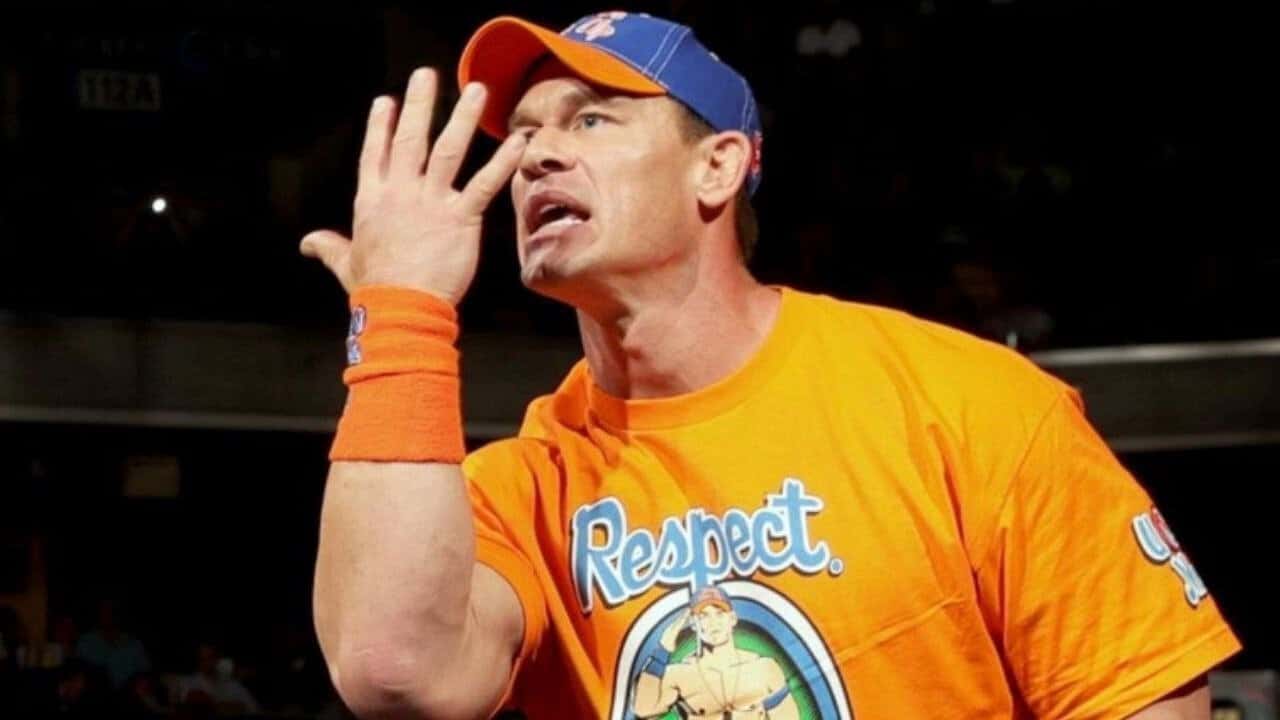
It is one of the most recognizable gestures in modern pop culture. An open hand, fingers spread tight, waved vigorously in front of the face.
Even if you have never watched a single frame of professional wrestling, you likely know the move. You probably also know the phrase that accompanies it: “You Can’t See Me.”
It is inextricably linked to John Cena, the WWE superstar turned Hollywood actor. For two decades, it has been his signature taunt, a signal to opponents that their time is up. But the originators of this global phenomenon weren’t corporate marketing teams or wrestling choreographers.
The most famous hand gesture in sports entertainment began as an inside joke, inspired by a hip-hop video and solidified by a sibling dare.
The Setting: The “Thuganomics” Era
To understand the origin, you have to rewind to the early 2000s. John Cena was not yet the clean-cut, salute-giving hero of children everywhere. He was rising through the ranks of the WWE as the “Doctor of Thuganomics,” a brash, white-rapper character who would spit diss tracks at his opponents before matches.
Hip-hop culture was central to Cena’s persona. He wasn’t just playing a character; he was actively recording his own music. Around 2004 and 2005, Cena was deep into production on his debut studio album, coincidentally titled You Can’t See Me.
It was during these recording sessions that the gesture was born.
The Inspiration: Tony Yayo
While listening to playback of his new tracks in the studio, Cena was accompanied by his younger brother, Sean Cena. Sean was a massive fan of G-Unit, the hip-hop group led by 50 Cent.
Sean had been obsessively watching the music video for the song “So Seductive” by Tony Yayo (a member of G-Unit). In the video, there is a moment where Tony Yayo holds his hand flat in front of his face to obscure his features while bobbing his head to the beat.
In the recording studio, grooving to his brother’s music, Sean started mimicking the Tony Yayo dance move.
The Dare and the Modification
Sean, amused by his own dancing, issued a challenge to his older brother: he dared John to perform that specific Tony Yayo move on national television during his next WWE match.
John Cena accepted the dare, but with a caveat. He felt that simply holding his hand stationary in front of his face looked a bit ridiculous for a tough guy in a wrestling ring. He worried it wouldn’t translate to the massive stadium crowds.
To make the move his own—and to make it more visually dynamic for the cameras—Cena modified it. Instead of a static hand hid beneath a bobbing head, Cena decided to wave his open hand back and forth in front of his face.
He debuted the move shortly after on WWE television, usually preceding his “Five Knuckle Shuffle” fist-drop maneuver. It was an instant hit with the live crowds.
The Meaning Behind the Move
While the gesture started as a borrowed dance move, Cena quickly imbued it with a specific meaning relevant to his competitive persona.
When Cena waves his hand and declares “You can’t see me,” he isn’t claiming literal invisibility. It is a metaphor for speed and skill level. He is telling his opponent: I am moving too fast for your eyes to track. I am operating on a level you cannot comprehend. You cannot touch me.
It was the ultimate taunt of superiority, perfectly fitting the arrogant “Thuganomics” character before eventually becoming a symbol of his superhero-like dominance in later years.
The Meme That Will Not Die
The true test of the gesture’s staying power, however, has been the internet.
As Cena transitioned from wrestling to mainstream movies like Trainwreck and Peacemaker, the phrase took on a hilarious life of its own online. The internet took “You Can’t See Me” completely literally.
For over a decade, the “Invisible John Cena” meme has been a staple of internet culture. If a photo is posted featuring John Cena standing next to a celebrity, comments will inevitably flood in asking, “Why is that person standing alone?” If Cena gives an interview in front of a green screen, the joke is that the editors will have a hard time keying him out because he isn’t really there.
What began as a brotherly dare over a hip-hop video has evolved into a multi-generational cultural touchstone. It is a testament to Cena’s charisma that a simple wave of the hand became an iconic symbol that everyone—even those who aren’t wrestling fans—can instantly recognize.

