


On December 17, 2006, World Wrestling Entertainment (WWE) presented the Armageddon pay-per-view event from the Richmond Coliseum in Richmond, Virginia. The event featured a four-way ladder match for the WWE Tag Team Championship, a bout designed to showcase high-risk aerial maneuvers and weapon usage.
The Participants and the Planned Spot
The match was characterized by a rapid pace and numerous high-impact sequences. The incident that resulted in Joey Mercury’s injury occurred approximately 15 minutes into the contest.
The planned sequence—or “spot”—involved a collaborative maneuver between The Hardy Boyz. The objective was to incapacitate both members of MNM simultaneously using ladders as weapons.
The setup required Matt Hardy and Jeff Hardy to position two ladders upright in the center of the ring. Joey Mercury and Johnny Nitro were positioned between the ladders, held in place by Matt Hardy. The plan called for Jeff Hardy to jump onto one end of the ladders, causing them to seesaw upward rapidly. The rising ends of the ladders were intended to strike Mercury and Nitro under the chin, simulating a violent impact.
The Incident: Mechanical Failure and Impact
As executed live, the timing of the maneuver was imperfect. Jeff Hardy jumped onto the seesaw apparatus with significant force. The ladders rotated upward with high velocity.
Johnny Nitro, positioned slightly further back, was able to shield his face and take the impact on his chest and arms. The ladder struck Mercury directly in the face. The impact was centered on the bridge of his nose and his left orbital area. The force of the blow was not absorbed or deflected; it was a direct collision with the steel ladder moving at high speed.
The results were immediately visible. Mercury fell backward out of the ring. He immediately clutched his face, and blood began to pour profusely from his nose.
The Immediate Aftermath and Medical Response
The severity of the injury was apparent to the performers in the ring and the ringside medical staff. The amount of blood loss was significant, pooling rapidly on the ringside mats.
While the match continued in the ring, WWE medical personnel attended to Mercury immediately at ringside. The cameras briefly captured the extent of the bleeding before cutting away to focus on the action in the ring.
Mercury was assisted to the backstage area. The trauma to his face was severe enough that he required immediate transport to a local hospital. The match concluded without him, with Paul London and Brian Kendrick retaining their championships.
Medical Diagnosis and Surgery
At the hospital, diagnostic imaging revealed extensive facial fractures. The diagnosis included:
- Shattered Nose: The nasal bone was fractured in multiple places, requiring complete reconstructive surgery.
- Orbital Fracture: The bone surrounding the left eye was fractured.
- Lacerations: The skin across the nose and around the eye required over 30 stitches to close.
Mercury underwent emergency surgery to address the fractures and control the bleeding. The procedure involved resetting the nasal bones and repairing the damage to the orbital socket.
The Recovery Process
Following the surgery, Joey Mercury faced a lengthy and painful recovery period. His face was severely swollen, and his eyes were swollen shut for several days.
The psychological toll of the injury was also significant. In interviews years later, Mercury described the intense pain and the realization that his appearance had been permanently altered. “I looked like I had been in a car accident,” Mercury stated in a WWE-produced documentary about the incident. “I didn’t recognize myself in the mirror.”
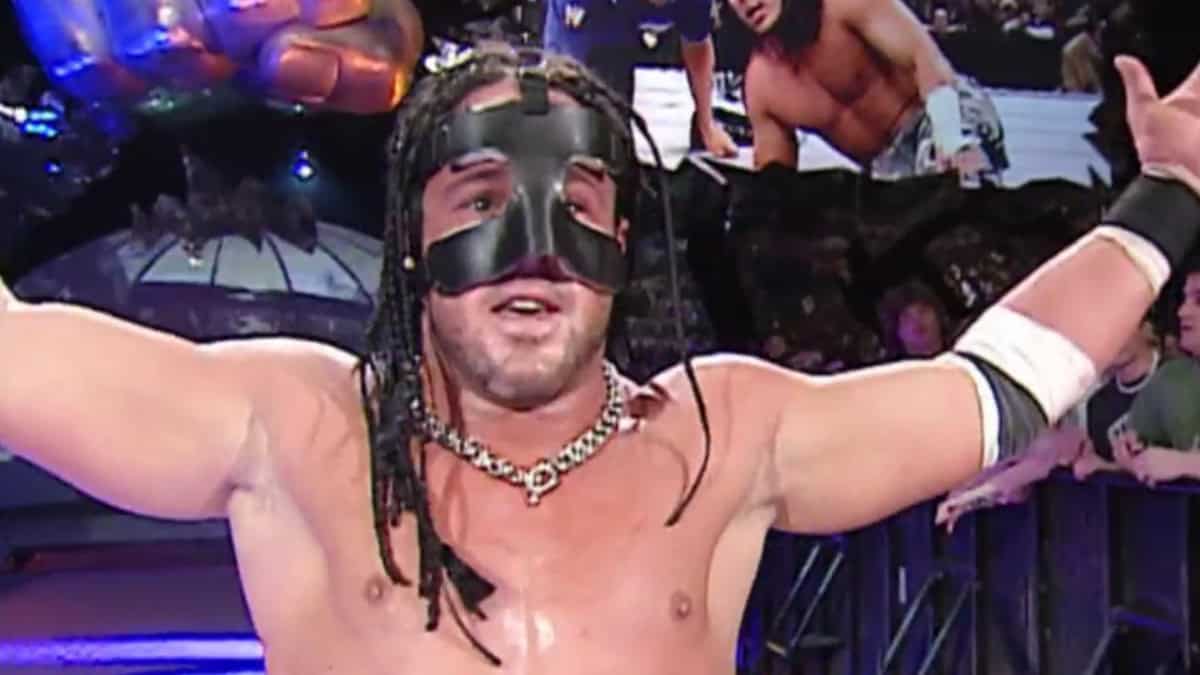
The recovery required him to remain out of action for over three months. He returned to WWE television in March 2007, wearing a protective face mask to shield his healing nose during physical activity.
The incident at Armageddon 2006 became a reference point for discussions regarding safety in high-risk matches. The seesaw ladder spot, while visually spectacular when executed correctly, carried a margin for error that resulted in catastrophic injury.
Following the incident, the use of the seesaw spot in WWE was significantly reduced. When it was utilized in later years, it was often executed with modified ladders or with stricter timing protocols to ensure the safety of the performers receiving the blow.
The injury also highlighted the reality of the risks taken by mid-card performers endeavoring to “steal the show.” In a match featuring legends like The Hardy Boyz, younger talent often felt pressure to perform dangerous stunts to stand out.
Joey Mercury’s Career Trajectory
Prior to the injury, Joey Mercury and MNM were considered one of the top tag teams in the company. The injury derailed their momentum. While Mercury did return to action, the team was eventually disbanded.
Mercury was released by WWE in 2007 due to issues related to substance abuse, which were reportedly exacerbated by the pain medication prescribed following the facial injury. He later returned to WWE in a non-wrestling role, working as a producer and trainer for NXT, before having another on-screen run as part of “J&J Security” alongside Jamie Noble in 2014.

