


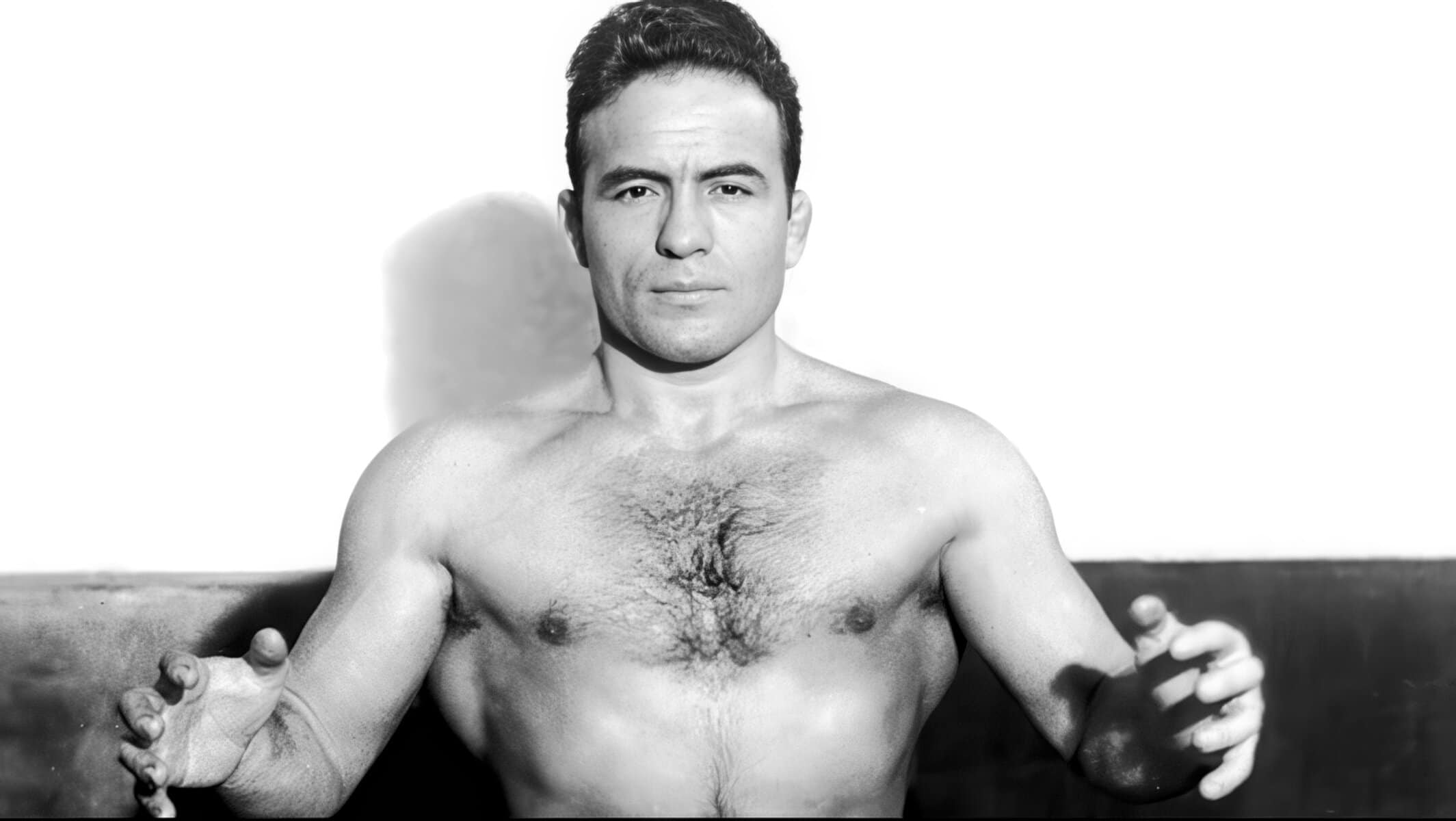
In a detailed historical segment on the first 2026 episode of The Jim Cornette Experience, wrestling historian and manager Jim Cornette presented evidence arguing that professional wrestler Jim Londos was likely the most successful athlete in the United States during the Great Depression. Citing a full-page article from the St. Louis Post-Dispatch dated December 27, 1931, Cornette provided a granular analysis of Londos’ financial dominance and drawing power, offering a stark contrast between the wrestling business of the early 20th century and the modern era.
The discussion began with Cornette explaining the source of his data. He referenced a three-volume set of books by Scott Teal of Crowbar Press, which compiles wrestling-related comic strips, illustrations, and cartoons from the early 1900s. Within this collection, Cornette discovered a reprint of a newspaper page dedicated entirely to Jim Londos’ performance in the year 1931.
“There is one full page from St. Louis, December 27, 1931, a full page article on Londos and his year of 1931,” Cornette described. “The headline is ‘Jimmy Londos wrestling 101 times in 1931 is busiest champion and big money maker.'”
The Financial Dominance of the Golden Greek
The statistics read by Cornette from the 95-year-old newspaper painted a picture of financial success that rivals or exceeds modern top-tier athletes when adjusted for inflation. According to the report, Londos wrestled 101 times that year and cleared a personal income of $252,500.
Cornette and co-host Brian Last performed an inflation calculation to contextualize this figure for the modern audience. “I am going to say that 1931 to today is 20 to one. One dollar then is $20 today,” Cornette estimated.
Using this multiplier, Last calculated the modern equivalent of Londos’ 1931 earnings. “If I go with just a flat number of $252,000 in today’s money, that is $5,340,000,” Last stated.
Cornette emphasized that this figure represented personal earnings in the middle of an economic depression, a feat that placed Londos above nearly all contemporaries in professional sports. The newspaper also listed the highest single gate Londos attracted that year at $63,000.
“That means that the $63,000 gate was actually a 1.2 and a half million dollar gate,” Cornette noted regarding the inflation-adjusted value.
Dominating St. Louis
To further illustrate Londos’ popularity, Cornette read from a sidebar in the article that specifically detailed Londos’ appearances in St. Louis, a city that would later become a wrestling capital under promoter Sam Muchnick. The data, provided by the Chairman of the Missouri Athletic Commission, showed that in just seven appearances, Londos generated massive revenue.
“Jimmy Londos’ seven appearances in St. Louis in 1931 drew $150,013.66 in gross receipts from a total of 92,320 spectators,” Cornette read.
Cornette listed the specific matches and attendance figures documented in the paper:
- February 20 vs. Ray Steele: 10,567 people for a gate of $19,774.
- April 8 vs. Danno Shocker: 13,000 people for over $13,000.
- April 29 vs. Danno Shocker (Rematch): 13,973 people for a staggering $35,270 gate.
- Vs. Karl Pojello: 11,518 people for $12,000.
- Vs. Burt Camphor: Two matches drawing 18,000 fans each.
- Vs. Garibaldi: 12,176 people for $22,000.
Cornette pointed out the significance of the rematch with Shocker, which drew a $35,000 gate—equivalent to $700,000 today—demonstrating how ticket prices were elevated for high-demand bouts. “The point is 92,000 people,” Cornette said. “And those weren’t the only seven matches in St. Louis. That is just the seven that Londos appeared on.”
The Grueling 1931 Schedule
Beyond the financials, the podcast segment highlighted the logistical impossibility of Londos’ schedule given the infrastructure of 1931. Cornette read through the list of cities Londos visited in March of that year alone, listing Richmond, Baltimore, Atlanta, Philadelphia, Memphis, New York, Boston, Milwaukee, Indianapolis, Chicago, Detroit, Cleveland, New Haven, Jersey City, and Paterson.
“That is when [there were] no interstates. In 1931 in a depression with air travel in its infancy at best,” Cornette observed. “This guy was the biggest sports star in the United States of America.”
The article noted that across his 101 matches, Londos faced only 28 or 38 different opponents, indicating he was touring with a specific loop of top contenders to draw these crowds.
Contextualizing the Fame
Cornette used these figures to challenge the modern perception of wrestling’s popularity. He compared Londos to cultural icons like Babe Ruth, arguing that while Ruth is more remembered today, Londos may have been the higher earner at the time due to the business model of wrestling.
“Babe Ruth wasn’t making this much money, not nearly this much money,” Cornette argued. “The wrestlers and the boxers… were a one man team that could travel all over the country… They were the highest paid professional athletes.”
He explained that in the 1930s, promoters and athletic commissions openly publicized gate receipts and earnings to legitimize the sport and emphasize the magnitude of the events. This transparency stands in stark contrast to the modern era, where financial details are often guarded or part of the “kayfabe” presentation.
“They advertised and promoted wrestling like the other professional sports with these figures,” Cornette explained. “So for the people who think, ‘Well, this is all just bullsh*t that was made up in some old newspaper,’ that is kind of how this stuff takes place.”
The Legacy of Jim Londos
The segment concluded with a discussion on the longevity of Londos’ fame. Co-host Brian Last mentioned finding a program from 1945 that still listed Londos as a world title claimant in Phoenix, Arizona, 14 years after the record-breaking year discussed in the article.
Cornette argued that Londos’ cultural footprint in the 1930s exceeded that of Hulk Hogan in the 1980s because Londos remained a household name for decades after his peak.
“There was more of a recognition factor amongst the average person in the United States during the 30s for Jim Londos than there was in the 80s for Hulk Hogan,” Cornette asserted. “Even in the 50s, he could walk into a newspaper office or make a personal appearance, and just by virtue of the fact that everybody had heard that name… he was a major star for the rest of the time he spent in the business.”
Cornette used the segment to underscore the contraction of wrestling’s popularity relative to the population growth. He noted that Londos was drawing tens of thousands of people in a country of 150 million, without the aid of television or modern travel.
“This is a country of 350 million people now, as opposed to… 150 million in the 30s,” Cornette said. “And this motherf**ker is putting 10, 15,000 or more in the ballparks in Boston and New York and Chicago… to see him wrestle these guys with no television, limited radio and newspaper coverage. That’s a big star.”
If you use any portion of the quotes from this article please credit Jim Cornette and Brian Last with a h/t to WrestlingNews.co for the transcription.

