


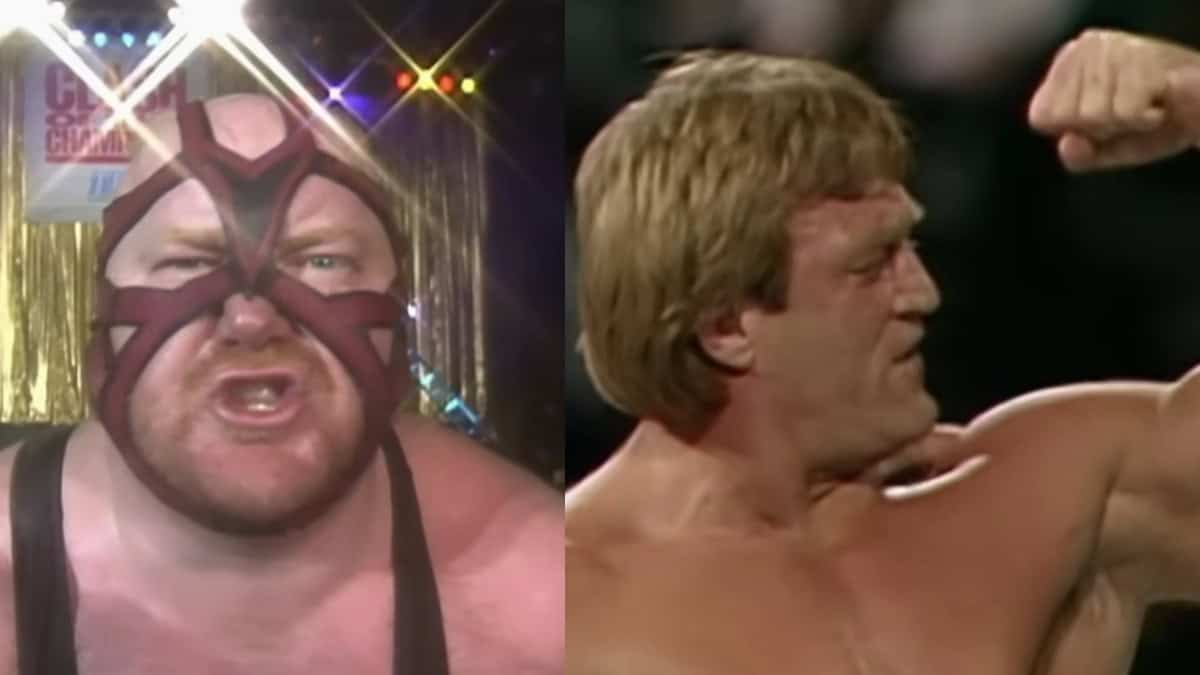
In the lore of professional wrestling, the distinction between a “tough guy” and a “shooter” is often debated. A tough guy looks the part; a shooter can inflict legitimate bodily harm. In 1995, World Championship Wrestling (WCW) employed Leon White, known as Big Van Vader, a 450-pound behemoth who was widely considered the stiffest, most intimidating performer in the industry. He was a “tough guy” by trade, a former offensive lineman who broke opponents’ noses and orbital bones with reckless abandon.
The Monster: Big Van Vader
To understand the magnitude of the altercation, one must first understand the standing of Leon White in 1995. Vader was a force of nature. Having made his name in New Japan Pro Wrestling—where he incited a riot in Sumo Hall by defeating Antonio Inoki—he came to WCW and dominated.
He was a three-time WCW World Heavyweight Champion. His style was physically punishing. He had famously injured Cactus Jack (Mick Foley) on multiple occasions, including the powerbomb on the concrete that caused Foley to temporarily lose feeling in his extremities, and the match in Germany where Foley lost his ear.
Vader carried himself with an air of intimidation. He was known to be “stiff” (hitting real), often taking liberties with jobbers (enhancement talent) to make himself look stronger. While he was reportedly a gentle giant outside the arena, inside the locker room, he was moody, protective of his spot, and increasingly difficult to manage.
By late 1995, tensions were high. Eric Bischoff was trying to reshape the company with the arrival of Hulk Hogan. Vader, who had been the king of the mountain, was being deprioritized. He was unhappy creatively and financially, creating a powder keg waiting for a spark.
The Agent: Paul Orndorff
On the other side of the conflict was Paul Orndorff. “Mr. Wonderful” was a bona fide legend, having main-evented the very first WrestleMania alongside Hulk Hogan and Roddy Piper. He possessed a physique carved out of granite and a legitimate mean streak.
However, by 1995, Orndorff was physically compromised. A severe neck injury suffered in the mid-80s had caused significant nerve damage. Over the years, the muscles in his right arm had atrophied, leaving the limb noticeably smaller and weaker than his left. He was in constant pain.
Transitioning into a backstage role as a road agent, Orndorff was responsible for maintaining order and ensuring the talent adhered to the schedule. He was a strict professional who believed in the old-school ethics of the business: show up on time, do your job, and respect the hierarchy. He had little patience for prima donnas, regardless of how big they were.
The Spark: A Missed Call Sheet
The incident occurred at the Center Stage Theater, the primary venue for WCW Saturday Night tapings. These days were long and grueling, often involving multiple matches and pre-taped interviews.
On the day in question, the schedule required Vader to be present early for a series of promotional photos and interviews. Vader, however, was late.
When Vader finally arrived, he was reportedly in a foul mood. Paul Orndorff, executing his duties as the road agent, approached Vader to inform him that he was late and that the production crew was waiting for him.
According to accounts from Eric Bischoff and other witnesses, Vader did not take the reprimand well. He dismissed Orndorff, acting as though the rules did not apply to a star of his magnitude. The verbal exchange escalated quickly. Vader, towering over Orndorff, reportedly told the agent to “get a life” or words to that effect, disrespecting Orndorff in front of the other wrestlers.
Orndorff, whose pride was as legendary as his physique, did not back down. He followed Vader into the dressing room area.
The Confrontation
The argument continued in the locker room. Vader was sitting down, preparing for the show. Orndorff demanded that Vader go to the photo shoot immediately.
Vader stood up. At 6-foot-5 and 450 pounds, he dwarfed the 6-foot Orndorff. Vader used his size to intimidate, invading Orndorff’s personal space.
In his autobiography, Vader recalled the moment, admitting that he was the aggressor verbally. “I got in his face,” Vader wrote. “I said some things I shouldn’t have said.”
Vader shoved Orndorff violently against the wall. In the world of wrestling, a shove is usually a prelude to a pull-apart, where other wrestlers step in to separate the combatants before real punches are thrown. Vader likely expected this outcome. He expected the locker room to hold them back.
He was wrong. The locker room, filled with wrestlers who had grown tired of Vader’s stiffness and bullying behavior, stood still. They watched.
The Fight: Flip-Flops and Fury
When Vader shoved him, Paul Orndorff didn’t wait for a referee. Despite wearing casual clothes and a pair of rubber flip-flops (shower shoes), Orndorff reacted with the instinct of a street fighter.
Orndorff delivered a headbutt to Vader’s face, stunning the giant. He followed up with a flurry of punches. Because his right arm was atrophied, Orndorff fought primarily with his left hand, and he unleashed a series of hooks that connected flush with Vader’s jaw.
Vader, shocked by the resistance, tried to clinch. Orndorff, utilizing his amateur wrestling background and leverage, managed to take Vader off his feet. The 450-pound man crashed to the concrete floor of the dressing room.
What happened next is the stuff of legend. With Vader on the ground, Orndorff did not stop. He began kicking Vader in the face.
The visual was surreal. Paul Orndorff, wearing flip-flops, was stomping the most feared monster in wrestling. According to witnesses like Meng (Haku), who was present, the sound of the flip-flops snapping against Vader’s face echoed through the room. Orndorff kicked him repeatedly, shouting threats and asserting his dominance.
Vader, dazed and bloodied, covered up. He did not fight back effectively. The “monster” had been neutralized.
The Aftermath in the Locker Room
Eventually, the fight was broken up. Meng, who is universally recognized as the toughest man in wrestling history, reportedly stepped in to pull Orndorff off Vader, likely saving Vader from severe injury.
The atmosphere in the room shifted instantly. Vader, the bully who had hurt so many people in the ring, was humiliated. He lay on the floor, bleeding, beaten by a retired wrestler with one good arm and shower shoes.
Eric Bischoff was summoned to the scene. In his podcast 83 Weeks, Bischoff described the chaotic scene. He found Vader sitting on the floor, holding a towel to his face, weeping.
“Leon was a sensitive guy. For all his bluster, he was very emotional. He was crying, saying, ‘He hit me, Eric. He hit me.'”
Bischoff then went to find Orndorff. He found Mr. Wonderful pacing, still furious, adrenaline coursing through his veins. Orndorff looked at Bischoff and simply said, “I’m sorry, but he had it coming.”
The Consequence: Vader’s Exit
The fight was the final straw for Vader’s WCW career. Politically, he could not recover from the loss. A monster heel relies on an aura of invincibility. Getting beaten up by a road agent destroyed that aura in the eyes of the other wrestlers and, inevitably, the office.
Furthermore, Vader felt betrayed. He believed that his status as a top star should have protected him. He demanded that Orndorff be fired. Eric Bischoff refused. Bischoff viewed the incident as Vader’s fault for initiating the physical contact and for being unprofessional regarding his schedule.
Feeling unsafe and disrespected, and realizing his leverage was gone, Vader negotiated his release from WCW shortly after the incident. He would go on to join the World Wrestling Federation (WWF) in 1996, debuting at the Royal Rumble. However, his WWF run was plagued by injuries and creative mismanagement, and he never reached the heights of his early WCW dominance.
The Consequence: Orndorff’s Legend
For Paul Orndorff, the fight elevated him to a god-like status among the boys. He had done what many of them had dreamed of doing: he humbled the bully.
Stories of the fight spread across the industry like wildfire. It served as a reminder that the “old school” guys were not to be trifled with. Orndorff continued to work for WCW for several more years, commanding a level of respect that few road agents ever achieve.
In later interviews, Orndorff expressed no regret for the incident. He maintained that he was doing his job and defending himself. “I wasn’t afraid of him,” Orndorff said in a shoot interview. “Big doesn’t mean bad. I knew if I got him down, he wasn’t getting up.”
The Psychology of the Bully
The Vader vs. Orndorff incident is often cited by wrestling historians as a classic example of the “bully dynamic.” Vader was accustomed to using his size to intimidate. He was used to people backing down. When he encountered someone who refused to be intimidated—someone who had legitimate skills and a fearless mindset—he crumbled.
It also highlighted the changing culture of the business. In the territory days, a fight like that might have been kept quiet. In the era of the “dirt sheets” and internet newsletters, the news broke immediately, embarrassing WCW and Vader publicly.
Conclusion
The locker room fight at Center Stage remains one of the most vivid examples of reality crashing into the world of professional wrestling. It stripped away the characters to reveal the men underneath.
On one side was Big Van Vader, a giant who believed his own press clippings. On the other was Paul Orndorff, a crippled warrior in flip-flops who refused to be disrespected.
The image of Mr. Wonderful standing over the fallen giant, flip-flop on his foot and fist cocked, is a testament to the idea that in the wrestling business, the toughest man in the room isn’t always the one on the poster—sometimes, he’s the guy with the clipboard telling you you’re late for work.

