


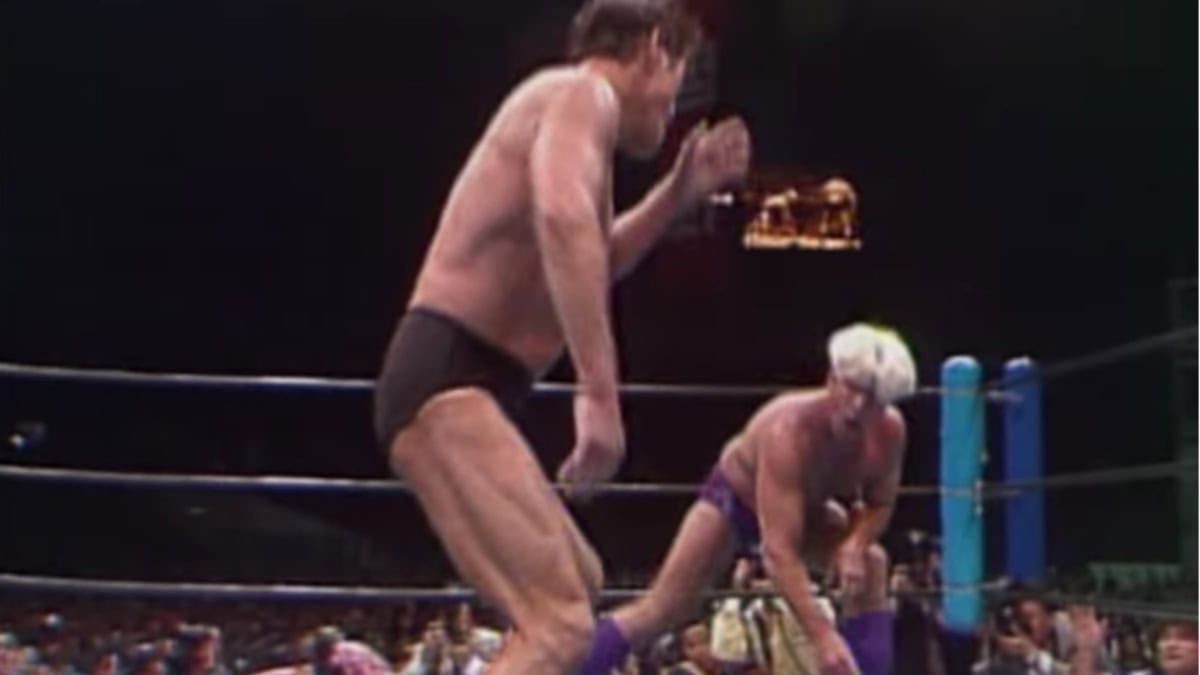
The Architect: Antonio Inoki’s Vision
The catalyst for this geopolitical experiment was Antonio Inoki. In Japan, Inoki was more than a wrestler; he was a cultural icon and a sitting member of the House of Councillors in the Japanese Diet (legislature). He was the leader of the “Sports Peace Party,” a political entity built on the belief that athletic competition could bridge diplomatic divides.
Inoki had a deep, personal connection to North Korea through his mentor, Rikidozan. Rikidozan is considered the father of Puroresu (Japanese pro wrestling), but he was born Kim Sin-rak in Japanese-occupied Korea. In North Korea, Rikidozan is revered as a national hero who grew strong and defeated American wrestlers, symbolizing Korean resilience. Inoki, as Rikidozan’s greatest student, held a unique status in the Hermit Kingdom.
In 1995, Inoki sought to use this connection to thaw the frosty relations between Japan and North Korea. He proposed a massive wrestling festival to the North Korean government. The regime of Kim Jong-il, eager to project an image of strength and international cooperation, approved the event.
To fill the card, Inoki reached out to his business partners in America: WCW. Eric Bischoff, the Executive Vice President of WCW, saw an opportunity. While he admitted to knowing little about the political nuances, Bischoff was driven by the prospect of global publicity. He wanted to beat the World Wrestling Federation (WWF) to a new market and claim the record for the largest wrestling crowd in history.
Arrival in the Hermit Kingdom
The roster of talent that traveled to Pyongyang included some of the biggest names in the industry: Ric Flair, The Steiner Brothers (Rick and Scott), Scott Norton, Chris Benoit (performing as Wild Pegasus), 2 Cold Scorpio, Road Warrior Hawk, and Eric Bischoff. They were joined by Muhammad Ali, who was attending as a guest of honor and a symbol of global sportsmanship.
From the moment the plane touched down, the wrestlers realized this was not a standard tour. Upon arrival, their passports were confiscated by North Korean officials “for safekeeping.” They were assigned “minders”—government handlers who accompanied them everywhere, monitored their conversations, and ensured they did not stray from the approved itinerary.
In his autobiography Controversy Creates Cash, Eric Bischoff described the atmosphere as suffocating. The city was devoid of commercial advertising, the streets were eerily quiet, and the group was constantly subjected to propaganda.
One of the first stops was the Mansu Hill Grand Monument, the site of the massive bronze statue of the “Great Leader,” Kim Il-sung. The wrestlers were instructed to lay flowers at the feet of the statue. While most complied to avoid conflict, the cultural friction was palpable. The handlers scrutinized their every move, looking for signs of disrespect.
The Scott Norton Incident
The tension nearly boiled over into a diplomatic incident involving Scott Norton. A massive, powerful wrestler known for his arm wrestling prowess and legitimate toughness, Norton did not take kindly to the restrictive environment.
According to accounts from multiple wrestlers on the trip, including Ric Flair in his book To Be The Man, Norton became agitated during a phone call to his wife. He believed the room was bugged and the phone lines were tapped. Frustrated and feeling trapped, Norton allegedly declared that he was leaving and refused to participate in the forced tours.
This defiance triggered a panic among the organizers. In North Korea, refusing a government directive is not a minor infraction. Norton was reportedly confronted by officials. The other wrestlers, realizing the potential danger, had to calm Norton down.
Ric Flair later noted that he genuinely feared Norton would be detained or “disappear.” The wrestlers were warned that any act of rebellion could result in them not being allowed to leave the country. Norton eventually cooled off, but the incident served as a stark reminder that they were essentially hostages until the plane took off.
The Crowd of 190,000
The event took place at the Rungrado May Day Stadium, a architectural marvel capable of holding 150,000 people comfortably, with thousands more squeezed in for this event. The visual was staggering. The stands were packed from the ground to the roof with people dressed in drab, uniform clothing.
However, unlike a wrestling crowd in Tokyo or Chicago, this audience was silent. They had no concept of professional wrestling. To them, “wrestling” meant amateur Greco-Roman or freestyle competition. They did not understand the pageantry, the storylines, or the “worked” nature of the bouts.
When the wrestlers performed high-flying moves or dramatic slams, the reaction was confusion rather than excitement. Eric Bischoff noted that the silence was deafening. It wasn’t until the main event, when Antonio Inoki entered the ring, that the crowd came alive. They knew Inoki. He was the student of their hero, Rikidōzan. When Inoki fought, the crowd roared, but it was a synchronized, disciplined roar, almost as if they were instructed when to cheer.
Muhammad Ali and the Propaganda
Muhammad Ali’s presence was a coup for the organizers, but it was heartbreaking for the Americans. By 1995, Ali was suffering significantly from Parkinson’s disease. Despite his physical frailty, his mind remained sharp, and he recognized the nature of the event.
In a famous anecdote recounted by Ric Flair, the group was sitting at a large round table dinner with North Korean officials. A high-ranking official began boasting about the superiority of North Korea, claiming that they could destroy the United States and Japan if they chose to.
Ali, whose hands were trembling, slowly looked up. He famously said, “No wonder we hate these motherf***ers.”
The table went silent. The wrestlers were terrified. However, the translator, likely fearing for his own life or wanting to avoid a scene, reportedly translated the comment into a generic pleasantry or remained silent. The moment passed, but it highlighted the surreal danger of the trip.
Ric Flair’s Ordeal
As the NWA World Heavyweight Champion (representing WCW), Ric Flair was the antagonist for the main event against Antonio Inoki. However, before he could wrestle, he had to navigate a political minefield.
North Korean officials demanded that Flair make a public statement. They wanted him to read a prepared speech that denounced the United States and praised the leadership of North Korea. Flair, a lifelong conservative and patriot, was in an impossible position. Refusing could endanger the group; accepting would be treasonous to his own values and a PR nightmare back home.
Flair, displaying the charisma and quick thinking that made him a legend, found a middle ground. In his speech, he praised the “beautiful and peaceful country” of North Korea and expressed his honor at performing there, but he stopped short of denouncing the US or praising the ideology of the regime. He famously stated, “I applaud you for having this beautiful country,” focusing on the landscape rather than the government. It was a masterclass in survival promo skills.
The Aftermath
When the wrestlers finally boarded the plane to leave Pyongyang, the relief was overwhelming. Bischoff described the feeling of the wheels lifting off the tarmac as one of the greatest moments of his life.
From a business standpoint, the event was a mixed bag. In North Korea, it was hailed as a massive success for the regime. In Japan, it was a major news story. However, in the United States, it was a commercial flop. WCW released the event as a pay-per-view titled Collision in Korea months later, in August 1995. Without the live hype and with the results already known to hardcore fans, the buyrate was abysmal (reportedly around 0.15).
However, the event holds an unbreakable record. The attendance figures—often cited as 150,000 for night one and 190,000 for night two—are recognized by the Wrestling Observer Newsletter and other historians as the largest verified crowds to ever watch professional wrestling. While WWE claims the attendance record for WrestleMania 32 or WrestleMania III (around 101,000 and 93,000 respectively), Collision in Korea dwarfs those numbers, even if the tickets were mandatory.
Legacy of the Bizarre
Collision in Korea stands as a testament to the wild ambition of 1990s wrestling. It was a time when promoters believed they could solve international conflicts with a suplex.
For the wrestlers involved, it became a badge of honor. They had survived the trip to the other side of the world. They had performed under the gaze of a totalitarian regime. They had walked through the valley of the shadow of death and lived to tell the tale.
Today, the event is studied not for the matches—which were good, but standard fare for the talent involved—but for the context. It represents the ultimate intersection of sport, politics, and propaganda. It was the only time the Nature Boy wooed in the Hermit Kingdom, and the only time 190,000 people sat in silence until they were told to cheer for the fight.

