


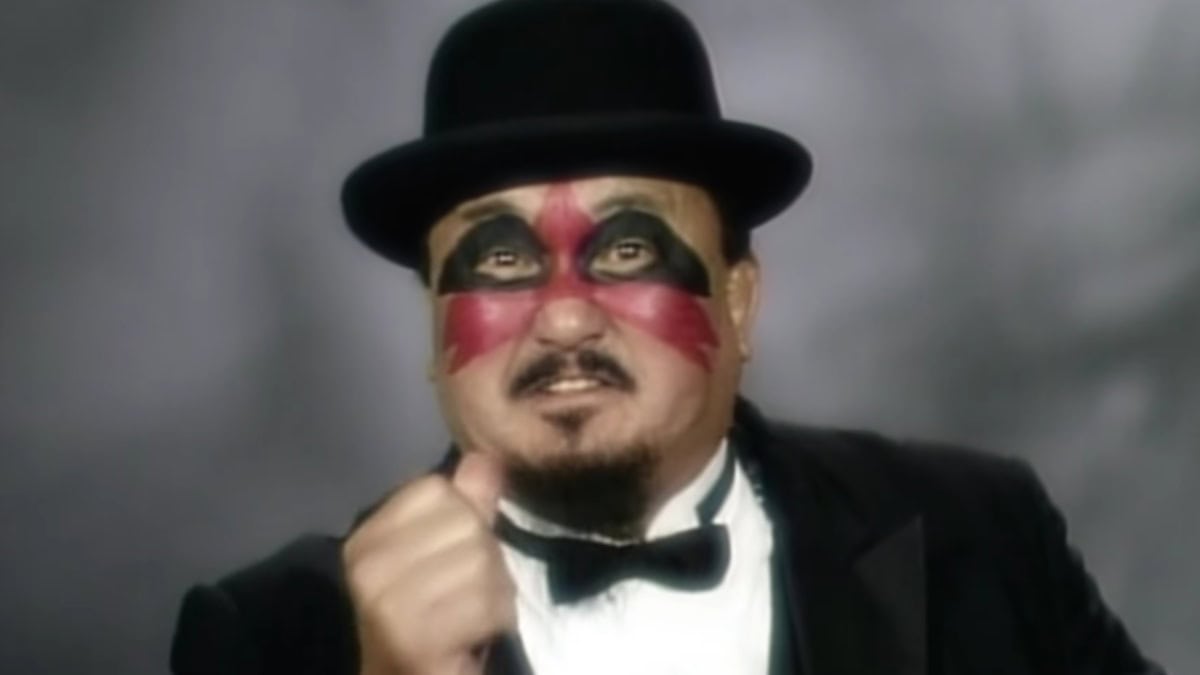
The stories of Mr. Fuji’s ribs are passed down like folklore among veterans. They paint a picture of a man who possessed a dark sense of humor and a terrifying commitment to the bit, creating a legacy that is as much about fear as it is about championship belts.
The Psychology of the Rib
To understand why Mr. Fuji did what he did, one must understand the environment of professional wrestling in the 1970s. The wrestlers traveled by car, driving hundreds of miles a day between towns. There were no smartphones, no internet, and very little entertainment. Boredom was the enemy. To combat this, wrestlers turned on each other.
Furthermore, the locker room was a hierarchy. Veterans (“shooters” and “hookers” who could legitimately fight) ruled the roost. Rookies were expected to be seen and not heard. If a newcomer showed arrogance or disrespected the business, it was up to the veterans to humble them. Mr. Fuji took this responsibility personally.
Fuji was a legitimate tough guy. He was a powerhouse in the ring and had a high pain threshold. This physical capability meant that few people were willing to retaliate against him. If you pranked Fuji back, you risked an escalation that you could not win. This power dynamic allowed him to turn ribbing into an art form.
The Automotive Antics
Many of Fuji’s most famous pranks involved automobiles, the primary vessel of a wrestler’s life.
One of his signature moves was the “engine block cookout.” Fuji would often travel with a raw steak or a fish. While his travel partners were inside an arena wrestling, Fuji would open the hood of their car, wrap the meat in foil, and wire it to the engine block. As the wrestlers drove to the next town, the heat from the engine would slowly cook the meat. The smell would eventually permeate the ventilation system, filling the car with the stench of rotting, burning flesh. By the time the victims realized what was happening, the smell had seeped into the upholstery, often ruining the car’s interior.
Another favorite involved the car’s exhaust. In cold weather territories like Minnesota (AWA) or the Northeast (WWF), wrestlers would rush to their cars after matches to warm up. Fuji would sneak out early and stuff potatoes or bananas into the tailpipes of the babyfaces’ cars. The cars would start, sputter, and die, leaving the wrestlers stranded in the freezing cold while Fuji drove past, waving politely.
Perhaps the most dangerous automotive rib involved the removal of tires. There are accounts of Fuji loosening the lug nuts on a rival’s car—not enough to cause the wheel to fly off immediately, but enough to cause a terrifying wobble on the highway. This level of recklessness highlights the difference between a “fun” rib and a Fuji rib; for Fuji, the potential for danger was part of the punchline.
The Destruction of Property
Fuji had little respect for personal property if it could be used for a laugh. A common tactic was “the shoe nail.”
In the days of kayfabe, heels and faces dressed in separate locker rooms, but often left their street clothes in a communal area or unguarded while in the ring. Fuji would take a wrestler’s street shoes—often expensive dress shoes—and use a hammer to nail them to the floor. When the wrestler returned, exhausted and ready to shower, they would find their footwear permanently attached to the concrete. Alternatively, he would use industrial-strength glue to seal the shoes to the ceiling.
Clothing was also a target. Fuji was known to take a pair of scissors to a wrestler’s dress shirts or slacks. He wouldn’t just shred them; he would make subtle cuts in the seams. The wrestler would put the clothes on, looking fine, but as soon as they bent over to pick up a bag or sat down in a car, the garment would disintegrate.
For wrestlers who wore hats, Fuji had a specific torment. He would take a razor blade and cut out the inner sweatband of a cowboy hat. He would then fill the lining with shaving cream or glue and replace the band. When the wrestler put the hat on and pressed it down, the substance would ooze down their face.
The Padlock Torture
Mr. Fuji always traveled with a pocketful of padlocks. This simple hardware store item was his weapon of choice for inconveniencing the roster.
If a wrestler left their travel bag unziped, Fuji would padlock the zippers together. If they wore boots with laces, he would padlock the laces. In the most extreme cases, he would padlock a wrestler’s street clothes to a pipe in the ceiling or a locker, then snap the key off in the lock.
This forced the victim to find bolt cutters or a hacksaw just to get dressed. In an era where “making the town” on time was critical to getting paid, a delay caused by a padlock could cost a wrestler money. Fuji knew this, and he reveled in the panic it caused.
The Torment of Rookies
New talent was fresh meat for Mr. Fuji. He viewed it as his duty to test their breaking point.
One famous story involves a young wrestler who made the mistake of complaining about the stiffness of the ring. The next night, Fuji arrived early. He peeled back the canvas and the padding, exposing the wooden boards underneath. He then placed a series of small, hard objects—some say marbles, others say bolts—under the padding in the specific spot where the rookie was scheduled to take a bump. When the rookie hit the mat, he landed on a minefield of hard debris, suffering intense pain while Fuji watched from the curtain, laughing.
Another rookie initiation involved the shower. While the newcomer was showering, Fuji would steal their clothes and towel, leaving them naked and wet in a locker room full of men. He would then “helpfully” offer them a towel that had been soaked in freezing water or, in worse scenarios, rubbed with deep-heating rub (like IcyHot).
The Legend of the Dog
The darkest and most controversial story attributed to Mr. Fuji involves a rib that goes beyond cruelty into the realm of sociopathy. The story has been told by numerous wrestling legends, including Roddy Piper, Hulk Hogan, and Jules Strongbow, though the details vary slightly depending on the teller.
The core of the story is that a fellow wrestler (often identified as Tor Kamata or a similar peer) had a small dog that he brought on the road. The dog was reportedly noisy and an annoyance to the other travelers.
According to the legend, the wrestler returned to his hotel room or the locker room one evening to find that his dog was missing. Later, Mr. Fuji invited the wrestler to dinner or presented him with a meal he had cooked. The wrestler ate the meat, enjoying it.
After the meal was finished, Fuji allegedly revealed the source of the protein: it was the wrestler’s dog.
Roddy Piper, speaking in a shoot interview, recounted the tale with a mix of horror and awe.
“Fuji cooked the dog. He fed the guy his own dog. That’s the kind of guy Fuji was. You didn’t mess with him.”
It is important to note that this story exists in the gray area of wrestling folklore. Some claim it was a cooked cat; others say it never happened and was just a terrifying myth cultivated by Fuji to ensure people left him alone. However, the fact that the story is even plausible within the context of Fuji’s reputation speaks volumes about how he was perceived by his peers.
The Airplane Incidents
Fuji’s terror was not confined to the ground. On commercial flights, he was a menace.
A favorite tactic was the “sleeping hand.” If a wrestler fell asleep next to him, Fuji would gently place the person’s hand into a cup of warm water. The body’s reflex would often cause the sleeping person to urinate on themselves.
He was also known to use safety pins. He would pin a sleeping wrestler’s pant leg to the seat cushion. When the plane landed and the wrestler stood up to retrieve their bags, they would be yanked back down or rip their trousers.
Why No One Stopped Him
To the modern observer, these actions constitute assault, destruction of property, and animal cruelty. The question arises: why was he allowed to continue?
The answer lies in the unique insulation of the wrestling business. In the 70s and 80s, wrestlers policed themselves. Going to the authorities or management was seen as weak. Retaliation was the only recourse, but retaliating against Mr. Fuji was a losing proposition.
Fuji was often partnered with Professor Toru Tanaka, another legitimate tough guy. Together, they were a formidable unit. Furthermore, Fuji had tenure. He was a trusted employee of Vince McMahon Sr. and later Vince McMahon Jr. He showed up to work, he did his job well, and he protected the business. In the eyes of the promoters, if Fuji was terrorizing the locker room, it kept the boys on their toes.
Don Muraco, who was managed by Fuji in the WWF and participated in the famous “Fuji Vice” skits, has spoken about Fuji’s dual nature. Muraco described him as a professional and a mentor, but admitted that his sense of humor was “wicked.”
Legacy of the King
Mr. Fuji passed away on August 28, 2016, at the age of 82. The tributes from the wrestling world were a mix of reverence for his career and disbelief at his backstage antics.
While fans remember him for the salt in the eyes and the tuxedo, the wrestlers remember him for the padlocks, the engine blocks, and the fear. He represents a bygone era of the industry—a time when the locker room was a lawless place, and survival required a thick skin and a watchful eye.
Mr. Fuji’s ribs are not just funny stories; they are the scars of a generation of wrestlers. They serve as a testament to the boredom, the brutality, and the bizarre brotherhood of the road. He was a master villain on camera, but behind the curtain, he was the monster under the bed that every wrestler checked for before they went to sleep.

