


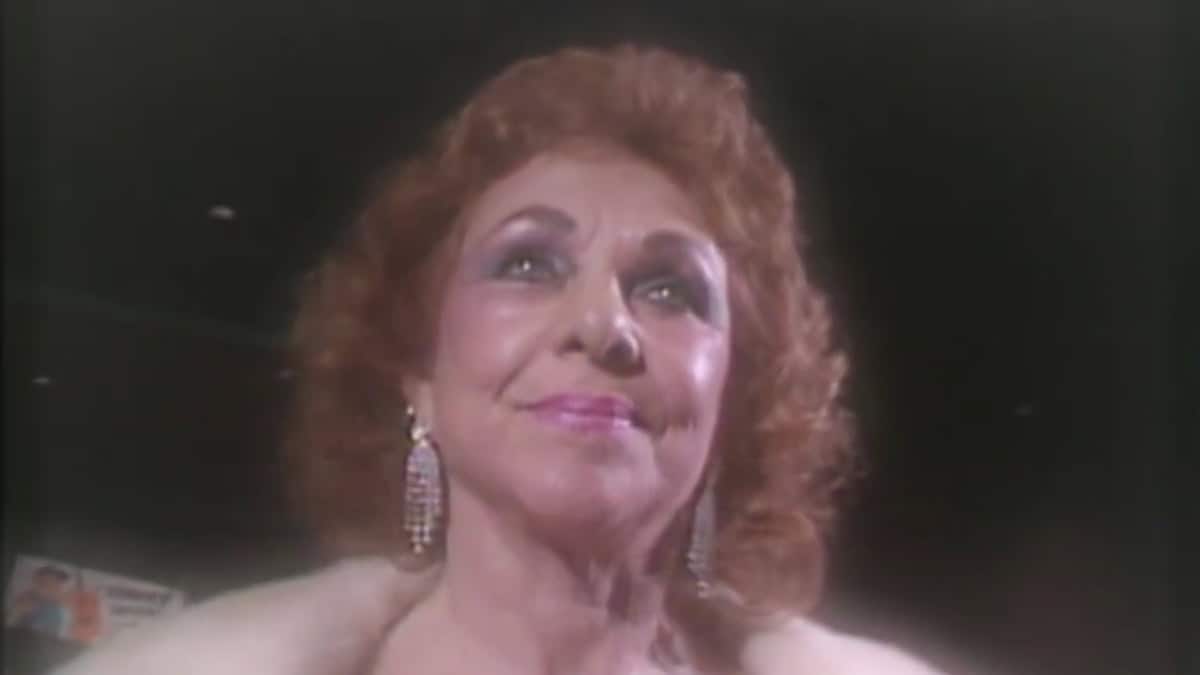
For nearly half a century, the history of women’s professional wrestling was synonymous with one name: The Fabulous Moolah. To the casual observer and the corporate historians of the World Wrestling Federation (WWF), she was a pioneer, a trailblazer, and the longest-reigning champion in the history of the sport. She was presented as a matriarch who kept the division alive during the dark ages of the territory system.
The story of Moolah’s monopoly is one of the most controversial chapters in wrestling history. It involves allegations of theft, pimping, and the “Original Screwjob” of Wendi Richter—a betrayal that predated Montreal by twelve years and served as a brutal reminder that in Moolah’s world, the Queen always wins.
Building the Empire: The Girl Wrestling Enterprises
To understand Moolah’s grip on the industry, one must understand the structure of the National Wrestling Alliance (NWA) in the mid-20th century. The NWA was a patchwork of territories. Most promoters focused on male heavyweights and viewed women’s wrestling as a sideshow attraction. They did not want the hassle of managing a women’s division.
Moolah recognized a gap in the market. She established “Girl Wrestling Enterprises” out of her compound in Columbia, South Carolina, known as Camp Moolah. She offered promoters a turnkey solution: she would provide the women for the shows. She would train them, manage them, transport them, and book them.
This arrangement gave Moolah absolute leverage. If a promoter in St. Louis or Texas wanted women on the card, they had to go through Moolah. She controlled the supply. Consequently, she controlled the labor.
The financial model was predatory. Promoters would pay Moolah a lump sum for the talent. Moolah would then pay the wrestlers a fraction of that fee, often keeping 25% to 50% (or more) for herself. She justified this by claiming she covered travel and training expenses, but numerous former wrestlers have alleged that they were still forced to pay for their own road expenses while Moolah pocketed the booking fees.
Camp Moolah: A Compound of Control
The source of Moolah’s talent was her training school on her estate in South Carolina. Young women with dreams of stardom would travel to Camp Moolah, often signing over their financial independence in the process.
The conditions at the camp have been described by former students as exploitative. In various documentaries and shoot interviews, women have alleged that they were forced to rent rooms from Moolah on the property, buy groceries from her at inflated prices, and perform manual labor to maintain the estate.
The control extended to their identities. Moolah owned the rights to the names and gimmicks of the women she trained. She decided who was a babyface and who was a heel. She decided who won and who lost. If a woman crossed Moolah or tried to book dates independently, she was blackballed from the entire NWA circuit. Moolah’s influence was so pervasive that being fired by her meant the end of a career.
The Championship Stranglehold
Central to Moolah’s power was the NWA World Women’s Championship. Moolah won the title in 1956. Through a combination of politics and ownership, she held the title—or a version of it—for the next 28 years.
While the WWE recognizes a singular, uninterrupted reign, the reality is that Moolah traded the belt back and forth with wrestlers she controlled to stimulate business in local territories. She would drop the belt to a local favorite to pop the crowd, only to win it back weeks later before leaving the territory. Because she controlled the bookings, she ensured that the title always returned to her waist.
By physically possessing the belt and holding the rights to the title, Moolah made herself indispensable. She was the champion, the manager, the booker, and the agent. It was a conflict of interest that would be illegal in legitimate sports, but in the unregulated carnival of wrestling, it was simply “good business.”
The Original Screwjob: Wendi Richter and the Spider Lady
The most famous example of Moolah’s ruthlessness occurred on November 25, 1985, at Madison Square Garden. By this time, Vince McMahon had taken the WWF national. He had purchased the rights to the Women’s Championship from Moolah, but she remained a key figure in the company.
The star of the division was Wendi Richter. Young, charismatic, and heavily featured in the “Rock ‘n’ Wrestling” connection with Cyndi Lauper, Richter was a mainstream star. However, Richter was unhappy with her pay. She realized that she was drawing massive crowds but was being paid a fraction of what the male stars earned. She demanded a new contract commensurate with her drawing power.
Vince McMahon, unwilling to meet her demands and fearing she might leave with the title, conspired with Moolah to strip her of the championship.
Richter was scheduled to defend her title against a masked journeyman called “The Spider Lady.” Richter assumed it would be a standard match where she would retain the title.
During the match, the Spider Lady (Moolah under a mask) deviated from the script. She entangled Richter in a small package pin. The referee, who was in on the fix, counted a rapid three-count, even though Richter clearly lifted her shoulder before the three.
The bell rang. Richter, confused and furious, continued to fight. She ripped the mask off the Spider Lady, revealing a grinning Fabulous Moolah. But it was too late. The announcement was made: Moolah was the new champion.
Richter grabbed her belongings, left the arena in her wrestling gear, and went straight to the airport. She never wrestled for the WWF again. Moolah had successfully executed a “shoot” double-cross to protect the company’s interests and eliminate a threat to her own position as the matriarch of the division.
The Darkest Allegations: Sexual Exploitation
While the financial and professional exploitation is well-documented, darker allegations have shadowed Moolah’s legacy for decades. Several former wrestlers, most notably the family of Sweet Georgia Brown (Susie Mae McCoy), have accused Moolah of sexual trafficking.
In interviews, McCoy’s children and other contemporaries have alleged that Moolah would drug women or coerce them into providing sexual favors for promoters and business associates. They claim that Moolah used her wrestlers as currency to secure bookings and maintain her political power within the male-dominated NWA.
These allegations suggest that Camp Moolah was not just a wrestling school, but a grooming ground where vulnerable women were isolated and commodified. While Moolah denied these claims until her death in 2007, the volume and consistency of the stories from independent sources have led many historians to view them as credible.
Mad Maxine (Jeannine Mjoseth), another Moolah trainee, has been vocal about the abuse. In statements to the press, she described Moolah as a “monster” who preyed on women’s dreams to enrich herself.
The Sale to Vince McMahon
In 1983, as Vince McMahon began his national expansion, he needed the Women’s Championship to be part of the WWF brand. He approached Moolah.
Moolah sold the rights to the NWA World Women’s Championship to the WWF. This transaction effectively killed the NWA women’s division for years, as Moolah brought the belt and her stable of talent exclusively to the WWF.
This sale solidified Moolah’s financial future. She was given a job for life with the WWF, transitioning into a comedic on-screen role during the Attitude Era (appearing with Mae Young) while continuing to collect royalties and accolades.
The Modern Reckoning: WrestleMania 34
For years, WWE whitewashed Moolah’s history, presenting her solely as a feminist icon who paved the way for women in sports. This narrative collapsed in 2018.
WWE announced that WrestleMania 34 would feature the inaugural “Fabulous Moolah Memorial Battle Royal.” The announcement triggered an immediate and massive backlash from fans. Armed with the internet and the stories of Wendi Richter, Mad Maxine, and Sweet Georgia Brown, the fanbase rejected the honor.
Fans contacted Snickers, the primary sponsor of WrestleMania, threatening a boycott. The pressure worked. Within days, WWE removed Moolah’s name from the match, rebranding it simply as the “WrestleMania Women’s Battle Royal.”
It was a watershed moment. It proved that the “Moolah Myth” could no longer withstand the scrutiny of the information age. The collective memory of the fans forced the company to acknowledge, albeit implicitly, the toxic nature of her legacy.
Legacy of a Monopoly
The Fabulous Moolah died on November 2, 2007. Her impact on professional wrestling is undeniable, but it is not the heroic tale WWE once tried to sell.
She did keep women’s wrestling alive, but she did so by keeping it in a chokehold. She stunted the evolution of the sport by prioritizing her own bookings over the development of new stars. She prevented the women’s division from becoming a true athletic showcase, keeping it as a novelty act that she controlled.
The monopoly of The Fabulous Moolah stands as a testament to the unregulated cruelty of the territory days. It is a story of a woman who clawed her way to the top of a man’s world by becoming more ruthless than the men she did business with, leaving a trail of broken careers and exploited lives in her wake.

