


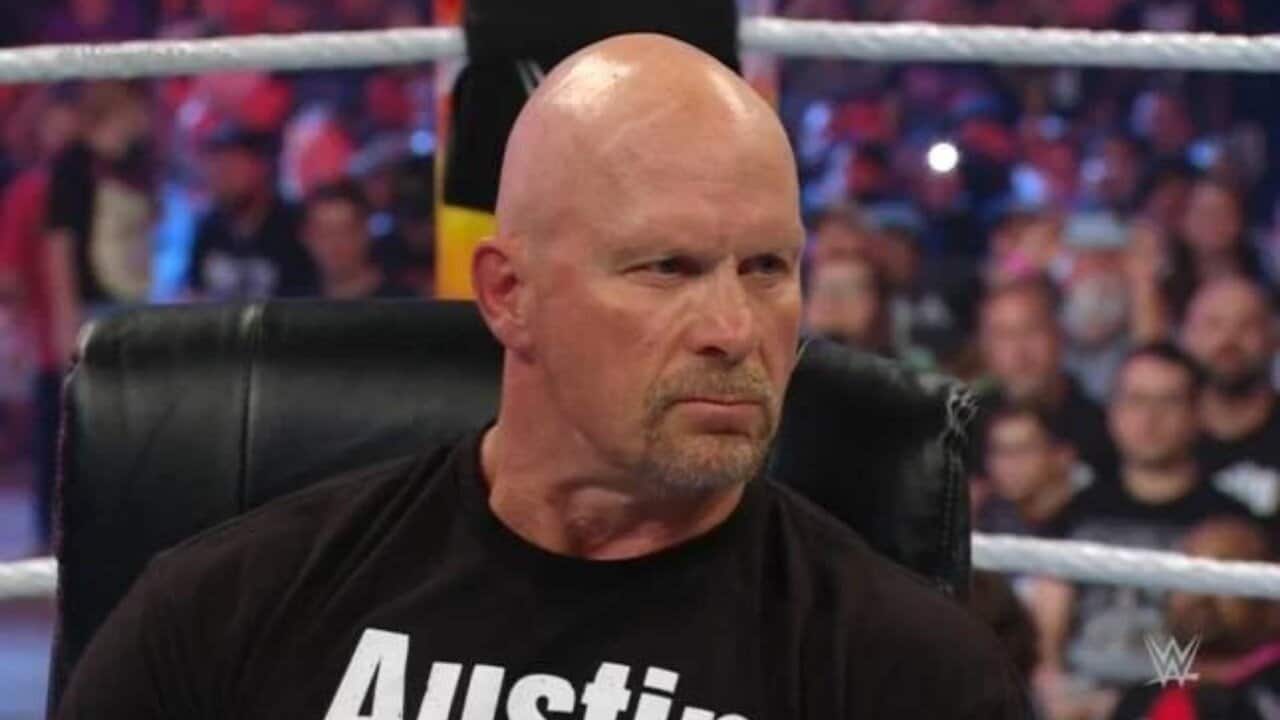
On the morning of June 10, 2002, the script for Monday Night Raw called for a defining moment in the rise of a rookie monster. In a King of the Ring qualifying match, “The Next Big Thing” Brock Lesnar was scheduled to defeat “Stone Cold” Steve Austin. On paper, it was a passing of the torch—the biggest star of the Attitude Era elevating the future face of the company.
This singular decision sparked one of the most volatile public feuds in the history of World Wrestling Entertainment (WWE). It resulted in the company publicly burying its franchise player on live television, a merchandise crash, and a period of silence between Austin and Vince McMahon that lasted for nearly a year. The walkout of 2002 remains a complex case study in creative burnout, the protection of intellectual property, and the fragile egos that drive the wrestling business.
The Creative Rut
To understand the walkout, one must examine the environment of WWE in the spring of 2002. The “Invasion” angle had concluded, the New World Order (nWo) had been brought in and largely neutralized, and the roster had been split into two brands, Raw and SmackDown.
Steve Austin, despite being the biggest draw in the history of the industry, found himself in a creative wilderness. Following WrestleMania X8, where he defeated Scott Hall in a match that was clearly secondary to The Rock vs. Hogan, Austin grew increasingly frustrated with his positioning. He felt the creative team was suffering from burnout and that his character was being taken for granted.
Austin was placed in a feud with Ric Flair and the Big Show. While both were legends, the storylines felt repetitive to Austin. He was also dealing with mounting physical issues. His knees were deteriorating, and the neck injury that had shortened his career in 1997 was causing chronic pain and numbness. The combination of physical agony and creative dissatisfaction created a powder keg.
In various interviews years later, Austin described feeling like “the mules were pulling the wagon, but the wagon wasn’t going anywhere.” He felt that the writing team was simply “booking on the fly” rather than crafting the long-term narratives that had defined his rise to glory.
The Proposition: A Free TV Match
The tipping point arrived when the creative plans for the June 10 episode of Raw were relayed to Austin. The plan was for a King of the Ring qualifying match. It was to be the first-ever meeting between Stone Cold Steve Austin and Brock Lesnar.
Brock Lesnar was a rookie phenomenon. He had debuted the night after WrestleMania and was tearing through the roster under the guidance of Paul Heyman. WWE management, specifically Vince McMahon, viewed Lesnar as the future. They wanted to strap a rocket to him by having him defeat Austin cleanly.
When Austin received the call from Jim Ross, the Head of Talent Relations, he asked for the details. Ross informed him that he was putting over Lesnar in the qualifier.
Austin’s objection was not about losing. Throughout his career, Austin had lost matches to help elevate talent when the time was right. His objection was the context. He argued that a match between Stone Cold and Brock Lesnar was a “money match”—a pay-per-view main event that should have weeks, if not months, of buildup.
Austin believed that giving away the first encounter on free television with zero promotion was bad business. It “hot-shotted” the angle, sacrificing millions of dollars in potential revenue for a single night’s rating pop. He famously stated, “I’ll do the job, but not on free TV with no build.”
The Phone Call and the Departure
The negotiations were tense. Austin tried to reason with management, suggesting that if they wanted Lesnar to go over, they should build to it properly. However, Vince McMahon was adamant. The script was written, and the direction was set.
Feeling disrespected and believing that the company was trying to sabotage his character’s value, Austin made a snap decision. He went to the airport.
Jim Ross, who was arguably Austin’s closest friend in the company, attempted to mediate. He left voicemails and tried to get Austin to reconsider. However, Austin had shut down. He boarded a flight home to Texas, leaving the creative team in Atlanta scrambling to rewrite the entire show hours before going live.
“Taking His Ball and Going Home”
When Raw went on the air that night, Vince McMahon made a strategic decision to control the narrative. Rather than making a vague excuse for Austin’s absence or ignoring it, McMahon decided to publicly “bury” his top star.
The broadcast opened with Vince McMahon standing in the ring. In a promo that blurred the lines between character and reality, McMahon informed the audience that Stone Cold Steve Austin had walked out on them.
The line that would be repeated ad nauseam was: “Austin took his ball and went home.”
Throughout the night, the broadcast team and other wrestlers took shots at Austin. The Rock, Austin’s greatest rival, cut a promo stating that while Austin was at home, The Rock was there to entertain the fans. It was a systematic dismantling of the Stone Cold mystique. The company even stopped selling Austin merchandise at the arena, a move that cost them significant revenue but sent a clear message: nobody is bigger than the brand.
To fill the void in the bracket, Ric Flair faced Brock Lesnar. Lesnar won, continuing his ascent, but the shadow of the walkout loomed over the entire King of the Ring tournament.
The Confidential Episode
WWE did not let the issue die after Raw. They produced an episode of their magazine show, Confidential, dedicated entirely to the walkout. The episode featured interviews with Vince McMahon, Triple H, and other top stars expressing their disappointment and anger toward Austin.
This was unprecedented. Usually, contract disputes were handled behind closed doors. By airing the dirty laundry on national television, WWE turned the fanbase against Austin. Fans who had cheered him for years began to view him as a quitter. The narrative was controlled entirely by the company, as Austin remained silent in Texas, refusing to grant interviews or defend himself.
The Cold War
For months, there was zero communication between Steve Austin and WWE. Austin retreated to his ranch, spending his time hunting, drinking, and isolating himself.
During this period, Austin’s personal life also spiraled. A domestic dispute with his then-wife, Debra Marshall, led to police involvement and further negative headlines. The combination of his professional exile and personal turmoil led many to believe that the career of Stone Cold Steve Austin was over.
Vince McMahon, publicly, moved on. He pushed Brock Lesnar to the moon, culminating in Lesnar defeating The Rock at SummerSlam 2002 to become the youngest WWE Champion in history. The “Ruthless Aggression” era was in full swing, and it appeared there was no place for the Texas Rattlesnake.
The Reconciliation
The ice began to thaw in late 2002. Jim Ross, refusing to let the relationship die, continued to send “olive branches” to Austin. He sent postcards and occasional messages, not talking about business, just checking in as a friend.
Eventually, Austin realized he had made a mistake. While he still believed he was right about the business of the match—that Lesnar vs. Austin should have been a pay-per-view main event—he admitted that his method of handling it was wrong. Walking out was unprofessional.
A meeting was arranged in Houston, Texas, between Austin and Vince McMahon. According to Austin’s account on his podcast, the two men met in a hotel room. The tension was high, but the history they shared was deeper. They talked for hours, aired their grievances, and ultimately agreed to put it behind them.
Austin paid a hefty fine—reportedly $250,000—for the breach of contract, but he was reinstated.
The Final Run
Steve Austin returned to WWE at No Way Out in February 2003, defeating Eric Bischoff. The crowd reaction was deafening. It was as if he had never left.
However, the physical toll of his injuries had caught up with him. The doctors informed Austin that his neck was in critical condition and that one bad bump could leave him paralyzed. He quietly prepared for his retirement.
At WrestleMania XIX in March 2003, less than a year after the walkout, Steve Austin wrestled his final match against The Rock. Only a handful of people knew it was the end. He lost the match, finally “doing the job” on the biggest stage possible, and rode off into the sunset on his own terms.
Historical Perspective
Decades later, the 2002 walkout is viewed with more nuance. Most industry insiders, including Paul Heyman and Brock Lesnar, agree with Austin’s business assessment: throwing that match away on Raw with no buildup was a waste of a potentially record-breaking box office attraction.
However, Austin himself has repeatedly called the walkout the biggest regret of his career. He has stated that he should have gone to the arena, negotiated a different finish, or simply done business and then handled the dispute later.
The incident serves as a defining moment in the power dynamics of pro wrestling. It proved that even the biggest star in the world is replaceable in the machine of the WWE. It also highlighted the unique relationship between Vince McMahon and his top stars—a relationship that can withstand lawsuits, walkouts, and public burials, as long as there is money to be made in the reconciliation.

