


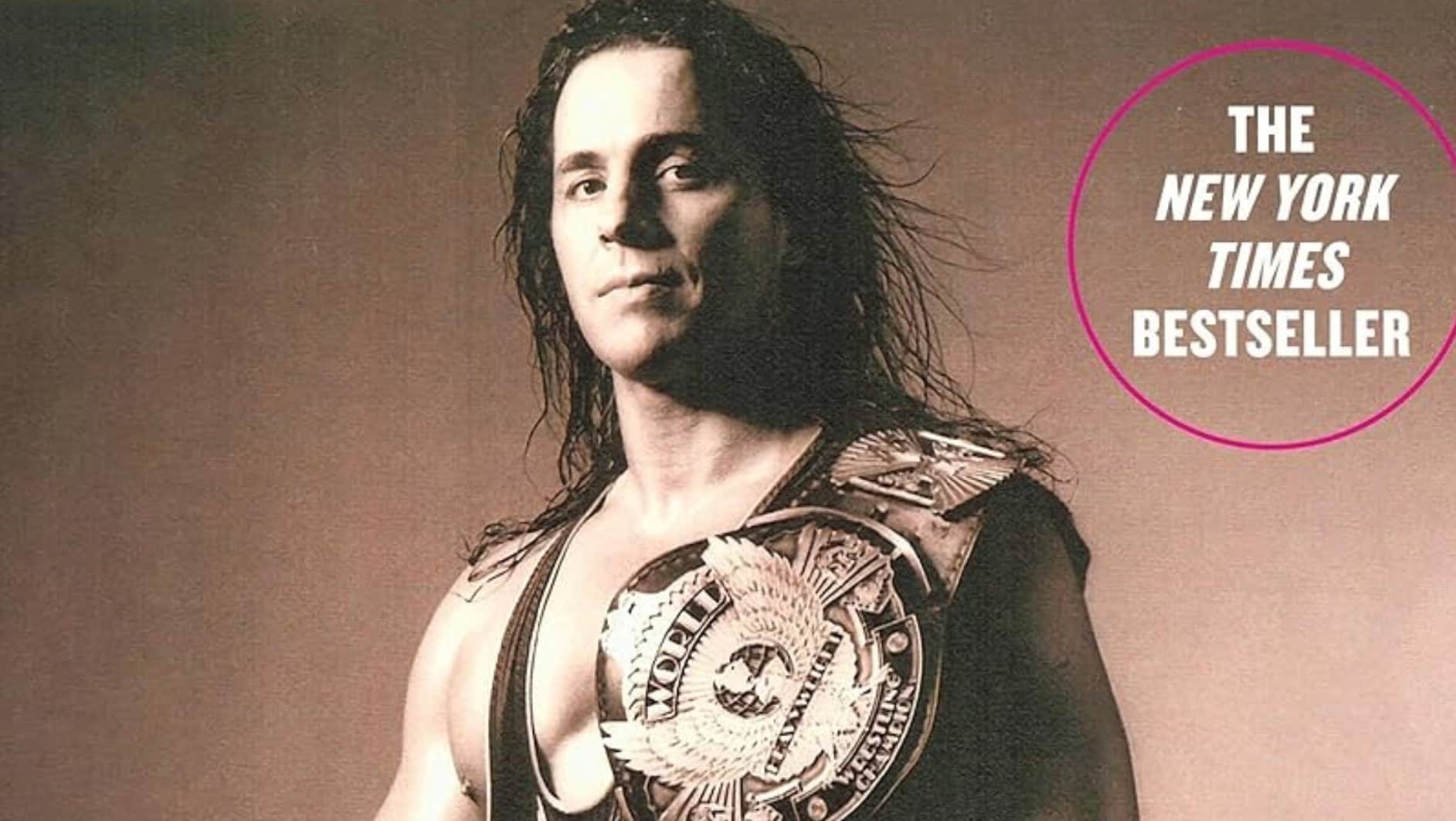
In the pantheon of professional wrestling literature, one book stands alone as the undisputed heavyweight champion of honesty, detail, and historical significance. Bret Hart’s autobiography, “Hitman: My Real Life in the Cartoon World of Wrestling,” is not merely a sports memoir; it is a meticulous, often heartbreaking historical document. Published in 2007 and constructed from decades of audio diaries Hart recorded while on the road, the 600-page tome strips away the varnish of “sports entertainment” to reveal the gritty, painful, and often absurd reality of the wrestling business. It is a story of a man born into a dynasty, who climbed to the absolute peak of his profession, only to watch the industry he loved destroy his family and his body.
Genesis: The Hart Dynasty and the Dungeon
Bret Hart’s story begins in Calgary, Alberta, where he was born the eighth of twelve children to the legendary patriarch Stu Hart and his wife, Helen. The setting for his childhood was the imposing Hart House, a twenty-one-room Victorian mansion that functioned less like a home and more like a chaotic boarding house for itinerant grapplers, circus freaks, and the massive Hart brood. At the center of this existence was “The Dungeon,” a peeling, sweat-soaked basement room where Stu Hart, a legitimate “shooter” (submission expert), tortured aspiring wrestlers to teach them the trade.
Hart describes his father with a poignant duality that defines the early chapters of the book. “My father was two different people,” Hart writes. “At an early age I began to call one of them Stu, and I was terrified of him. Dad was the father I loved.” The sounds emanating from the Dungeon were the soundtrack of Bret’s youth. He recalls, “Stu trained and broke in his wrestlers down there, hooking on like an octopus, squeezing hard enough that the screams of his victims would echo eerily through the rest of the house.”
The discipline within the Hart household was often brutal. Bret details the physical toll of his father’s temper, writing, “Too many times I limped around bruised and battered, my eyeballs red and ruptured because of his discipline. On more than a few occasions I thought I was going to die before he was done with me.” Yet, amidst the terror, there was a strange, dark comedy. Stu’s submission skills were indiscriminate. Bret vividly recounts, “I remember him stretching the daylights out of Father Roberts, the Catholic priest who baptized all the Hart kids. Father Roberts got closer to God in my father’s basement dungeon than he felt comfortable with. But Stu was non-denominational; he stretched a rabbi once too.”
The backyard of the Hart mansion was equally surreal. It was a graveyard of old Cadillacs and carnival attractions. One of the most vivid memories Bret shares involves “Terrible Ted,” a wrestling bear that lived in a cage under the back porch. Bret and his siblings would “dangle our bare feet through the slats in the porch steps and drip Fudgesicles on our toes for Ted to lick.” This casual proximity to danger—whether from bears or submission holds—conditioned Bret for the life that lay ahead.
The Territory Days: Survival and Ribs
Hart’s induction into the family business, Stampede Wrestling, was a trial by fire. He vividly describes the poverty and creativity of the territory days in Western Canada. In one memorable anecdote involving a rival wrestler named Waldo Von Erich, Hart details a prank that bordered on cruelty. Waldo stole the family’s milk cow, Daphne, sold her to a slaughterhouse, and then “generously presented Stu with a rack of beef, saying a farmer friend had given it to him.” Bret notes the grim irony: “With my dad having so many kids, he said, he wanted him to have it instead. Poor old Daphne. Some joke.”
Life on the road was perilous. The wrestlers traveled in battered vehicles through blinding blizzards, often crammed in with “giants and midgets, strongmen and freaks, packed in like sardines.” Hart writes of the camaraderie that developed in these freezing conditions, particularly with characters like “The Stomper” Archie Gouldie, whom Hart idolized. He recalls a storyline where The Stomper “attacked Stu, stomping his arm over and over until he broke it,” terrifying a young Bret until he saw Stomper at the house later, hugging his mother.
Hart’s apprenticeship eventually took him to Puerto Rico, a territory notorious for its violence and heat. There, he learned the “art of losing” and how to survive riots in arenas that lacked air conditioning but were filled with hate. He describes a match with a wrestler named King Kong, a 350-pounder who crushed him: “He did a belly flop and landed on me like a slab of concrete, knocking all the wind out of me. To him, I was just a piece of meat.” After the match, Kong thanked him, and Bret smiled back, thinking, “Fuck you, fatso. It was all part of paying my dues.”
The Anvil and the Dynamite Kid
Two figures loom large in Hart’s development: Jim “The Anvil” Neidhart and Tom “Dynamite Kid” Billington. Neidhart, a former NFL player who would eventually marry Bret’s sister Ellie, provided comic relief amidst the brutality. Hart shares a hilarious story of Stu smelling marijuana on the tour bus. When Stu shouted, “Who the hell is burning tea leaves?”, Neidhart naively confessed to smoking “a small amount… to relax.” The result was predictable: “The next day we heard poor Jim, as big as he was, screaming for his life down in the dungeon. It was a good thing Stu liked him!”
The Dynamite Kid serves as a darker counterpoint. Hart revered Dynamite’s in-ring genius—citing him as the best worker he ever saw—but was appalled by his cruelty outside the ring. In one disturbing incident, Hart describes trying to “blade” (cut his forehead with a razor) during a match to add drama, only for Dynamite to intentionally kick him in the face mid-act. Hart writes, “I finally realized that Tom was intentionally stiffing me when he intentionally soccer-kicked me in the face just as I was cutting myself. The kick alone was bad enough, but because of the blade, he could have severely injured me. I still can’t think of anything more unprofessional.”
Entering the WWF: The Pink and Black
When Stu Hart sold his territory to Vince McMahon in 1984, Bret made the transition to the World Wrestling Federation (WWF). It was a culture shock. McMahon saw him as a mid-card talent and pitched a gimmick Hart found laughable: “Cowboy Bret Hart.” McMahon enthused, “Can you imagine that? We’ll sell the action figure with the horse in the same box! It’ll be great!” Hart, despite being a Calgary native, flatly rejected it: “I told him I was sorry, but I couldn’t even ride a horse and, where I come from, if you called yourself a cowboy, you’d better be one.”
Instead, Hart proposed turning heel and teaming with Neidhart. Thus, the “Hart Foundation” was born. It was during this period that Hart adopted his signature look, including the mirrored sunglasses, which he initially wore to hide his nervousness during interviews because his “eyes darted every which way.” He also coined his immortal catchphrase during a segment on the talk show Tuesday Night Titans: “We’re the best there is, best there was, and the best there ever will be!”
The Rise of the Hitman
Hart details his slow climb up the card, battling backstage politics and the “muscleman” culture of the 1980s. He writes with immense pride about his technical prowess, distinguishing himself from the “limited” performers like Hulk Hogan and The Ultimate Warrior who dominated the main events. He viewed himself as a craftsman in a land of giants.
His first Intercontinental Title victory against Mr. Perfect (Curt Hennig) at SummerSlam 1991 is described as a masterpiece of storytelling. Hart writes of the finish: “I kicked out… grabbed his leg and locked on the sharpshooter… Before I could even hold the pose long enough for Perfect to submit properly, Hebner rang the bell.” He celebrated in the ring with his parents, a moment of pure vindication. “I’d never seen my mom this happy,” he writes. “It was as though she’d finally made peace with the darn wrestling business.”
However, the road to the World Title was blocked by the immense shadow of Hulk Hogan. Hart’s disdain for Hogan is a recurring theme throughout the memoir. He recounts the political maneuvering at WrestleMania IX, where he lost the title to Yokozuna, only for Hogan to immediately enter the ring and win it in an impromptu match. Hart felt betrayed, having been told Hogan would return the favor later. When Hogan eventually refused to drop the title to Hart, claiming Hart wasn’t in his “league,” Bret confronted him in the locker room. “I looked my old friend in the eye and said, ‘Terry, you told me at WrestleMania IX that you’d be happy to return the favor… You’re not in my league. On behalf of myself, my family and most of the boys in the dressing room, you can go fuck yourself.'”
The Brother vs. Brother Saga
One of the book’s most emotional narrative arcs is the feud between Bret and his younger brother, Owen Hart. In 1994, the WWF decided to pit the brothers against each other, a storyline Bret was hesitant about until he realized it was the best way to elevate Owen’s career. Bret describes how they meticulously planned their opening match at WrestleMania X to steal the show. “I kept repeating to myself, Keep Owen heel. He and I clicked perfectly. He played the nasty little brother, cheating viciously at every turn.”
The match is widely regarded as a classic, but for Bret, it was a labor of love designed to make his brother a star. “I’d carried him as far as possible, and now Davey [Boy Smith] too… The torch had been passed.” He writes with deep affection about Owen’s talent and their bond on the road, sharing lighter moments like prank-calling their father Stu. In one instance, Owen called Stu pretending to be a rival promoter named Reg, enraging the old man until he slammed the phone down. Stu later told Bret, “That was Owen. The little bastard got me!” The love between the brothers serves as the emotional anchor of the book, making the tragedies to come all the more devastating.
The Clique and the Shift in Culture
By the mid-90s, the locker room culture shifted with the rise of “The Clique”—a powerful backstage faction consisting of Shawn Michaels, Kevin Nash, Scott Hall, Sean Waltman, and Triple H. Hart viewed them as a cancer in the company, prioritizing their own spots over the health of the business and the well-being of other wrestlers. He writes, “Shawn, Razor and Nash talked to me in Hamburg about the idea of forming a clique of top guys who strictly took care of their own… I told them I’d think about it, but I never did.”
The animosity with Shawn Michaels became personal and venomous. Hart describes Michaels as “a phony, a liar and a hairless yellow dog.” This tension exploded in a dressing room fight in June 1997. Hart details the confrontation: “I popped him on the chin… and pulled a handful of hair out of his head.” The fight was broken up, but the lines were drawn.
The Montreal Screwjob
The memoir provides the definitive, minute-by-minute account of the “Montreal Screwjob” at Survivor Series 1997. Hart, the WWF Champion, was leaving for rival company WCW but refused to lose the title to Michaels in Canada, citing creative control in his contract. He details the assurance Vince McMahon gave him: “You don’t even have to drop the belt if you don’t want to… I’ll never give you a reason to ever want to leave.”
During the match, however, the betrayal unfolded. As Michaels applied Hart’s own hold, the Sharpshooter, McMahon ordered the referee to ring the bell despite Hart never tapping out. Hart describes the immediate realization: “I saw Vince… standing at the ring apron… Then he screamed at the bell ringer… ‘Ring the bell! Ring the fucking bell!'” Hart writes, “I couldn’t believe Earl [the referee] fucked me. It felt like all the blood in my veins had just evaporated.”
The aftermath was violent and legendary. Hart went to the locker room and confronted McMahon. “I’ve told you nothin’ but lies all week, all fucking year!” Hart shouted. “After fourteen years, you just couldn’t let me leave with my head up?” He then punched McMahon. Hart writes with clinical precision about the blow: “I would find out later that my punch lifted him high enough off the ground that when he came down he rolled his ankle and nearly broke it.”
WCW and the Death of Owen Hart
Hart’s tenure in World Championship Wrestling (WCW) is depicted as a miserable period of creative incompetence. He felt like a “whore,” collecting massive paychecks while the company wasted his talent on nonsensical storylines, such as monster truck battles. However, professional frustration paled in comparison to the personal tragedy of May 1999.
Hart writes agonizingly about the death of Owen, who fell 78 feet from the rafters during a botched stunt at a WWF pay-per-view. Bret received the news on a plane. “Carlo didn’t have the facts yet, but all he knew for sure was that Owen was gone.” He describes the “blackest day” and the “ghastly” scene in Kansas City where he inspected the rigging that failed, writing, “This is the worst thing to ever happen in the business, to the nicest guy who was ever in the business.”
The tragedy fractured the Hart family irrevocably. Bret supported Owen’s widow, Martha, in her lawsuit against the WWF, while other siblings sided with Vince McMahon, hoping for jobs or settlements. He recalls a screaming match with his sisters Ellie and Diana that severed their relationships: “If you two think for one minute that you’re going to use Owen’s death to get your husbands jobs… I will never, ever talk to either of you ever again!”
The End of the Road
Hart’s career ended not with a bang, but with a concussion. During a match with Bill Goldberg in WCW, he received a stiff kick to the head that ended his career. “I felt like someone chopped me with a hockey stick,” he writes. “I lay there not moving. I couldn’t help but think, This must be what you see in the seconds before you die.” He wrestled for weeks afterward, unaware of the severity of the injury, until doctors told him his career was over.
Post-retirement brought further hardship. In 2002, Hart suffered a massive stroke after a bicycle accident, leaving him paralyzed on his left side. He details the humiliation and struggle of recovery, weeping as nurses bathed him. “I started out not being able to lift a finger… I couldn’t dress myself, feed myself or wash myself.”
Yet, the book ends on a note of resilience. Hart describes a chance meeting with Muhammad Ali during his recovery. “Ali squeezed my hand hard and long and smiled as he looked deep into my eyes. The look said, Here I am, a fellow fighter also battling a challenge greater than any I ever faced in the ring.”
In the final chapters, Hart buries his father, Stu, and realizes, “this was the day that wrestling truly died for me.” He concludes by reflecting on his legacy, asserting his pride in his safety record and technical skill: “I never injured another wrestler to the point that he couldn’t work the next day.” He signs off as a survivor, characterizing himself as a “polar bear” moving ever forward, battered but still standing.
Review: ★★★★★ (5/5 Stars)
“Hitman: My Real Life in the Cartoon World of Wrestling” is a masterpiece of the genre. Unlike many wrestling biographies that feel ghostwritten or self-serving, Hart’s voice is distinct, intelligent, and relentlessly honest. The use of his audio diaries allows for a level of detail—conversations, dates, emotions—that makes the reader feel present in the locker rooms and rental cars of the past. It is a dense, emotional read that serves as both a history of the business and a cautionary tale about the cost of fame.
How to Get the Book in 2026
- Physical Copies: The book is widely available in trade paperback and hardcover. You can find new and used copies on Amazon, Barnes & Noble, AbeBooks, and ThriftBooks. Prices for used copies often start as low as $8.00.
- Digital Editions: The e-book is available for immediate download on Amazon Kindle ($11.99), Apple Books, Google Play, and eBooks.com ($17.99).
- Audiobook: In late 2025, a special unabridged audiobook edition narrated by Bret Hart himself was released. It spans approximately 24 hours and can be purchased on Audible (1 credit or ~$44.99) and via Hachette Audio.
- Signed Copies: Bret Hart frequently sells autographed copies of his book through his official website, brethart.com, and at personal appearances. These typically retail for around $100.00 USD.

