


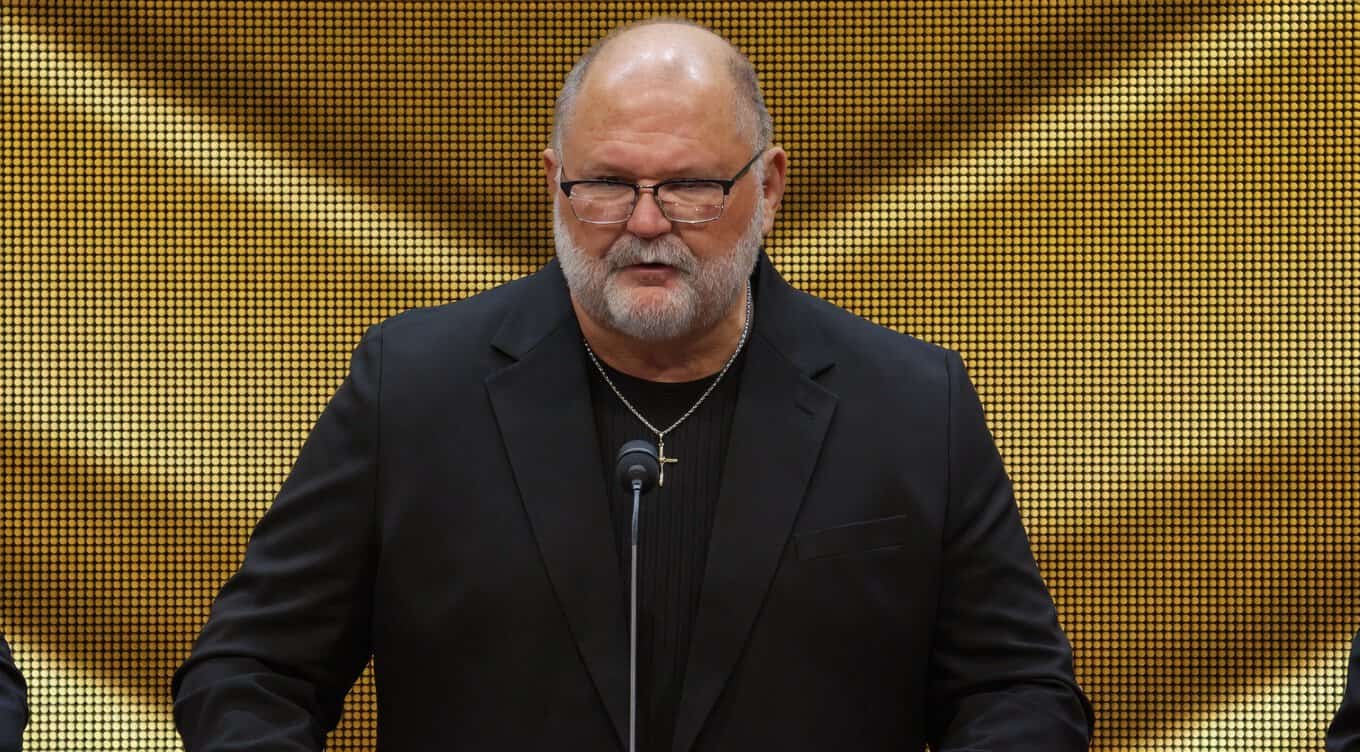
Arn Anderson says he is in favor of anything that makes an audience wonder whether what they just saw was real, and that who wins is the least important thing on the card.
The work shoot promo started becoming a regular tool in the late 1990s, and Anderson was asked on ARN whether he thought it was good business or a mistake to blur the line deliberately.
“I like anything that’s believable. Anything that makes you go, well, hey, wait a minute, I thought this was just entertainment,” he said. “He really hit him. He crossed the line on that. You shouldn’t have said that. Anything that gets reality plugged into it, and you almost believe in it, and then not, and then okay, well, shoot, I don’t know.”
Anderson was a Horseman through the period when the business was at its most protected, and the group itself worked on the principle he is describing. The Horsemen were presented as men who genuinely ran together, travelled together and spent the money together, and the act held because audiences were not entirely sure where the character stopped.
His test is whether it leaves the viewer asking anything at all.
“You’re asking questions. That did something good,” Anderson said.
Told that the curtain has been pulled back so far now that anything making people question what is real counts as a win, he agreed and went further.
“Of course it is. It’s more important than who won and who should have won, or was he supposed to win,” Anderson said. “That’s the least important thing.”
He had one instruction for the audience alongside it.
“Watch it close, and make sure that you make the wrestlers earn your respect, because they can’t see through your work,” he said. “That’s the ones that notoriously get over and stay over.”
The position is not an obvious one for him to hold. Anderson spent his career protecting the business at a time when acknowledging any of it on television was close to forbidden, in a territory system where wrestlers who broke character in public could lose their bookings. The work shoot did the opposite. It took the thing the business had spent decades hiding and made it the hook.
What he is describing as the goal is closer to the old system than the new one, though. The territories worked because audiences were not sure, and the work shoot was an attempt to get that uncertainty back after it had gone. Anderson’s argument is that the uncertainty was always the product, and that the result of the match was never it.
The tool he is talking about became standard after CM Punk’s promo on Raw in 2011, which is the one everybody reaches for, though the technique predates it by more than a decade. What changed since is that audiences now expect it. A wrestler stepping outside the story to say something that sounds real is a recognized move rather than a rupture, which is why Anderson frames the win as getting somebody to ask the question at all rather than getting them to believe the answer.
The line about making wrestlers earn respect is the part aimed at the audience rather than the business. His position is that a crowd that gives its reaction away cheaply gets a worse product, and that the acts who last are the ones who had to work for it.
Anderson is a WWE Hall of Famer, founded the Four Horsemen with Ric Flair and worked as a producer for WWE and later AEW. He hosts ARN with Paul Bromwell.
https://www.youtube.com/watch?v=D6hIctKR26g