


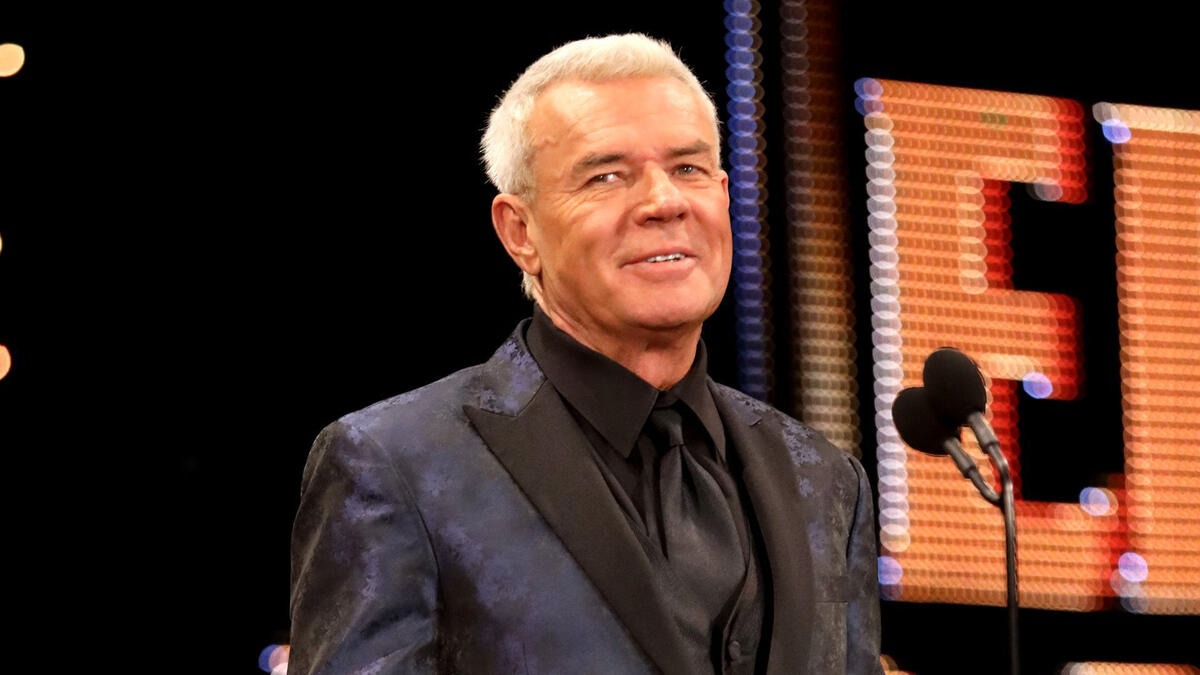
On a recent episode of the 83 Weeks podcast, Eric Bischoff and Conrad Thompson discussed the perception of WWE as a politically aligned organization. Thompson initiated the conversation by noting the public positioning of the brand in relation to modern political movements.
“I don’t see what a big deal it was. What CNN posted, WWE, top officials are on TV with the President and the Republican Party. What’s the difference?” Thompson asked. He further elaborated, “I do think just politics and wrestling are just bad, you know, like when, when Linda was in Trump’s cabinet, and I guess she still is, I don’t know. And I know that Triple H is there as some sort of fitness component. You know, when you’re seeing photos of Triple H in the White House, if you oppose that administration, now, you’re more inclined to jump online and say, ‘Oh, WWE, is this or that?’ And I don’t think that’s necessarily what any corporation should want, in my opinion, like you want to be all things to all people, especially if you’re an entertainment brand… for better or worse, it has become positioned Eric that, hey, WWE is the MAGA company”.
Bischoff responded by challenging the “MAGA company” label, citing the diversity of WWE’s content and its role in mainstreaming international talent.
Bischoff said, “I mean, isn’t the fact that it was WWE who introduced Bad Bunny to the mainstream American audience in a bigger way than anybody outside the music industry? How can we say that? How can we arrive at the conclusion that WWE is one way, when, in fact, they’re giving both sides of the equation. Great entertainment, yes, if all they would do is book, you know, hardcore conservative country acts like, yeah, yeah, but that’s not the case. They’re not doing that…I think people are trying to make more out of this, because it’s good commentary, it’s good clickbait, it’s great podcast conversation. I think it’s just a lot of freaking cheap noise. Cheap heat in wrestling, which is why it’s considered cheap heat, because it’s so freaking easy to get it has no value. This is kind of like cheap content, and I think the internet wrestling community is creating it because now they have something new to fight about and make fun of each other and accuse each other of horrific things. Now we can do that and talk about wrestling at the same time. That’s where all this is. I think it’s a sad commentary.”
Bischoff also recalled his 2017 TEDx talk, where he analyzed the parallels between political communication and professional wrestling narratives. He expressed concern over the increasing crossover between the two fields.
“I just think that, look, news the point of that TED talk,” Bischoff explained. “And I encourage people to go back and look at it. It was all about how politics has become more professional wrestling than professional wrestling. It’s probably one of the reasons I’m so animated about this. I don’t want to see that. I don’t want to see politics become more like professional wrestling, and I certainly don’t want professional wrestling to feel more like politics from anybody’s freaking point of view, even with someone that agrees with everything that I think. I don’t want that person interfering with my entertainment, you’re killing it. You’re taking away the fun. Don’t take away the fun”.
Bischoff concluded by emphasizing that professional wrestling should serve as an escape for its audience. He argued that political interference in entertainment products alienates large segments of the fan base and diminishes the overall quality of the product. He maintained that entertainment brands should prioritize universal appeal over political engagement to remain successful in the long term.
If you use quotes from this article, please credit the source and include a h/t to WrestlingNews.co for the transcription.

