


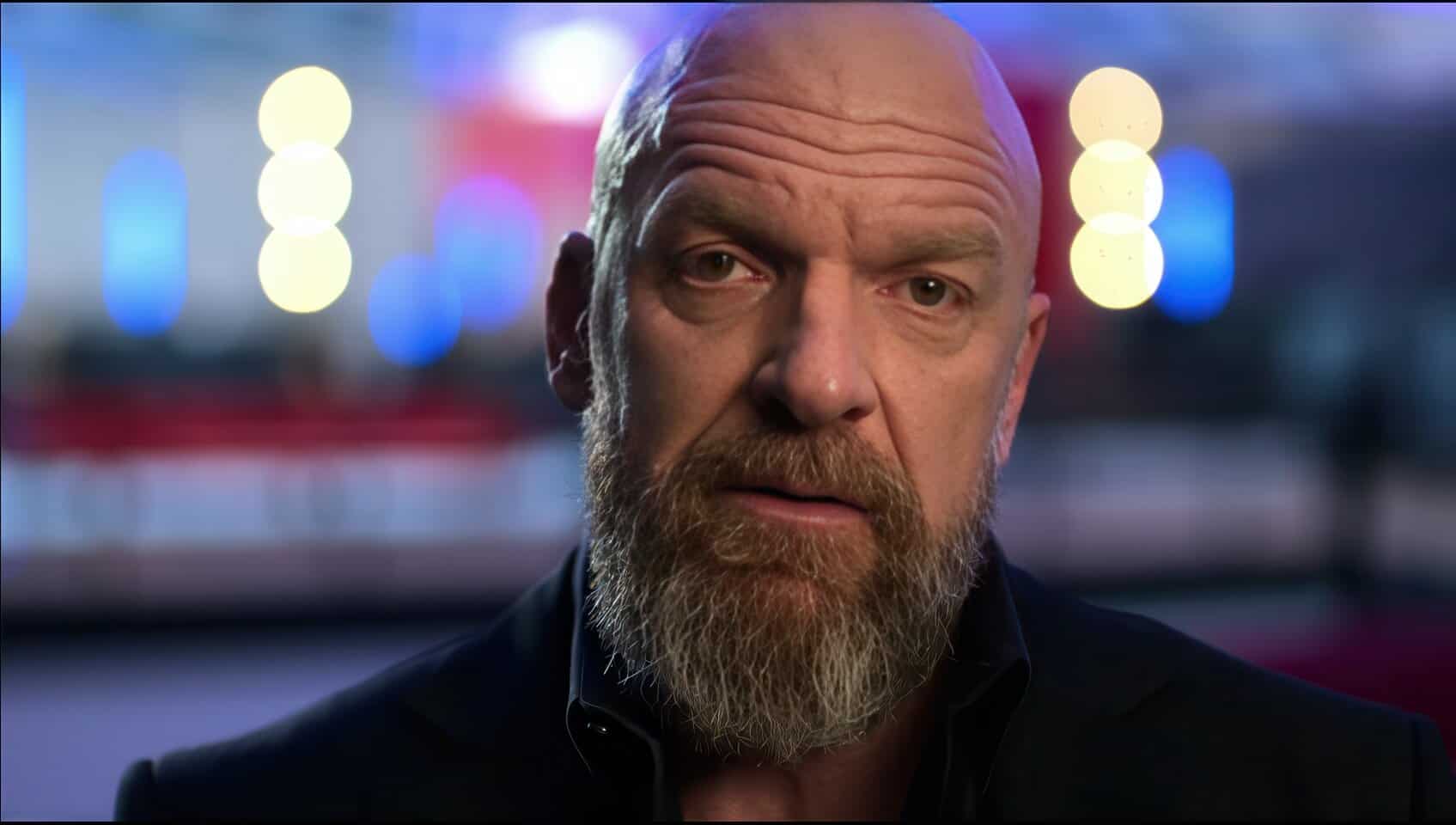
Maven Huffman has laid out the full story behind why he so often takes shots at Triple H, and his answer, shared in his latest YouTube video, is more complicated than a simple grudge.
Huffman, who won the first season of WWE’s Tough Enough and spent the next several years on the main roster, has been openly critical of Triple H in his commentary work since leaving the company. In the video he set out to explain where that criticism comes from, and the picture he painted was far from one-sided, mixing genuine gratitude with lingering hurt over how his run played out.
The Tough Enough Season 1 winner said the version of Triple H he met once he reached the main roster bore little resemblance to the intimidating figure from the reality competition. “the Triple H that I was now colleagues with was 180 degrees different than the man who made sure we were all in the wrestling business for the right reasons,” Huffman said. He described that Triple H as engaging and disarming, said he congratulated him on winning Tough Enough, and credited him with providing his first ever pair of wrestling boots, a gift he read as a vote of confidence. “I felt like he was in my corner,” Huffman said.
The backing carried into the ring. Huffman recalled tagging with Triple H against The Undertaker and Kurt Angle in a Smackdown main event early in his run, and said the veteran calmed his nerves and never pushed him past his comfort zone. He also told a lighter story: before the faction that became Evolution debuted, Huffman pitched Triple H a name for it, “the Regulators.” Triple H passed politely, saying they already had a name, and thanked him anyway. Huffman was candid that his steady stream of questions in those days was not purely about craft, admitting there was some “brown nosing” involved because he knew Triple H “had the keys to the kingdom.” He was also quick to compliment the man’s personality. “The man is funny, he has a quick wit, he’s great with one liners, and he has a very big sense of humor, not many things offend him, and he is definitely one to be in on the joke, and many times be the one providing the joke,” Huffman said.
The relationship, by Huffman’s telling, cooled over time. He said Triple H began making comments, backstage and on television, that seemed designed to remind him of his place. The bigger blow, he said, came years after his WWE run ended, when someone who had been in production meetings told him his suspicions were correct. Huffman presented what follows as his own account rather than confirmed fact. “every time my name was brought up it was quickly squashed back down, and who was the one doing the squashing? None other than Triple H,” he said. “if people thought, hey, here’s a good idea, here’s a good direction that we can send Maven on, here’s something that we think he can find success doing, it would quickly be diminished.”
Huffman was careful not to use the story as an excuse, conceding he genuinely was not ready at the time. “I, in no way, shape, or form, blame Triple H for my career arc, but it just does hurt sometimes, knowing that he indeed was weighing in, and weighing in not on my behalf,” he said.
He also revisited locker-room chatter from the era, including talk that Triple H’s relationship with Stephanie McMahon was “convenient” given that her father owned the company. Huffman stressed he could not speak to anyone’s feelings and was only relaying what wrestlers said at the time. As an example of the era’s dynamics, he recounted being among the talent effectively required to attend Triple H’s bachelor party at a North Carolina strip club, with the company scheduling everyone’s return flights for the next day so no one could skip it. By Huffman’s account, Triple H himself showed up only for the final 20 minutes.
As of publication, Huffman said the bitterness is long gone, describing the handful of encounters they have had since his departure as cordial and friendly.
Turning to Triple H’s present role as WWE Chief Content Officer, Huffman called the run “a mixed bag.” On the positive side, he credited Triple H with giving talent freedom to build their own brands, opening the company up to working with outfits like TNA, treating entrances as an integral part of characters, fostering a less toxic backstage culture with more attention to mental health, and giving wrestlers more time to tell stories in the ring.
His criticisms were equally pointed. Huffman argued that today’s matches are over-rehearsed. “It looks more like a dance than a wrestling match, and it breaks Al Snow’s number one rule: this is a fight. Well, no part of wrestling looks like a fight anymore. It all looks pre-rehearsed,” he said. He also said the volume of advertising had gotten out of control. His central complaint, though, was energy. Huffman said his biggest critique of the Triple H era is “the overall lack of excitement,” contrasting it with the appointment viewing of the Monday Night Wars. “I remember during the Monday Night Wars, it was unthinkable to miss Monday Night Raw, and everybody was out the next day regurgitating Stone Cold Steve Austin’s lines, or asking, did you see that promo, the rock cut?” he said. He said the opposite is true now: “Today, it’s very easy, and sometimes preferable to miss wrestling altogether.”
For all the criticism, Huffman ended on a supportive note. “the truth is, I pull for Triple H. I want Triple H to be successful, both in wrestling and in his personal life. He did make me a better in-ring wrestler, while also making his presence known backstage,” he said.