


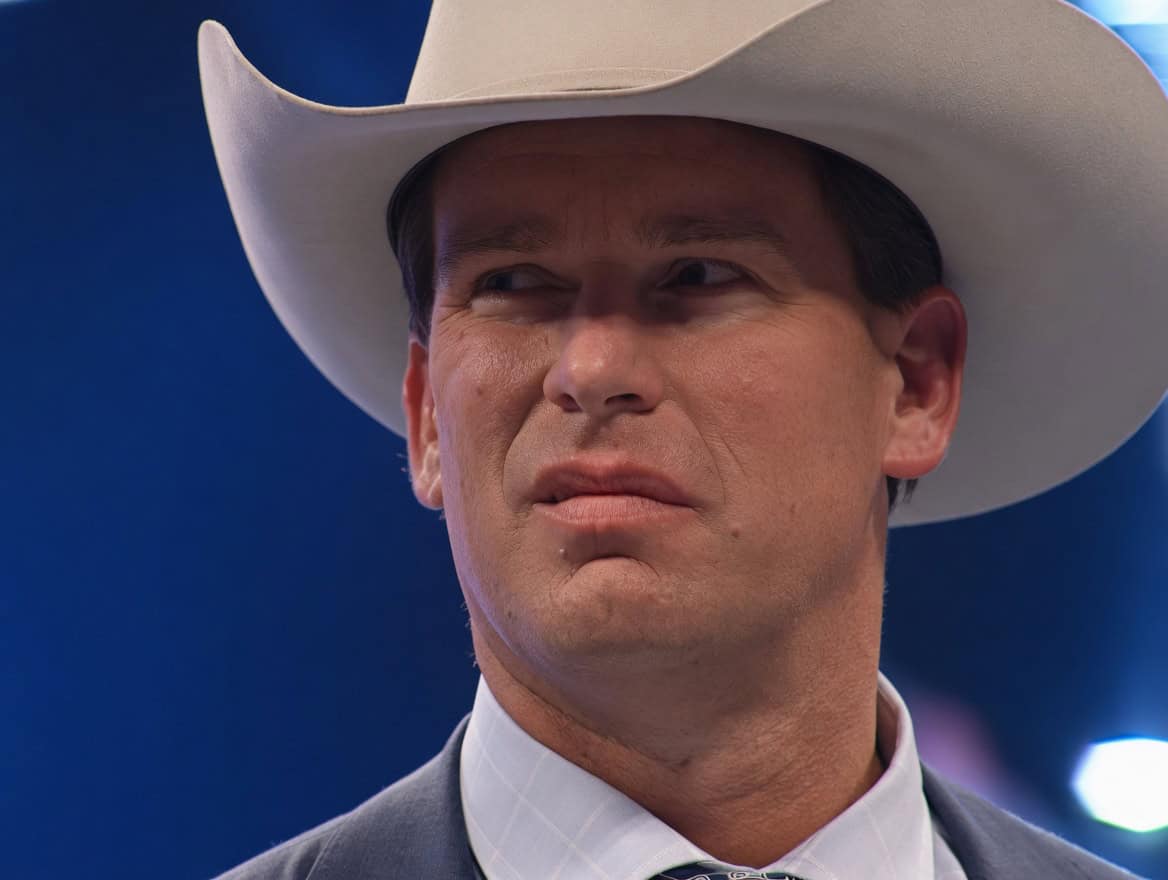
JBL says MJF’s belief is too high, but that the underlying advice is sound, and the reason has less to do with veterans being untrustworthy than with young wrestlers asking the wrong people.
MJF said ahead of All In that 99 percent of veterans in a locker room do not have a younger wrestler’s best interests at heart. Asked about it on Something to Wrestle With, where he was in for Bruce Prichard alongside Conrad Thompson, JBL started by noting the reality of the situation.
“You’ve got to know who to trust, and absolutely, there is going to be some guys that don’t have your best interest at heart. And also you don’t want to ask a bunch of people anyway,” JBL said.
He put the number lower. “I don’t know if it’s 99 percent. I think that seems a little bit high,” he said.
The story he keeps coming back to is one he was told early, in Japan.
“Buddy Landel comes up to me and says, hey, can I talk to you? I said, yeah. He goes, do you know when you’ve had a good match? I said, well, I think so,” JBL said. “And he said, then why, when you come back, do you look like a total mark and go ask everybody in the dressing room, did they see your match? And I had no answer. And he said, find you one or two people you trust. That’s it. And don’t go around asking.”
JBL said the reason most wrestlers ask is not what they think it is.
“Most guys, when they come back, they really don’t want advice. They really don’t want your feedback on how your match was. All they want to do is be put over,” he said. “Oh, you’re terrific, you’re great. That’s normal. That’s human nature.”
He was blunt about why the business is not built for open collaboration.
“This is not a kumbaya industry. It shouldn’t be. It should be that you’re trying to get over,” JBL said. He added that veterans do give good advice when it serves the company, because talent drawing money means everyone draws money.
What he does not have time for is the version he sees now.
“I watch these guys come back now, and it’s unbelievable. I sit there and watch whoever’s there at Gorilla position. They come back and they look at them. They want to be given a thumbs up, and oh, you’re wonderful, wonderful, so they can go back,” he said. “It’s one of the silliest things I’ve ever seen. I guess they need reassurance. I don’t know if it’s a sign of the new times.”
His conclusion landed close to MJF’s, by a different route.
“I think what MJF is saying is actually pretty good advice,” JBL said. “I don’t think that there’s a lot of people that try to undercut people. I think it’s just a bad idea to ask.”
He said the people he went to over his career were a small group he was close to, chosen for that reason rather than seniority, and that not knowing someone well is itself the reason not to ask them.
Buddy Landel, the man who gave JBL the advice, worked the NWA and WCW through the 1980s and 1990s and was in Japan on the same tour JBL is describing. He died in 2015.
Eric Bischoff addressed the same comments on 83 Weeks, putting the figure closer to 50 or 60 percent and using Bill Goldberg’s early WCW run as an example of veterans crowding a rising star with advice that also happened to suit them. Between the three of them, MJF’s 99 percent is the outlier. Bischoff put it at 50 or 60, and JBL took the number out of the argument entirely and said the problem is the asking rather than the answering.
MJF made the comments to Bleacher Report ahead of All In: London, where he entered the Casino Gauntlet second and did not win it. Andrade El Idolo took the match to earn a future AEW World Championship shot.