


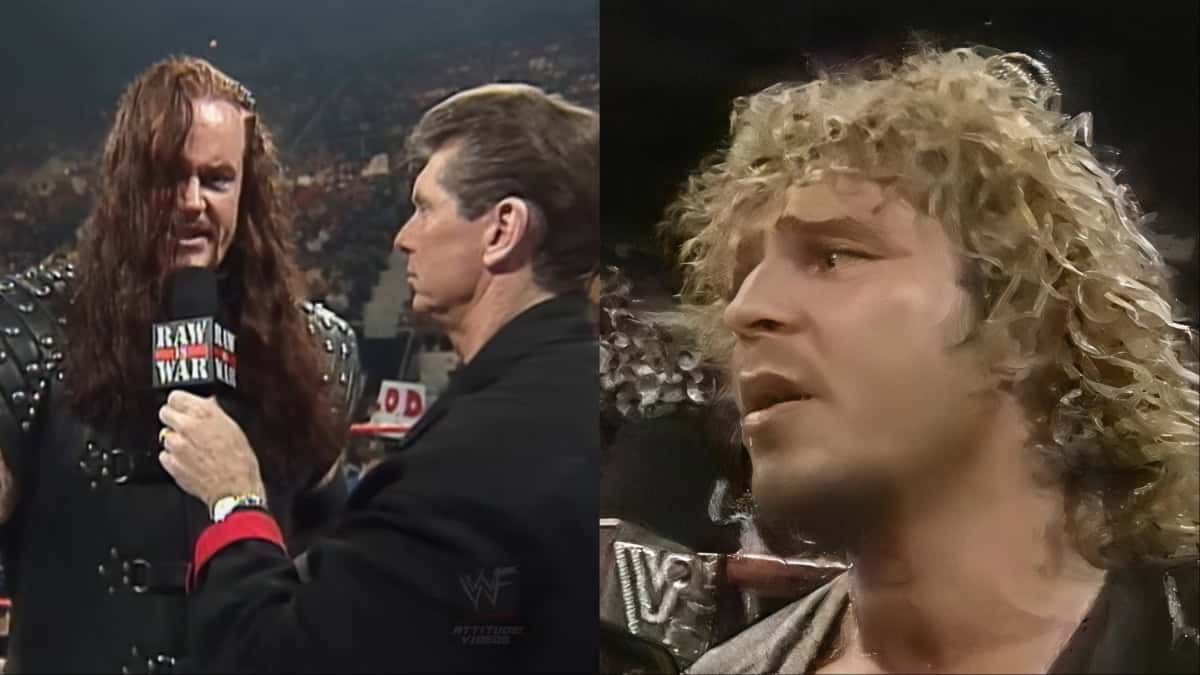
The late Brian Pillman, known for the volatile “Loose Cannon” persona, presented a challenging presence in every wrestling environment he was part of. A reported claim originating from Pillman’s biography suggested that Pillman viewed The Undertaker (Mark Calaway) as a “want to be tough guy” and held no respect for the long-time WWF veteran.
This reported disagreement between Pillman and the authority-figure Undertaker—who served as the primary “Voice of Reason” in the WWF locker room—represents an ideological conflict between two distinct professional viewpoints in 1990s wrestling. The claim, addressed on The Jim Cornette Experience, prompted wrestling historian Jim Cornette to analyze the factors that may have influenced Pillman’s perspective, linking it to the historical presentation of both performers.
The Source of Contention: Authenticity and Locker Room Status
The tension centered on the perception of toughness within the wrestling fraternity of that decade. The Undertaker, by seniority, size, and loyalty, held status as a locker room leader, commanding respect and leading the Bone Street Krew (BSK). Pillman, conversely, had an athletic background in football and was known for deliberately creating conflict that blurred the lines between wrestling and reality.
Cornette, though not specifically recalling the exact passage from the Pillman book, addressed the viability of Pillman’s assessment, linking it to the way Pillman was initially presented to the locker room.
“I don’t know whether he thought I want to be tough guy because [The Undertaker]… is a tough guy, but so was Brian Pillman,” Cornette stated on The Jim Cornette Experience. “And I can see that maybe Brian thought and maybe with validity, because a lot of guys, when they first saw Brian, they didn’t think much because he was short and he wasn’t, you know that not only that big… and also the hair, the fluffy hair, and the whole thing when he was younger, and he was flying Brian.”
Cornette noted that established wrestlers often struggled to accept Pillman’s “fluffy hairdos” and high-flying persona until they fully understood the legitimate intensity Pillman brought to his profession. Pillman’s athletic background meant he was capable of challenging others, a factor that might have been initially overlooked due to his appearance.
The Hair Dryer Incident and Early Hostility
The environment Pillman entered was often hostile, suggesting that Pillman may have developed contempt for certain figures who enforced the hazing culture. Cornette shared an incident involving Pillman’s entry into the WWF roster around 1997.
Cornette recalled that Pillman used a “hair dryer with one of… the big diffuser” for his hair. “And Brian came in one night after a fucking match, and somebody had broke it, stomped on it or whatever,” Cornette recalled.
Cornette placed this incident “before that they all really knew his story,” suggesting that such disrespect, perpetrated or allowed by those in authority, could fuel Pillman’s challenge to the tough-guy status of the established veterans.
Furthermore, Pillman and Calaway had a brief overlap in WCW around 1990 when Calaway was Mean Mark Callous. Cornette speculated that any issues between them may have been “lingering personal shit from seven years before,” indicating the basis for the conflict may predate their time in the WWF.
Paranoia, Injury, and the Clashing of Personalities
By the time Pillman joined the WWF in 1997, his career had been altered by a severe 1996 car accident, necessitating pain management and resulting in a paranoid and unstable mental state.
Cornette theorized that Pillman’s personal challenges contributed to difficult locker room interactions: “Brian’s relationships with most of the guys in the WWF at that point probably wouldn’t have been the best… if he was coming in as the old Brian who hadn’t been injured, wasn’t trying to hide shit, wasn’t paranoid about stuff, wasn’t having personal issues.”
This instability was noted by Shawn Michaels, who, in a 1999 shoot interview, discussed seeing Pillman shortly before his death in October 1997.
“I can remember that for for Minneapolis, seeing him right there in the in the locker room. And, boy, looked bad. And remember, came out after his match got into his bag, and he had beer in his bag, right? throwing some stuff down, drinking a beer, and he looked bad,” Michaels recalled. While Michaels noted he was not close with Pillman, he confirmed the volatile environment: “You can’t, you can’t tell anybody in this business [what to do].”
It is reasonable that The Undertaker, operating as the locker room steward, may have clashed with a Pillman trying to conceal his health and emotional state. Pillman may have viewed Taker’s authority or perceived judgment as a threat to his position.
The Shift in The Undertaker’s Persona
The public perception of The Undertaker in 2025 has undergone a change, which, in the context of Pillman’s claims, is noteworthy. After years of guarding the Dead Man character, Mark Calaway has become highly accessible through media, offering opinions that contrast with the mystique of The Undertaker.
Jim Cornette and Brian Last noted that this shift has resulted in audience disappointment over the loss of the character’s mysterious aura.
“It all those years, The Undertaker was a cool gimmick, and you didn’t hear the real guy talk… But now that they hear Mark Callaway, he’s not really a great stand up comedian, motivational speaker. He’s very Trumpy,” Cornette observed. “And he’s let his wife join his podcast where he looks like that fucking guy. That’s Kelly Ripa’s husband now. So you know that’s not The Undertaker. They didn’t want to know the person they wanted. Didn’t want The Undertaker to be a person, and now he’s annoying them.”
Brian Last affirmed the loss of universal appeal, stating the gimmick “should be a universally loved gimmick, almost loved dead man since Casper.” Cornette further stressed that Taker, of all figures, “should not be political.”
This modern shift—from mythical figure to accessible, opinionated personality—provides an interesting contrast to Pillman’s historical challenge to Taker’s authenticity.
Conclusion
The reported issues between Brian Pillman and The Undertaker represent a conflict between the deeply anti-authoritarian “Loose Cannon” and the established “Voice of Reason.” Pillman, who frequently tested boundaries and struggled with personal issues, likely viewed the perceived judgment and authority of The Undertaker with contempt. The claim that Pillman saw Taker as a “want to be tough guy” was likely an expression of Pillman’s disdain for Taker’s status, especially at a time when Pillman’s own physical and mental stability was compromised.
Pillman’s early death means the complete details of his feud with The Undertaker remain unverifiable. However, analyzing the extreme volatility of Pillman’s final years against Taker’s established role as the unyielding locker room authority clarifies the ideological grounds for the reported conflict between the two men.
If you use any portion of the quotes from this article please credit The Jim Cornette Experience and the 1999 Shawn Michaels Shoot Interview with a h/t to WrestlingNews.co for the transcription.

