


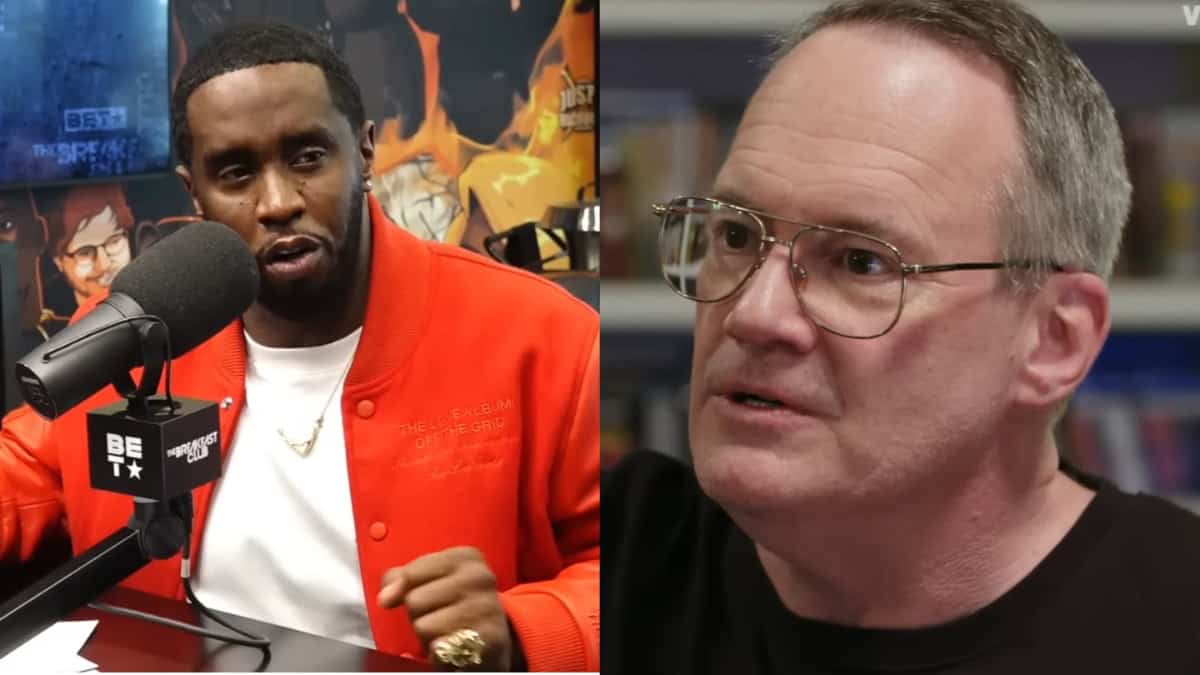
On the latest edition of “Jim Cornette’s Drive-Thru,” legendary wrestling manager and commentator Jim Cornette offered an extensive and scathing review of the Netflix documentary centered on Sean “Diddy” Combs. The discussion, which spanned the documentary’s content, Combs’ history in the music business, and his current incarceration, saw Cornette labeling the hip-hop mogul a “social climber” and a “complete maniac” who has destroyed the lives of those around him.
Initial Impressions: “A Complete Goddamn Maniac”
Cornette began his review by admitting that he went into the viewing with no preconceived notions or deep knowledge of the hip-hop figures involved. He noted that he “didn’t know who any of these goddamn people were” prior to watching the series. However, after consuming the four-part series, his assessment of Combs was damning.
“I still don’t know why he’s made this much fucking money, or why people give a shit about his fucking thoughts on fashion, or why he should have a goddamn clothing line, or a line of anything except a line of bullshit,” Cornette said.
Cornette described Combs’ trajectory as similar to that of former WWE Chairman Vince McMahon, characterizing Combs as a “social climber” who was desperate to be near “important people.” Cornette observed that once Combs acquired wealth, his behavior spiraled.
“When he got to money, he became [a] complete goddamn maniac,” Cornette stated. “Had no fucking moral compass, no goddamn restraint whatsoever, and just because people continued to give him hundreds of millions of dollars, he would buy his way out of all of the goddamn trouble that he got in in his social circle of other less than stellarly moral individuals who were all congregating around him”.
The City College Incident and A Pattern of Deflection
Cornette and Brian Last discussed the 1991 tragedy at City College of New York, where nine people died during a stampede at a celebrity basketball game promoted by Combs. Cornette viewed this early incident as establishing a lifelong pattern for Combs regarding accountability.
“He over-promoted it so they had too many people for the building, and they just all tried to burst into these and crushed each other,” Cornette recalled from the documentary. “You got to give him credit for being a promoter. But then he took… that was the start of the pattern, right? He took no responsibility and tried to duck and dodge and start blaming other people or deflecting”.
“Destruction” of Associates
One of Cornette’s primary takeaways from the documentary was the fate of the people who helped build Combs’ empire. Cornette pointed out that the friends and partners who started the record company with Combs appeared to be left with nothing.
“They interview his best friends and the people he started his record company with who look like they’ve been homeless, living under a bridge for years because he screwed all of them,” Cornette said. “Nobody’s ever heard of them. They ain’t got no money, and because he betrayed them in some fashion or another… A court stenographer couldn’t have kept track of all of these various transgressions”.
Cornette summarized the collateral damage of Combs’ career, stating, “As many heinous things as he had done to his girlfriends… all of his ex-confidants are either dead, in prison, or look like bums off the fucking street. He’s just destroyed everybody in his goddamn periphery”.
Specific mention was made of the rapper Shyne, who served prison time following a 1999 nightclub shooting involving Combs. Cornette remarked, “Everybody remembers Shyne? He used to have such a bright personality. But apparently, he took the bump, as they say, for Old Diddy because… there’s witnesses saying that Diddy shot the guy”.
The “Jack Pfeffer” of the Music Business
Cornette also critiqued Combs’ business practices and lack of musical talent. He compared Combs’ role in music videos—where he was often featured prominently despite not being the primary artist—to a wrestling personality trying to overshadow the talent.
“If he wasn’t dancing, he was driving, like, you know, he was like, mouthing the words as much as the rappers sometimes,” co-host Brian Last noted. Cornette responded by asking if Combs was “the George Gulas of the whole production,” referencing a wrestling territory figure known for being pushed despite a lack of ability.
Cornette went on to compare Combs to Jack Pfeffer, a wrestling promoter infamous for his questionable business ethics.
“He was the Jack Pfeffer of the music business,” Cornette said. “He was taking a piece of everybody’s money… That one girl was quoted as saying, ‘Oh yeah, it was a horrible contract.’ He was… that lawyer said he’s selling you fame, not fortune, and I signed it anyway”.
The Videographer and the Footage
A significant portion of the conversation revolved around how the documentary obtained intimate footage of Combs, including clips of him speaking to lawyers. Last explained that 50 Cent, an executive producer of the documentary, likely acquired the footage from a videographer Combs had hired but failed to pay.
“What I had heard was that potentially, he was paying a videographer, or he had hired a videographer to take all this footage… because he was planning something,” Last explained. “Apparently, that guy may not have been paid, and then he may have sold that footage to 50 Cent”.
Cornette found this plausible, given his assessment of Combs’ business history. “Did he fuck the videographer around?” Cornette asked, noting that it fit the narrative of Combs betraying those who worked for him.
Tupac and Biggie Smalls
The discussion touched on the unsolved murders of Tupac Shakur and The Notorious B.I.G., which were litigated in the documentary. Last mentioned the allegation that Combs had offered a million dollars to gang members to carry out a hit.
“The murder of Tupac and the murder of Biggie, and a lot of people are now pointing the finger directly at him, the guy who apparently told the gang, ‘I’ll give you a million dollars if you kill this guy and this guy,'” Last said.
Cornette’s assessment was that Combs likely had involvement but had managed to insulate himself legally. “It seems to me that… he’s guilty, but he’s covered his tracks well,” Cornette said. “When they put the pieces together, it works out well, that every time that he has an issue with somebody… they went north”.
Prison Life: “Toilet Vodka” and Rule Violations
The conversation shifted to current events, with Brian Last providing updates on Combs’ incarceration at Fort Dix. Last read from a report stating that Combs’ release date was recently extended due to rule violations.
“Sean Diddy Combs’ prison release date was recently extended by about a month… reportedly due to rule violations at Fort Dix,” Last read, citing reports of “alleged homemade alcohol consumption and unauthorized phone calls”.
Cornette seized on the detail about homemade alcohol, mocking the fall from grace for the billionaire mogul who was once synonymous with luxury.
“This motherfucker has been worth a billion dollars, and he’s been drinking all this goddamn highfalutin, the Perrier and the Dom Perignon,” Cornette said. “He’s been in jail like a fucking a year, maybe, and he’s reduced to drinking vodka out of the toilet… He was used to Cristal, and in a year he sunk to drinking toilet vodka”.
Cornette also expressed confusion over the charge of “unauthorized phone calls,” questioning the logistics of prison security.
“How can you make an unauthorized phone call from fucking jail?” Cornette asked. “If you can’t have a phone in jail, so therefore you shouldn’t be able to make unauthorized phone calls. But if you can get a phone in jail, they wouldn’t be unauthorized phone calls. They’d just be phone calls”.
Last clarified that the charges likely stemmed from having a smartphone, which is contraband. Cornette concluded, “Sounds like they need to crack down”.
No “Babyface” Turn on the Horizon
Looking to the future, Brian Last asked Cornette how Combs might attempt to rehabilitate his image upon release. “How is he going to try to Baby Face himself to the public after all this?” Last asked. “Because he’s gonna try”.
Cornette was skeptical that any redemption tour would be successful, comparing Combs unfavorably to Michael Jackson. He noted that while Jackson had a massive, entrenched fanbase and immense talent that kept people interested despite controversies, Combs lacks that foundation.
“I don’t know that anybody’s going to really think of him that fondly, and not a lot more people are going to be hopping on his bandwagon,” Cornette predicted. “It wouldn’t be like… people suddenly making the decision, ‘You know, I never really cared for Michael Jackson’s music, but son of a bitch, if it’s not starting to grow on me.’ So I think Diddy is as big as Diddy’s ever gonna be again”.
Cornette painted a grim picture of Combs’ future, predicting what he might look like in old age trying to cling to relevance.
“He’s gonna be 80 years old and he’s gonna have a surgically reconstructed, melting face, and he’s gonna be fucking breathing heavy on fucking records,” Cornette said.
Final Verdict
Despite his disdain for the subject matter and frustrations with the streaming experience—Cornette noted he had to restart the show multiple times—he ultimately gave the documentary a positive review, albeit for cynical reasons.
“I enjoyed it,” Cornette concluded. “He’s a very scummy person who deserves to have people talking badly about him, so I enjoy when that happens”.
For more of Jim Cornette’s thoughts on pop culture and professional wrestling, full episodes of the “Drive-Thru” and “The Jim Cornette Experience” are available on his official YouTube channel and podcast platforms.
If you use any portion of the quotes from this article please credit Jim Cornette and Brian Last with a h/t to WrestlingNews.co for the transcription.

