


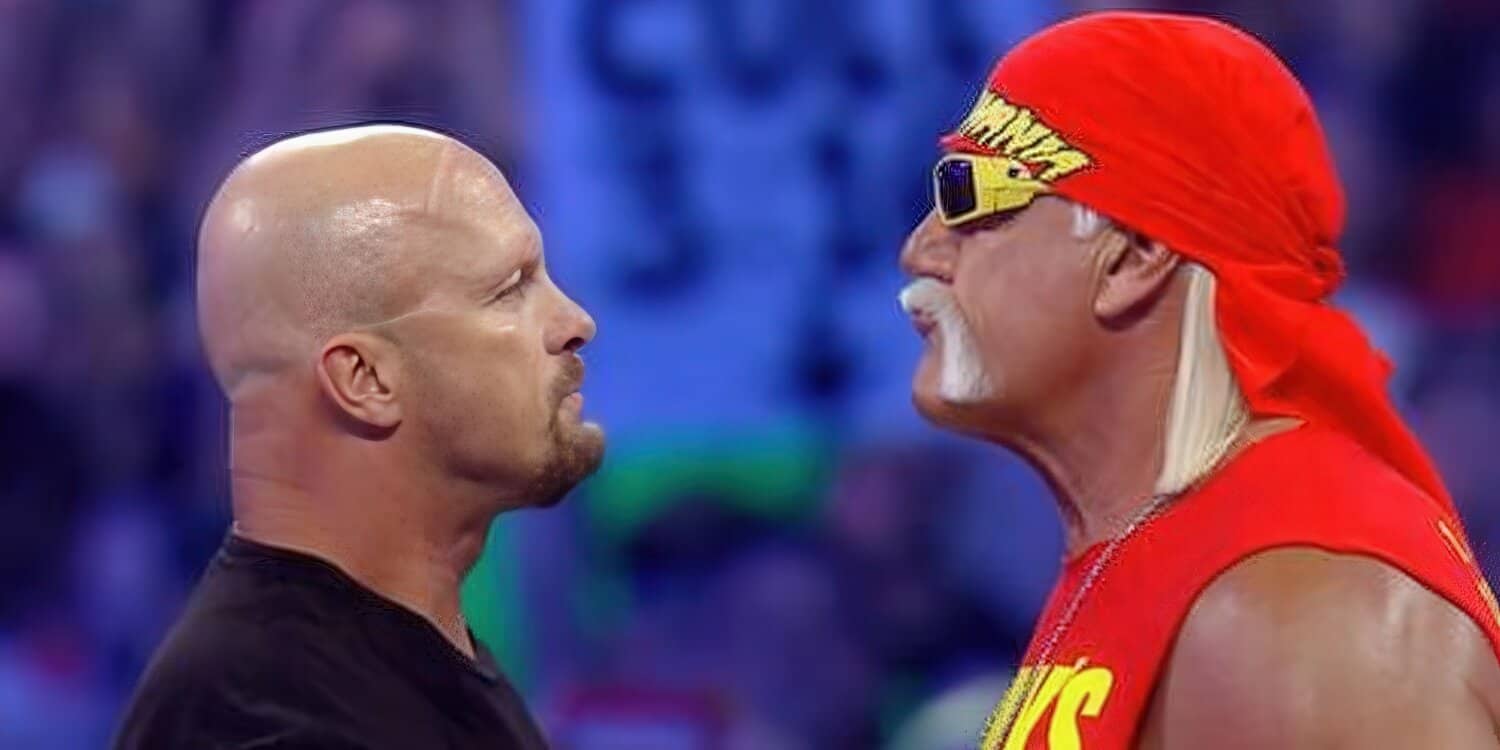
For decades, wrestling fans have debated why a “Dream Match” between the two biggest stars of their respective generations—”Stone Cold” Steve Austin and Hulk Hogan—never took place during Hogan’s final WWE runs. On the latest Grilling JR, Jim Ross provided the definitive reasoning behind the missed opportunity.
According to Ross, the primary obstacle was not the creative department, but Steve Austin’s own assessment of the potential match. Austin reportedly had concerns that their vastly different in-ring styles would not result in a high-quality performance.
“Austin didn’t want to work with [Hogan],” Ross stated. “It was wrong place at the wrong time… Steve just didn’t have a good gut feeling that they would have passable chemistry, and just to be passable wasn’t good enough for Austin”.
Ross compared Austin’s intensity to that of a professional football player, which he believed would have clashed with Hogan’s physical limitations at the time. Hogan had undergone roughly ten back surgeries by that point in his career.
“[Steve] was kind of a middle linebacker in a squared circle, and he liked to hit people, and he liked to be aggressive,” Ross explained. “We were obviously—no one thought that Hogan could maintain that on that given calendar year… Hogan should not have even been in a ring because he couldn’t get it done anymore”.
The physical toll on Hogan was evident in his main event rematch against The Rock at No Way Out in February 2003. Despite the high stakes, Ross characterized the match as a disappointment that failed to recapture the magic of their encounter at WrestleMania 18.
“Rock and Hogan situation was very disappointing,” Ross noted. “They didn’t come close to taking care of that business. And that’s very, very rare for Rock… you can only do so much for the guy that’s all crippled up, right? And that match right there kind of showed us that our investment we were making in Hogan was going to be on a part-time basis”.
The No Way Out event also featured Austin facing Eric Bischoff in a match Ross described as an “attraction” rather than a traditional contest. While the show achieved 450,000 buys, business was trending downward compared to the previous year. Ross summarized the state of the company in early 2003 as “flat” and in a state of transition.
If you use quotes from this article, please credit the source and include a h/t to WrestlingNews.co for the transcription.

