


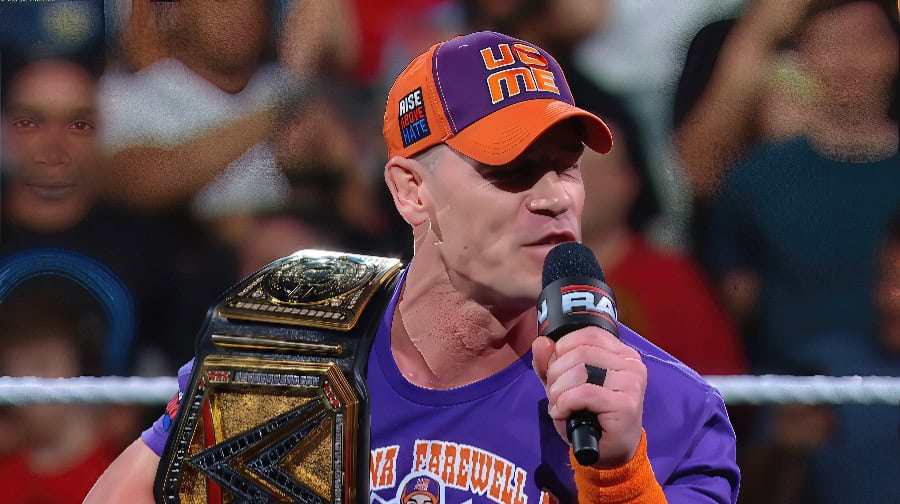
WWE Superstar John Cena provided an in-depth analysis of his 2025 heel run during an appearance on Insight with Chris Van Vliet. Cena explained that the creative direction for the character arc, which began at Elimination Chamber and concluded at SummerSlam, was predicated on the concept of “ruining” the show for the audience.
“If I’m gonna ruin this thing… I’m gonna wrestle methodically, like I have an idea of what ruining wrestling is. I’m gonna ruin it,” Cena stated.
He defined “ruining wrestling” as removing the entertainment value that fans expect from a main event performer. “Taking the fun away from the fan… I’m going to take the most coveted spot of the program, the main event spot, and a chase for the most coveted prize, and suck and make it painful for you to sit through,” Cena explained.
This approach resulted in a more methodical, slower in-ring style designed to frustrate the audience. Cena noted that if he performed exciting moves or high spots, the crowd would likely cheer him regardless of his character alignment. “If you’re lights out, doing triple flips and crazy kicks and crazy spots, and you take it home, people like, yeah, he earned it,” Cena said.
The Decision to Keep the Theme Song
One of the primary criticisms or points of confusion regarding the heel turn was Cena’s retention of his long-time entrance theme, “The Time is Now.” Cena addressed this decision directly, citing the limited timeframe of the storyline as the primary factor. The heel run was scheduled to last approximately 20 television episodes, a window Cena felt was too short to establish a new musical identity.
“It takes two to five years to get a guy over, once that guy’s over, if you do a drastic shift in their personality that takes a year or two on television. Again, I don’t have that time,” Cena reasoned.
He argued that introducing new music would have created confusion rather than heat, especially given that the character would need to revert to a babyface before the end of the year. “It will be far more confusing to the audience if we change everything, because then we have to change it back,” Cena noted.
Visual Cues and “Black” Branding
While the music remained the same, Cena implemented subtle visual changes to signal the character shift. This included the use of a black TitanTron and specific wardrobe choices.
“I wear the belt backwards because I don’t want to show my face… I put the towel over my back to remind people that I’m out,” Cena detailed. He also adjusted his entrance, opting for a walk to the ring instead of his signature sprint.
Cena acknowledged that these choices were calculated risks. “That’s the best effort I have, and it’s okay to miss. But boy, was I trying,” he said.
“Going Into Business” with AJ Styles
Cena also revealed a specific instance where he deviated from the approved creative direction during his feud with AJ Styles. For their match, Cena orchestrated a special introduction and utilized Bray Wyatt’s “Sister Abigail” maneuver without informing the production team or Styles beforehand.
“I went about it the wrong way. I went into business for myself. I should have gotten permission to do that,” Cena admitted. “I told no one about it, because I wanted to do something special, and in doing so, the people running the show felt surprised, and that’s not a position I ever want to put them in.”
Cena stated that he apologized to the creative team immediately following the segment. “The first thing I did was thank AJ, the second thing I did was pull a few creative individuals aside and say, I’m sorry. That will never happen again,” he recounted.
If you use any portion of the quotes from this article please credit Insight with Chris Van Vliet with a h/t to WrestlingNews.co for the transcription. You can watch the full interview on Chris Van Vliet’s YouTube channel.

