


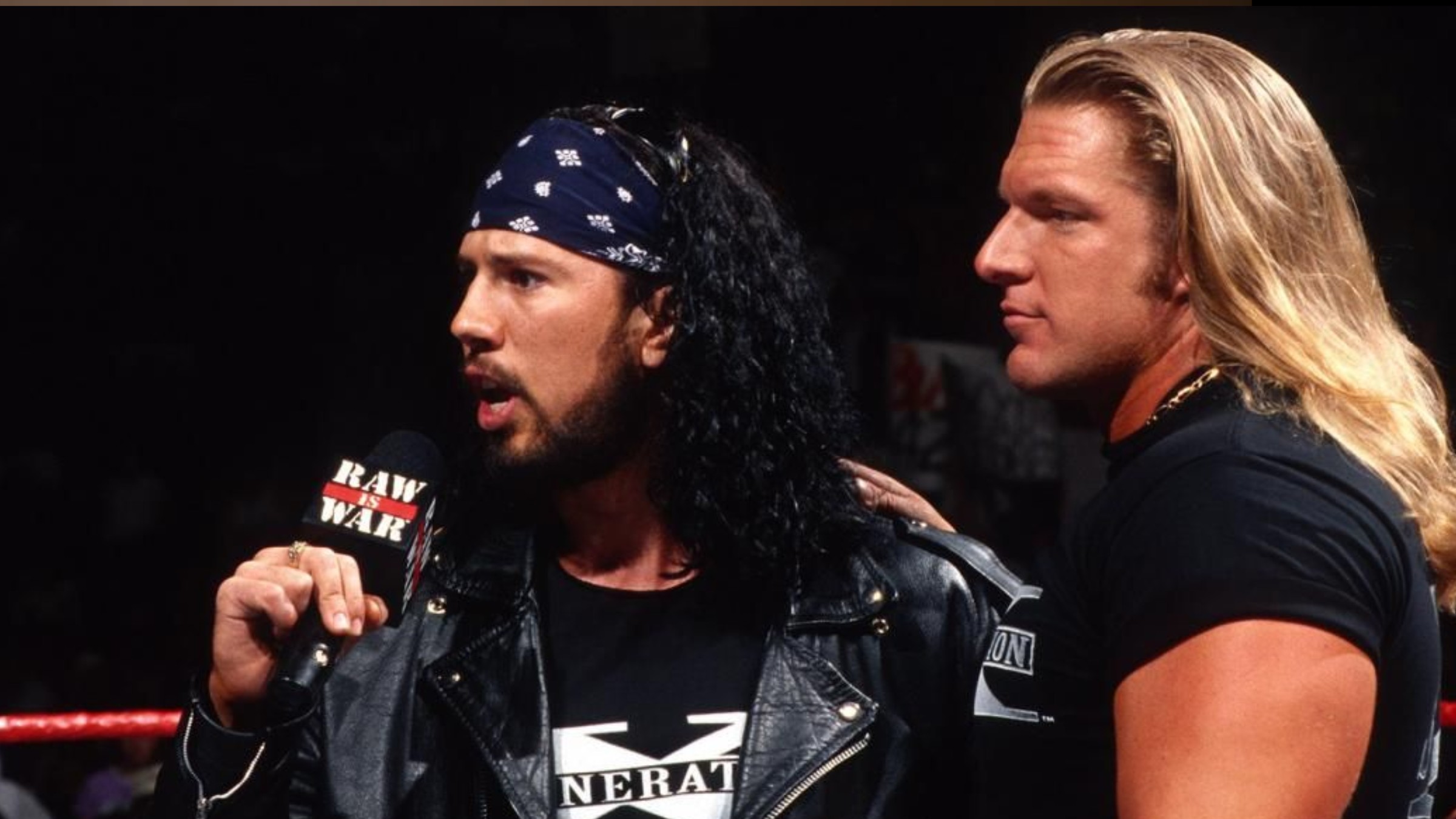
Sean “X-Pac” Waltman gave the fullest public account yet of his addiction and recovery on this week’s Six Feet Under with The Undertaker, including a suicide attempt in Mexico, two failed rehab stays, and what finally worked.
Undertaker raised the subject near the end of the episode, telling Waltman he wanted to talk about it because “a lot of people think when they get that monkey on their back that it’s a death sentence, or you can’t come back, or you can’t have a new and complete life.” Waltman said he was glad to. “I am happy to talk about all that stuff because it helps other people.”
The first rehab
Waltman said his first serious intervention came from Triple H. “I remember there was one point where I called Paul for help, and he came out to L.A. And, you know, first of all, they couldn’t find me for a while. Paul put me up in a hotel until he could come out there, and then they couldn’t find me at the hotel. And he came out and flew me to Atlanta and put me in a rehab. Him and Vince paid for it out of their own pocket.”
It did not take. “I just took a big giant crap on that help they gave me. I got high in the rehab place. They kicked me out of the rehab place.”
Undertaker’s response: “Until an addict or somebody wants that help, it’s not going to matter.” Waltman agreed, and went further. “Even once you want it, or you think you want it, or whatever, like even that, man, sometimes you just got to go out and suffer some more. When you think you hit the bottom, you’ll find out there’s some more floors underneath of that.”
Mexico
Waltman spent four years working for AAA after leaving WWE, living in Mexico City. He said the low point came there, after a fight with his girlfriend, when he attempted suicide on the roof of their building.
“I usually don’t tear up when I talk about this. I don’t know why I’m so emotional about it now, because I’ve talked about it so much. But she saved me. I was without oxygen for a while, and they had to put me and induce me into a coma to protect my brain. They thought my brain was done, too much brain damage. And so I was in a coma for three days.”
He described waking up. “I come up out of it, and I’m strapped in a table, and I’m freaking. I’m like, what the hell is going on here? Mind you, I’m strapped, but I also have a tube down my throat. I’m intubated. And then I got told what happened, and things started coming back, the memories start coming back.”
Kevin Nash flew to Mexico. “Big Kev came down, flew down, and flew me to Houston. And there’s a great place in Houston called Menninger Clinic. It’s a three months stay, and I’m not gonna say I begged, but I was like, please let me stay longer. It was great, and I got so much out of it.”
Then he went back. “I left there and I went right back to Mexico into the same apartment. My girl, she had left, by the way. So I was there alone in this apartment that I hung myself on the roof of. It was like really crazy, like stupid thing to do, put myself back in there. So I ended up back, you know, getting messed up again, using, drinking, doing whatever, for a while. I was a big meth head too, by the way.”
What got him out of Mexico was a job offer. “I got a call to go do TNA when Hulk and Kev and Eric went down there. They called me to come do that, and I left Mexico. I left all my stuff in Mexico, and I never came back. I’ve never been back to Mexico since.” He added: “I’m afraid to think about what whoever went to that room after me, what they found in that room.”
What worked
Waltman said the turn came after he moved back to Los Angeles. “Maria Menounos and her husband Kevin, they took me in and supported me and let me be a part of their world, and around all the people that they’re around, some amazing people. And they hooked me up with hypnotherapists and just all the right people to be around.”
He said the first hypnotherapy session was immediate. “The first session was like boom. It was like I couldn’t believe it.” He described the process as being awake but in a trance, with sessions recorded so he could play them back while sleeping.
The bigger shift was internal. “I had been punishing myself because I let my kids and my wife and hurt a lot of people, not meaning to, but caused a lot of pain. And so I was ashamed of myself for that, and I just thought I deserved to. And I finally felt like I paid in full. You do a crime, you get put in jail, you know when you’re getting out, you get that sentence. I felt like, okay, my sentence is up.”
He said the change in his drinking was gradual. “I’d still have a drink or a beer or something back then every now and again, and I just quit doing all that. I still use cannabis, with the pain and everything, but I have a totally different relationship with cannabis now than just being the Cheech and Chong stoner.”
Undertaker said the hardest part is self-forgiveness. “You obviously have to get to a point where you can forgive yourself. You can’t take it back. But it’s incredibly difficult to get to that point.” He told Waltman, “As your friend, I’m incredibly proud.”
Now
Waltman said he took three years off from dating before meeting his wife. “No hookup, no Tinder, no nothing. And then I started dating my wife, and that three years kind of helped me reset. I dated myself for three years and got to like myself first.” He said the marriage is the happiest he can imagine, and that he has a relationship with his kids again and a four-year-old grandson.
He works in recovery now. “I work with a friend of mine, his name’s Chris Drysbeck, Blueprints for Recovery in Pennsylvania. Some of the people in the industry that have problems, I’ll get them in this rehab, even if they don’t have insurance.”
He also mentors talent through WWE’s ID program and works with NXT. “The original thing was, yeah, you can review tapes for six hours a week, and it ended up not being just that.” He said he studies his own old matches for the mistakes to teach from, and does one-on-one Zoom sessions because he no longer likes tearing someone apart in front of a room. He also said a talent at the Performance Center complained about him after he called a match “not good,” and that Undertaker’s view was “toughen up.”
“Life was already great because I go hiking with my dog in the mountains almost every day during the week. But now having that, it’s important to have a purposeful life. I’m not going to say I’m happier than anybody, because I don’t know. But it’s hard for me to imagine somebody being happier than this.”
If you or someone you know is struggling, the 988 Suicide and Crisis Lifeline is available by call or text in the United States. Outside the U.S., the International Association for Suicide Prevention maintains a directory of crisis centers.