


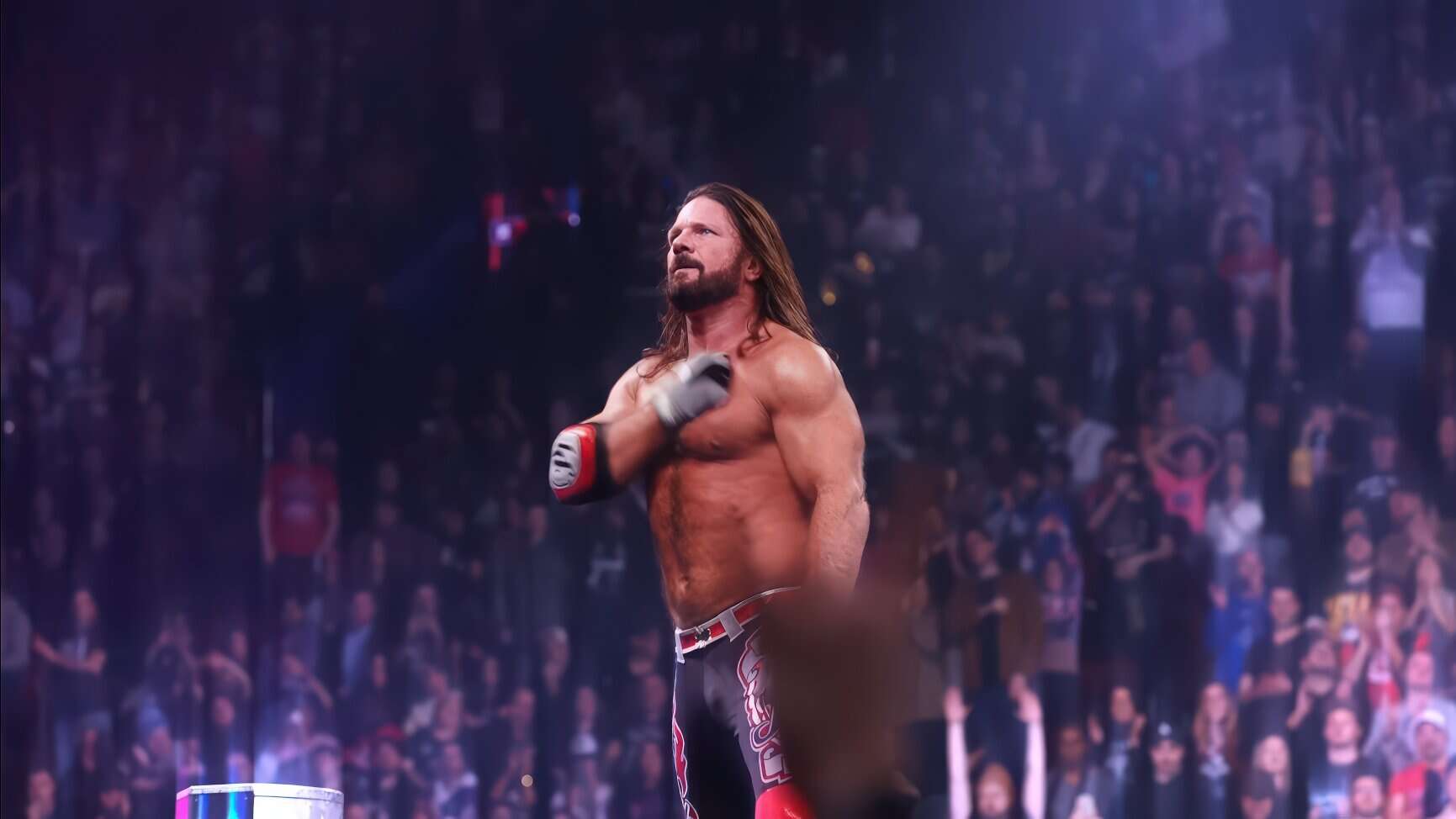
AJ Styles says the problem with wrestlers coming through the same schools under the same coaches is that they all arrive with the same moves and the same transitions, and his job now is breaking that up.
Styles laid out the thinking on The AJ Styles Show while talking about the NXT talent he works with as a producer.
“Different is good. When you learn from the same people, and by same people, a lot of times you’re with the same coach for a while, you’ll learn the same moves and learn the same stuff and the cut-offs,” Styles said. “So we have to find ways to make them different.”
He said that is work he wants to do himself.
“That’s what we have to work on, and maybe that’s something that I can do personally,” he said. “Go, hey man, we’ve got time. Let’s work on this with you. This is your move set. This is who you are. This will make you different.”
The problem shows up on the same show, in the same night.
“Unfortunately there’s some stuff that a lot of them do that everybody does. And you have to watch the match before you go, well, they did that already. Let’s think of something else, because we do it all the time,” Styles said.
His example was deliberately small. Rather than take a standard bump off an opponent’s move, he tells wrestlers to evade it instead.
“That’s real stuff that you need to come up with so that you can be different,” Styles said. “Then you can get to the same spot in a match, but you need to be different in how you get there.”
He said the same thing happens with reactions after the bell.
“It gets very redundant. Once a match gets over, people do the same stuff, and so they try to be the same way and do the same reaction. It worked for that time, and for that reason,” Styles said. “So let’s be different in the way that we do it. You are not them. You are not these guys. You are you.”
The end goal, as he described it, is that a match reminds an audience of the person in the ring rather than someone else.
“When they think of a match, we don’t want them thinking, oh wow, I remember The Rock and Hogan,” he said. “Do something that’s more you, so that they don’t think of them, they think of you.”
Styles said the two wrestlers he is most excited about on the NXT roster both came from the independents, and that what they have in common is being different, which he called the thing not many people possess.
That preference runs into a second observation he made in the same conversation, about the other route into the company. Styles said women who come to wrestling from other sports adjust to it faster than men do, and he thinks ego is the reason.
He started by separating two kinds of newcomer.
“She came in as an athlete. She’s been training as a wrestler, but she came in as an athlete, and there is a difference,” Styles said. “When you come in as an athlete, you’ve dedicated your life to something else. So when you come into wrestling, now you have to dedicate your life to this. And that’s the only way you get to the next level.”
He said the adjustment is harder for one group than the other.
“I think sometimes athletes have a hard time. And for some reason, I think women athletes have an easier time adjusting than the male athletes that come in,” Styles said.
He drew the contrast against wrestlers who came up on the independents.
“The indie guys know exactly where they want to be and exactly how things are supposed to be. They’ve watched it their whole life. They study it on film. They get it,” he said. “Because they wanted to do this their whole life. So when they came in, they just automatically kind of know.”
The converted athlete arrives without any of that.
“Our male athletes have dedicated their life to whatever sport they were in, and now they have to go, wait, what?” Styles said. “And the acting takes place, and all these things that they never had to do before, because they were focused on football or rugby or lacrosse.”
Pushed on why he thinks the split falls along those lines, Styles said he was not certain, then offered his theory.
“There’s an ego involved that you have to have to get to that level in which they are as athletes, the males,” he said. “You have to be different to get to that level of which they’ve reached in college sports. It’s not easy.”
He framed the whole thing as a ladder that works the same way in both fields, with high school as the independents, college as NXT and the pros as the main roster, and made the point that moving up a rung means being great among people who are already good.
Styles was careful to say he was not putting down converted athletes, and that people change as they develop in both directions.
The two arguments cut against each other slightly, which he did not address. The independent wrestlers arrive knowing the business and arrive with everybody else’s moves. The converted athletes arrive knowing none of it and with nothing to unlearn. Styles’ job as a producer is the same in both cases and starts from opposite ends.
Styles came up on the independents himself before spells in TNA and New Japan and a decade in WWE. He retired from the ring at the 2026 Royal Rumble, was inducted into the WWE Hall of Fame in April and now works in talent development, producing matches for NXT and Evolve.