


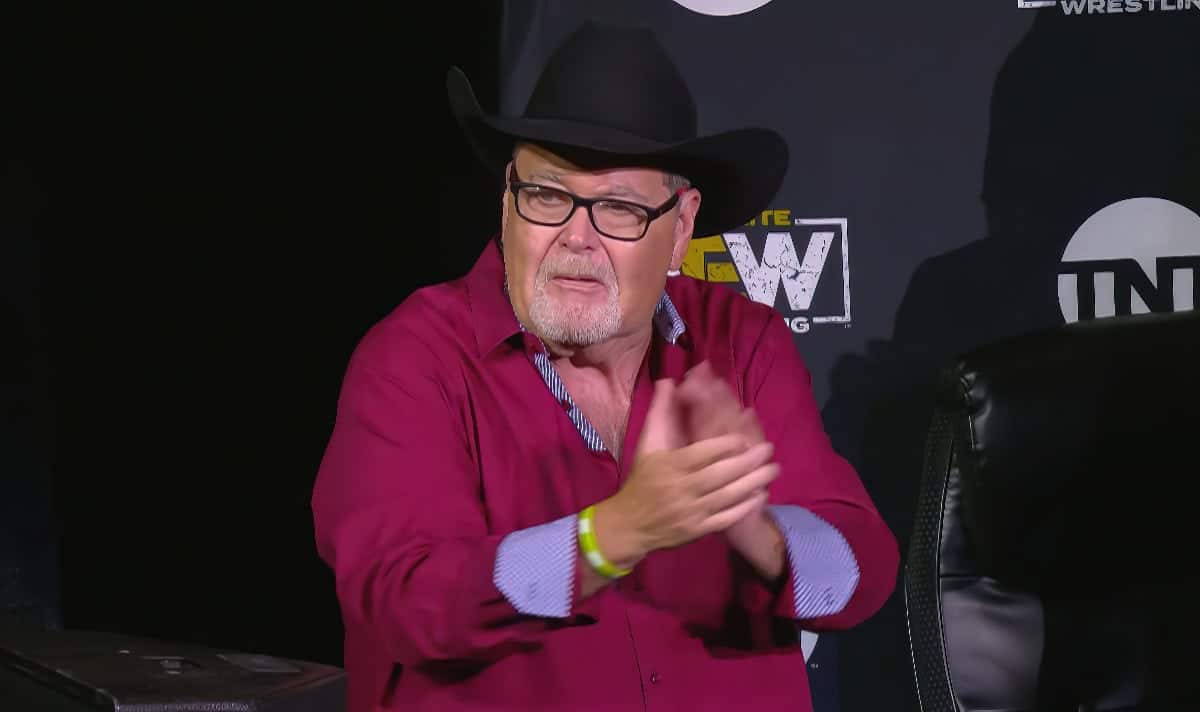
Jim Ross said it’s “troubling” that some current wrestlers don’t take the time to walk the commentary team through their match plans, responding to recent comments from WWE’s Corey Graves. Ross weighed in on the latest episode of Grilling JR, the podcast he co-hosts with Conrad Thompson, after Thompson brought up Graves’s remarks.
Graves made those comments on Busted Open Radio the week prior, in a conversation prompted by Natalya saying she personally seeks out the announcers before matches to tell them which parts of the story she wants emphasised. Graves said he cannot overstate how important that is, and that if a wrestler tells him what the story is meant to be, he will tell it and most likely enhance it. He went on to say a remarkably low number of talents actually seek out him, Michael Cole, Wade Barrett, Joe Tessitore or the other announcers, and that the ones who do tend to be the same names at the top of the card, naming John Cena, AJ Styles and Roman Reigns. Graves also framed commentary as a safety net, saying that if he knows where a match is trying to go, he can usually steer things back on track when something goes wrong.
Ross said he never wanted to know how a match would finish, but he did want the broad strokes.
“I didn’t want to know the finish. I wanted to know the theme, your theme and your opponent’s theme, your collective theme of this match,” Ross said. “Triple H was excellent at that. He would lay out the feeling he wanted to create in that performance.”
Ross said he never needed a long sit-down to get what he needed from a talent, just the basic storyline so he’d know where to take the call. What bothered him, he said, is when wrestlers don’t bother to do even that much.
“It’s a matter of guys just giving a s***,” Ross said. “That’s troubling. What Corey said is troubling to an old school guy like me, because you don’t want any more of the fundamentals that we’ve seen in wrestling over the years to continue to get a little pale.”
The two announcers are describing the same practice from opposite ends of the business and roughly thirty years apart. Ross called for WWE through the Attitude Era and into the 2000s, and has worked AEW television since the company’s first show in 2019. Graves moved to commentary full time in the mid-2010s after concussions ended his in-ring career, and now calls WWE’s flagship programming. Both are making a process argument rather than a criticism of any individual match: the announcers are the ones translating the story to the audience at home, and the information has to reach them before the bell.
Ross’s Triple H example puts a name to what he wanted. Rather than a finish or a spot-by-spot rundown, he describes being told the emotional shape of the match, which is close to what Graves is asking for when he says wrestlers should tell him what they want conveyed.
Ross has raised versions of this point before across his podcast run, usually framed around fundamentals he considers to have slipped as the business has changed. His use of the word “pale” here is doing that work again, arguing the risk is gradual erosion rather than any single broadcast going wrong.
Graves has not responded publicly to Ross’s comments. Ross, who has called AEW television since 2019, has been away from the booth for stretches of the past year while dealing with health issues and has said he hopes to return at All Out on September 26.