


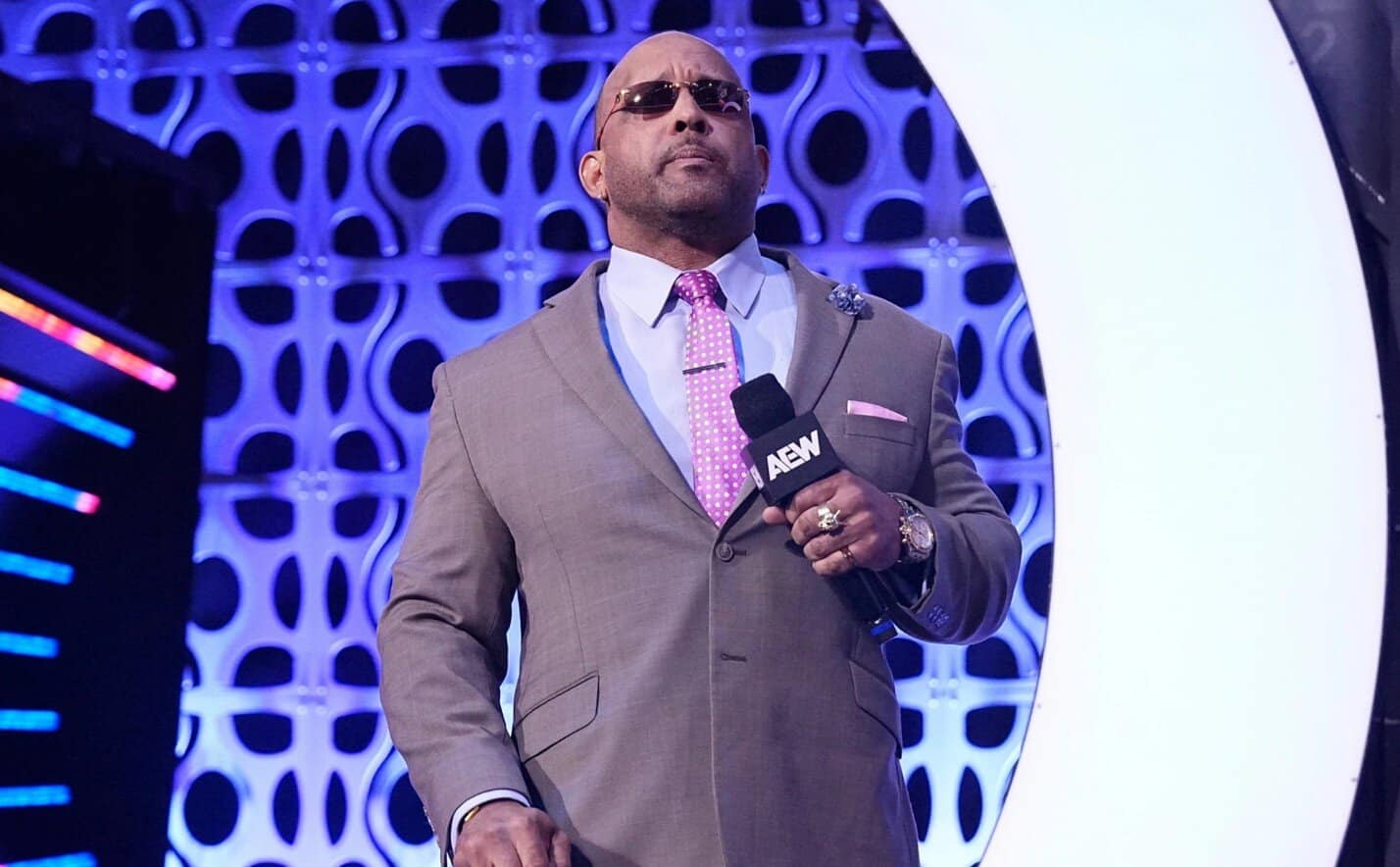
MVP says a lot of wrestlers today do not actually want to be heels, and that the job has become harder to do properly than at any point he can remember.
Speaking on his Marking Out podcast with co-host Dwayne Swayze, MVP started from the basic definition.
“A heel should never be liked. That’s the whole purpose of being a heel,” he said. “You’re supposed to be a bad guy. You’re supposed to be someone that is deplorable, reprehensible, disgusting. You should lie. You should cheat. You should steal.”
He said the point of all of it is what it does for the other man.
“That’s the whole point of being a heel, to be disliked, so that the babyface is immediately everyone’s savior,” MVP said. “They like the babyface, and they dislike you, so that when that babyface kicks your ass, they’re yay, we love it. But believability is a factor. They have to believe that you really are a dastardly, unscrupulous individual.”
MVP said he has always preferred that side of the card. “Boos are my cheers,” he said. “I love being a disliked character.”
He traced the difficulty back to the collapse of kayfabe. In the territory era, he said, heels were at physical risk because audiences believed what they were watching, and pointed to Jim Cornette and other veterans of that period as the ones with the stories about slashed tires and fighting through crowds to get backstage.
“These were people that believed that the bad guys were real bad guys. When they cheated, they really believed they were cheating,” MVP said. “So that believability was there, and you had this emotional connection to your babyface. That’s your guy.”
He said the audience now watches from a different position.
“Through the progression of our industry, now we all know that we’re playing cops and robbers. These are characters playing roles, and some people are really good at it, and some people aren’t,” MVP said.
On top of that, he said, the consequences of committing to the role have changed.
“It’s also a little more difficult to be a traditional heel today, because you’re trying to be a bad guy, and being a bad guy nowadays can get you fired, can get you canceled,” he said. “People don’t look at it and go, well, he’s playing a character. Or maybe the network might go, oh my God, you can’t say that on the network. So it’s more difficult to be a true heel now, probably than it’s ever been. But you can still do it. You just have to be creative and talented.”
He used his own act as the example of what happens when it works too well. The Hurt Syndicate has been getting cheered in AEW without changing anything about how it operates.
“Even though we haven’t really changed anything, we still wrestle the same way. I still cut primarily the same kind of promos. People are just like, nah, these guys are too good,” MVP said. “They’re just good at being bad. We like to see them come out and beat people up. So we still come out the heel side on our entrances. We didn’t change anything. They changed.”
The booking has started to follow the reaction. The group put itself forward as available for alliances and for settling scores on behalf of other wrestlers, and Shane Taylor Promotions took the offer up, which led to an eight-man tag on the August 15 episode of AEW Collision where Bobby Lashley and Shelton Benjamin teamed with Shane Taylor and Lee Moriarty and won. That is a babyface structure regardless of which side of the ramp the entrance comes from.
The part MVP takes issue with is talent who never commit in the first place.
“It’s my opinion that nowadays a lot, not all, but a lot of people don’t want to be real heels. They want to be cheered,” he said. “Oh, you know, I’m kind of a tweener. Have the courage to be a face or a heel.”
MVP argued that being a babyface is the harder assignment, which is part of why he thinks the middle ground gets chosen.
“Socially, it’s way easier to get people to dislike you than it is to get people to like you,” he said. “You’re going out there and trying to smile and make friends and shake hands and kiss babies and do your best work so people go, hey, I like this guy. So technically, it’s easier to be a heel. Now, in terms of talent and execution, that’s a different conversation. But to be presented as a babyface and to get over as one is more difficult than to get over as a heel.”
He closed the point bluntly. “A lot of today’s talent are scared to be real heels. They want to be cheered. They want to be liked. They don’t really want to go all in and be a real bad guy.”
Asked what a working heel dynamic looks like, MVP said the measure is whether the crowd will let the man talk at all.
“A heel shouldn’t get that kind of reception. As soon as that music hits, it should be like Dirty Dom, boo,” he said, referring to Dominik Mysterio. “If the heel’s trying to cut a promo, they should intensely be trying to drown him out, so you can’t hear a thing he’s saying. If the babyface is getting extreme cheers and you’re getting boos, and people won’t let you talk, then the dynamic is working properly, and everyone is doing their job.”
MVP, 52, works in AEW as manager of The Hurt Syndicate alongside Lashley and Benjamin. The three of them worked together in WWE as The Hurt Business, and all three arrived in AEW in 2024. He announced a contract extension in November and has since said the deal runs until he is 57.
He was not at All In: London on Sunday. Lashley and Benjamin both worked the show at Wembley Stadium, and MVP was kept away by a visa issue. He has said elsewhere on the same podcast that he is not officially retired but expects his final match to come next year, and that his role now is the talking rather than the wrestling. Which is the job he was describing throughout, and the one he says fewer wrestlers are willing to do properly.