


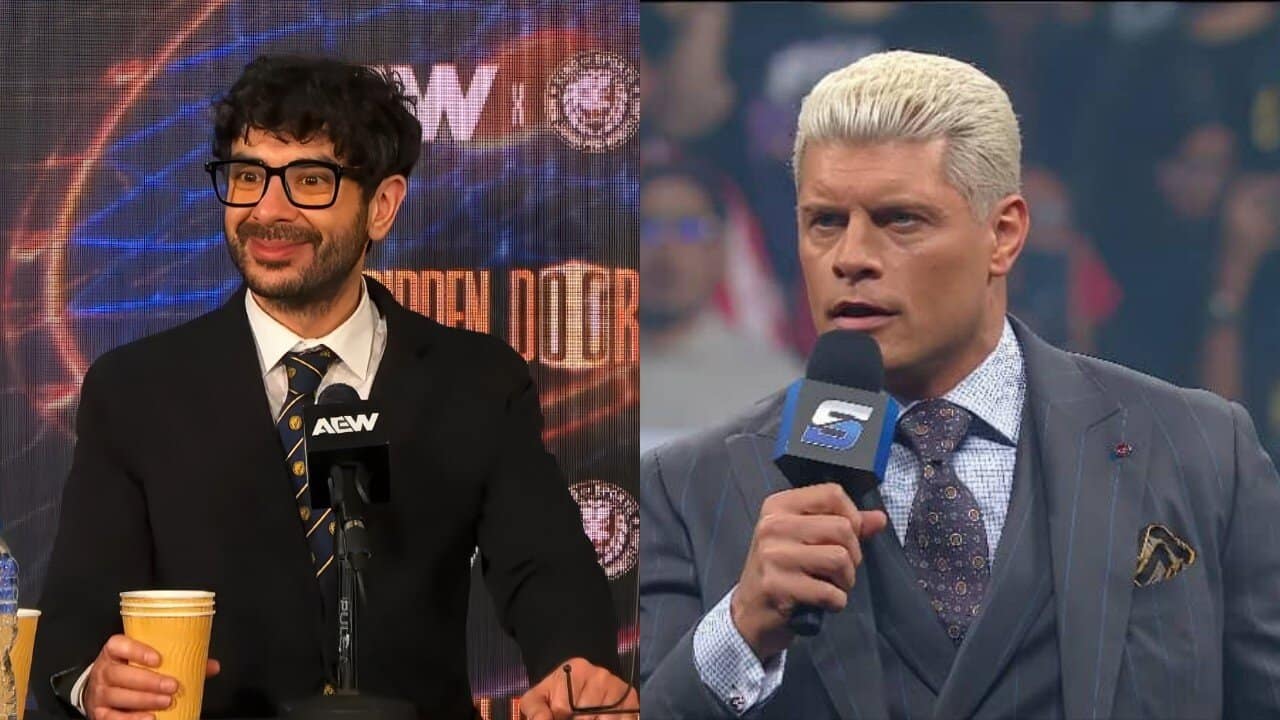
With MJF set to defend the AEW World Championship against Kenny Omega at Beach Break under a career-altering stipulation, Tony Khan has shed light on the origin of one of the promotion’s most dramatic gimmicks.
The stipulation, which bars a challenger from ever competing for the title again should they lose, will be in play as Omega puts his championship aspirations on the line this Wednesday. Speaking with Q101’s Case Lowe, Khan explained that the concept dates back to AEW’s first year, when Cody Rhodes challenged Chris Jericho for the AEW World Championship at Full Gear 2019.
According to Khan, the idea originated with Rhodes himself. “In the case of Cody, it was Cody’s idea to do that, and I did have some reservations about it at the time, and he felt pretty strongly about it, and that’s how it came to be,” Khan said. He ultimately signed off, recognizing the intrigue it would generate. “I went along because I could see why he wanted to have it, and it would certainly build unpredictability around the event.”
Khan called the bout a highlight, though he admitted it complicated matters going forward. “That was a great show and a great match, Cody versus Jericho at Full Gear 2019, but the aftermath did create challenges,” he said. Those challenges led to a silver lining, as the pandemic-era creation of the TNT Championship gave Rhodes a new platform. Khan praised Rhodes as the inaugural TNT Champion and pointed to his belief in Darby Allin, whom Rhodes helped elevate through a memorable rivalry.
Rhodes ultimately lost to Jericho at Full Gear and honored the stipulation for the remainder of his AEW run, which lasted until early 2022.
The stipulation has since made a comeback. Earlier this year, “Hangman” Adam Page agreed to the same terms when challenging MJF at Revolution in March, only to come up short. Khan noted that Page, like Rhodes, requested the stipulation himself. This time, while he still had some reservations, Khan felt it made a great deal of sense given AEW’s direction and how much the landscape had changed since 2019.