


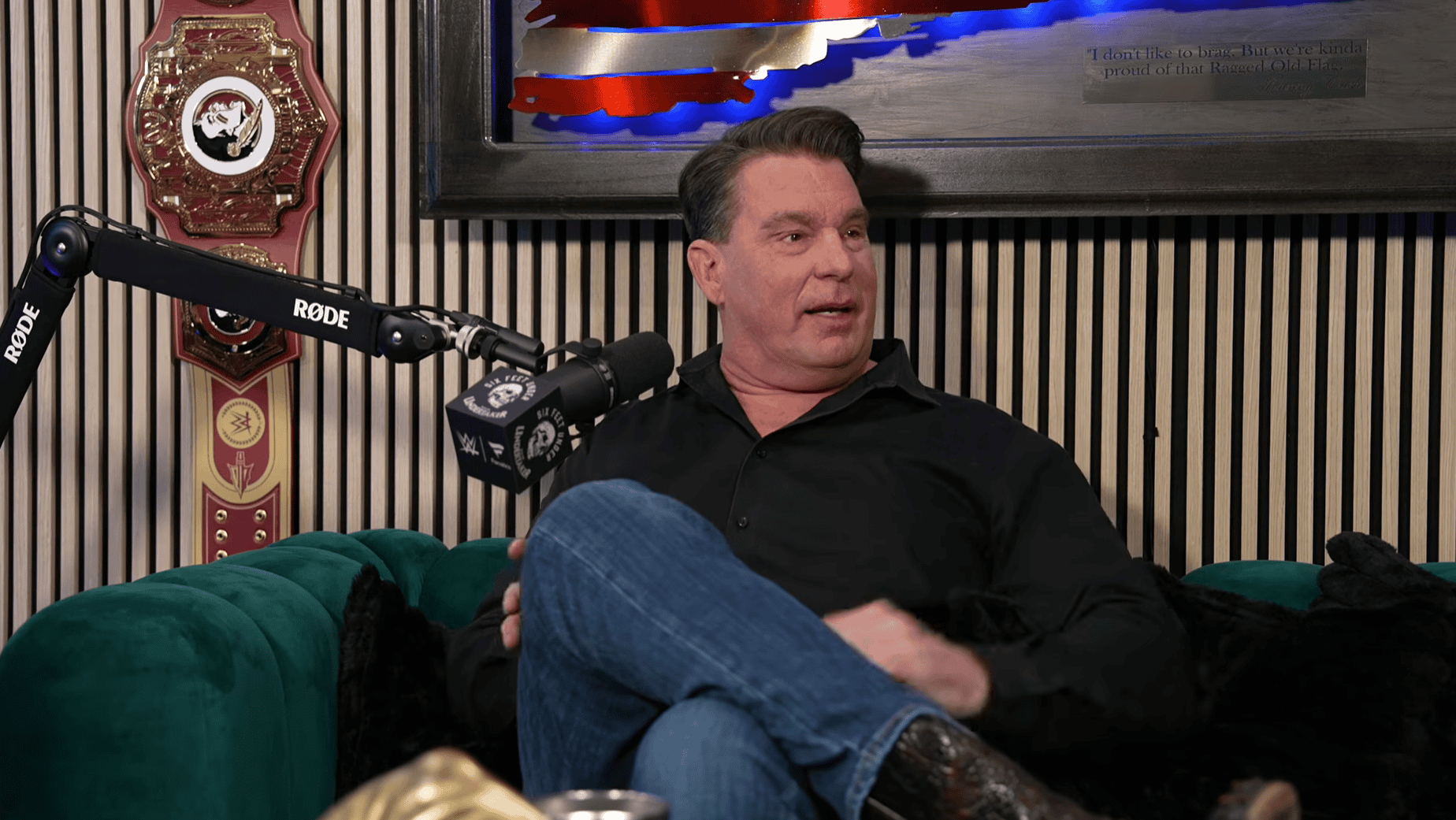
JBL says wrestlers should be pleased that TKO has resized talent pay, and that anyone who wants more money has one route open to them.
Mark Shapiro told the Goldman Sachs conference this week that TKO had resized fighter and superstar pay after its television deals with ESPN, Paramount, Netflix and others, that the change is already baked into the company’s numbers, and that there will be no further adverse impact from it. He said TKO is confident in where it sits and that its margins will continue to expand. Conrad Thompson put the quote to JBL on Something to Wrestle With.
JBL’s answer was that a fixed income creates a fixed problem.
“Now you’re dealing with a finite number, and that number is not going to change. That number was changing before,” he said. “If you have a finite amount, and that amount changes as far as what your income is, you got to do something on the other side of the ledger, and that’s lower cost. That’s just business.”
He had little patience for the emotional version of the argument.
“I understand people out there think that you should be adopted by WWE, and I think people have felt that forever. Or by WCW when it was around, or any other company,” JBL said. “Sorry, it’s a business. You’re not moving in with somebody into their house. You’re not being adopted.”
His advice to anyone unhappy with the number was to change what they are worth.
“If your contract’s out there, these guys are making really good money. You can’t do that probably anywhere else. But if you want to make more money, draw it. Simple,” he said. “Draw ratings. Do something like Danhausen has done. Do something Roman Reigns has done, like CM Punk has done, like Cody Rhodes has done. Figure out a way to create interest.”
He said the money then has to come from somewhere.
“You have a finite amount of money. Now it’s coming out of some other superstar’s pocket. That’s the way it’s always been,” JBL said. “It’s that way in football. It’s that way in basketball. If he’s worth it, he’s gonna make more. And if you’re worth it, you’re going to make more. All you gotta do is negotiate.”
Asked how many wrestlers are on million-dollar deals now compared with his era, he did not hesitate.
“Are you kidding me? Of course it’s a multiple. It has to be a multiple, and a high multiple. It’s not even close,” JBL said. “We never knew what anybody else made. Guys didn’t talk about salaries. We had a few guys making really good money. Most of the guys were getting by.”
He then gave his own figure, and refused to use it as a stick.
“My first year, I think it was $76,000 I made in 96. I was on, I believe, every pay-per-view and every house show. So whatever we worked, 250 nights,” JBL said. “I had to pay for my own car. I had to pay for a hotel. We’re staying four people to a room. I’m not comparing that to today. It’s not fair. It’s not fair to do that to the guys today and say, here’s what we did in our day. We paid our dues. We did, but so what? They don’t have to. That’s good for them.”
He made the same point about his own treatment.
“Vince took incredibly good care of us. There were times when I was hurt and I’d already reached my downside guarantee. He paid me throughout the year. He didn’t have to do that. He took care of every one of my surgeries, every one of the rehabs,” he said.
JBL’s position on the current arrangement is that it is a well-run company rather than a hard one.
“Their health care is phenomenal. They take care of these guys,” he said. “It’s terrific to see how far the business has come out of the old bingo halls and VFWs and all the stuff we used to wrestle, no health care, no nothing. Now that being said, you shouldn’t be taken advantage of, but they’re not being taken advantage of.”
The comments follow a year in which several wrestlers have left rather than accept restructured deals. Kofi Kingston said recently that the cut he and Austin Creed were offered was more than 50 percent, and that they asked for their releases rather than sign. Both had signed five-year extensions the year before and neither contract had expired. They debuted in AEW as New Level at All In: London.
Shapiro’s own framing of the pay structure has been consistent across his appearances at these conferences. He has described TKO as running a lean cost structure, said the cream of the crop get the premium dollars, and called the arrangement a scale and a formula that the company is transparent about with its fighters and wrestlers. JBL’s answer is the same argument from the other side of the table, which is that a wrestler who wants a bigger share has to make himself worth it rather than ask for it.