


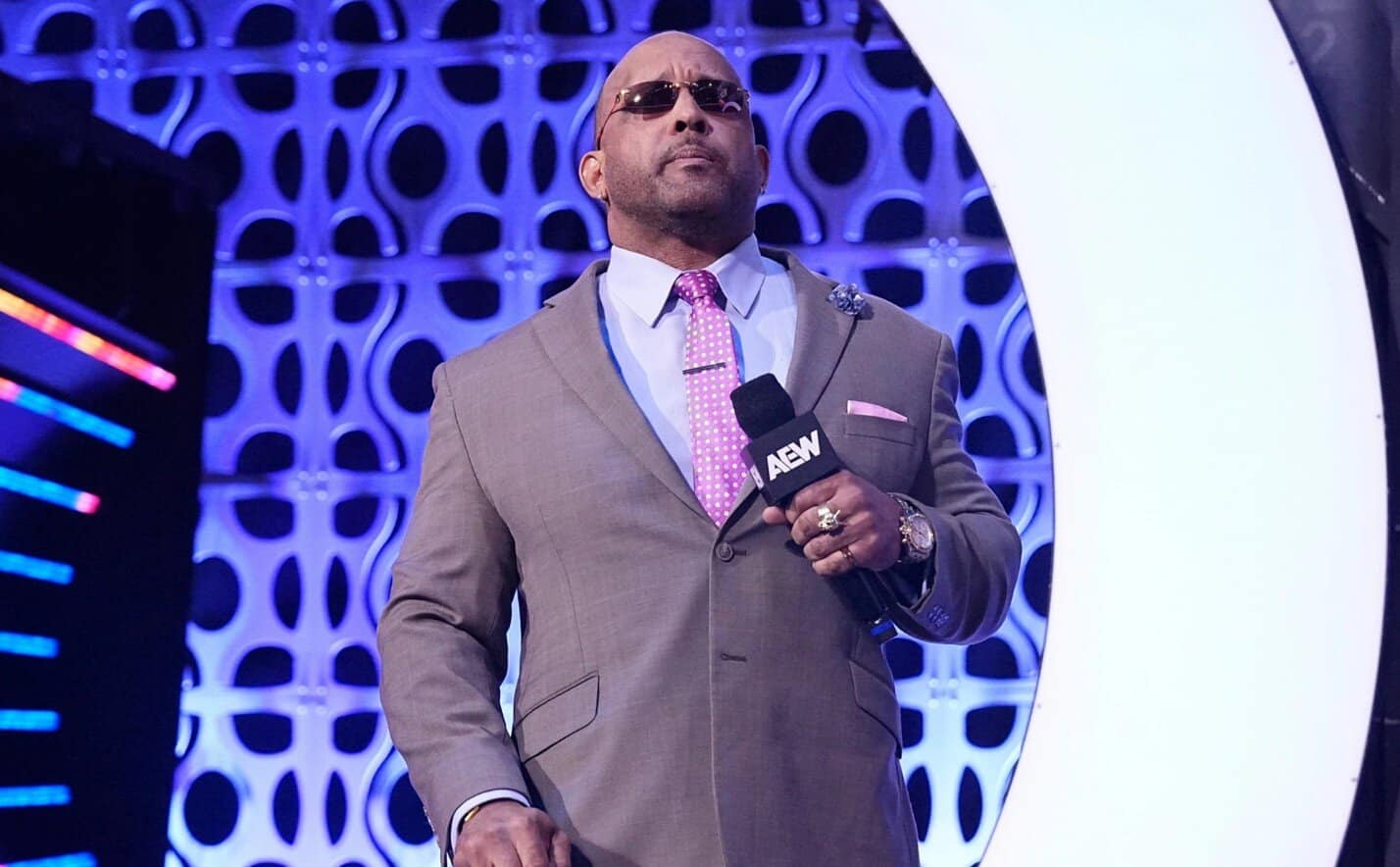
MVP says most wrestling contracts let a company add whatever time a wrestler misses through injury onto the end of the deal, and that whether they use it comes down to how they feel about the person.
MVP walked through the mechanics on Marking Out with co-host Dwayne Swayze.
“Say you sign a three-year deal, and you have an injury, and you’re out for six months, serious injury. When you come back, a lot of the time, the way the contracts are structured, the company reserves the right to extend your contract to the time that you missed being out on injury,” MVP said. “While you’re out on injury, you’re still getting paid, so they feel like, okay, we paid you while you were hurt. You still owe us that time. So they’ll extend your contract, say the six months that you were out, but you’ll still get paid. They’re just reclaiming their time.”
The part he wanted to stress is that it is a right, not an obligation.
“But here’s the thing. They don’t have to do it. They can do it. So you can get hurt and be done. They can say, all right man, no problem, you can go, it’s cool,” he said.
Where it gets used, in his experience, splits two ways.
“If they just want to be petty and be like, no, you ain’t going across the street, we’re invoking your time to make you stay here for the time that you were hurt. Or it can just be a legit professional thing. Like, hey man, we needed you, we were using you, we paid for your medical, we paid you while you were out, give us back that time,” MVP said. “I’ve seen it both ways. I’ve seen it where it was activated kind of petty, to keep somebody from happily going to the competitor. And I’ve seen it activated where it was legit.”
Asked whether he thinks the clause is fair, he came down on the company’s side.
“If you got hurt, and they paid for all your surgery, and they pay for your rehab, and they were continuing to pay you while you were at home recovering, you didn’t lose anything. What do they get?” he said. “So I can see a position of fairness from a business standpoint, where they say we want that time back out of you, because they continue to invest. To get you back on TV, drawing houses, selling merch, to get their money back. Yeah, that seems kind of fair to me.”
He said he does not know how any of it applies to pregnancy, and did not speculate.
The second half of his answer was aimed at wrestlers, and it is the opposite of what he says he was taught. MVP said the practice in his early years was to hide injuries.
“Back in my day, shout out to Tony Garea, we used to try to hide injuries, because you don’t want to get taken off the TV. You don’t want to lose TV time. You didn’t want downtime, and guys would go out of their way to try to conceal an injury and work around it,” he said. “And the game’s changed. Now that’s the last thing you want to do.”
His reasoning is partly medical and partly about the maths of a career.
“Working through an injury while you’re hurt can end up causing you to have a worse injury, or take more time off your career,” MVP said. “The sooner you can get medical attention, the sooner you can get your surgery, your treatment, and start your rehab, the sooner you can be healthy and get back to work.”
He argued that time off does not cost an established wrestler their position, and can do the opposite, using his co-host as the hypothetical.
“Dwayne Swayze’s hurt. He’s out. We just got the report that Dwayne Swayze has a knee injury. It’s gonna keep him out for six months. Dwayne Swayze’s out of sight, out of mind,” MVP said. “And then in six months, when that music hits and Dwayne Swayze comes out, oh, he’s back, he’s back.”
He was candid that this does not hold everywhere on the card.
“Now if you’re somebody swimming down near the bottom of the card, and your position’s uncertain, yeah, it’s a rougher position to be in,” he said. “But if you’re hurt, get fixed as quickly as you can.”
Even in the worst version, he said, the logic holds.
“Let’s just say this company does say, ah, you lost your spot, we don’t need you anymore, we’re gonna let you go. But now you’re healed. You’re 100, you’re healthy, and that puts you in a position to go look for work elsewhere,” MVP said. “So if you’re hurt, don’t work through it. Don’t be a tough guy or a tough girl. Go get it taken care of as quickly as you can.”
The scenario he describes at the end is not hypothetical. Zoey Serrano was released by WWE in April while rehabilitating a torn ACL, MCL and meniscus suffered on the May 2025 Raw, and signed with TNA once she was cleared. The other current example runs the other way. Piper Niven has been out of WWE since August 2025 with a neck injury and cervical stenosis, is still under contract, and has spent the past week telling fans she is not retired. Neither case tells you anything about what is in either contract, which is the limit of what any of this can establish from the outside.
Tony Garea, the man MVP credited for the old approach, wrestled for the WWWF and WWF through the 1970s and 1980s and worked as a road agent and producer for the company into the 2010s, which puts him among the people who trained a generation to do the opposite of what MVP is now advising.
MVP works in AEW as manager of The Hurt Syndicate. He is describing his own reading of how these deals work rather than the terms of any specific contract, and he is not a lawyer or an agent.
https://www.youtube.com/watch?v=GsZuoybEEq8&pp=ygUUbWFya2luZyBvdXQgd2l0aCBtdnA%3D