


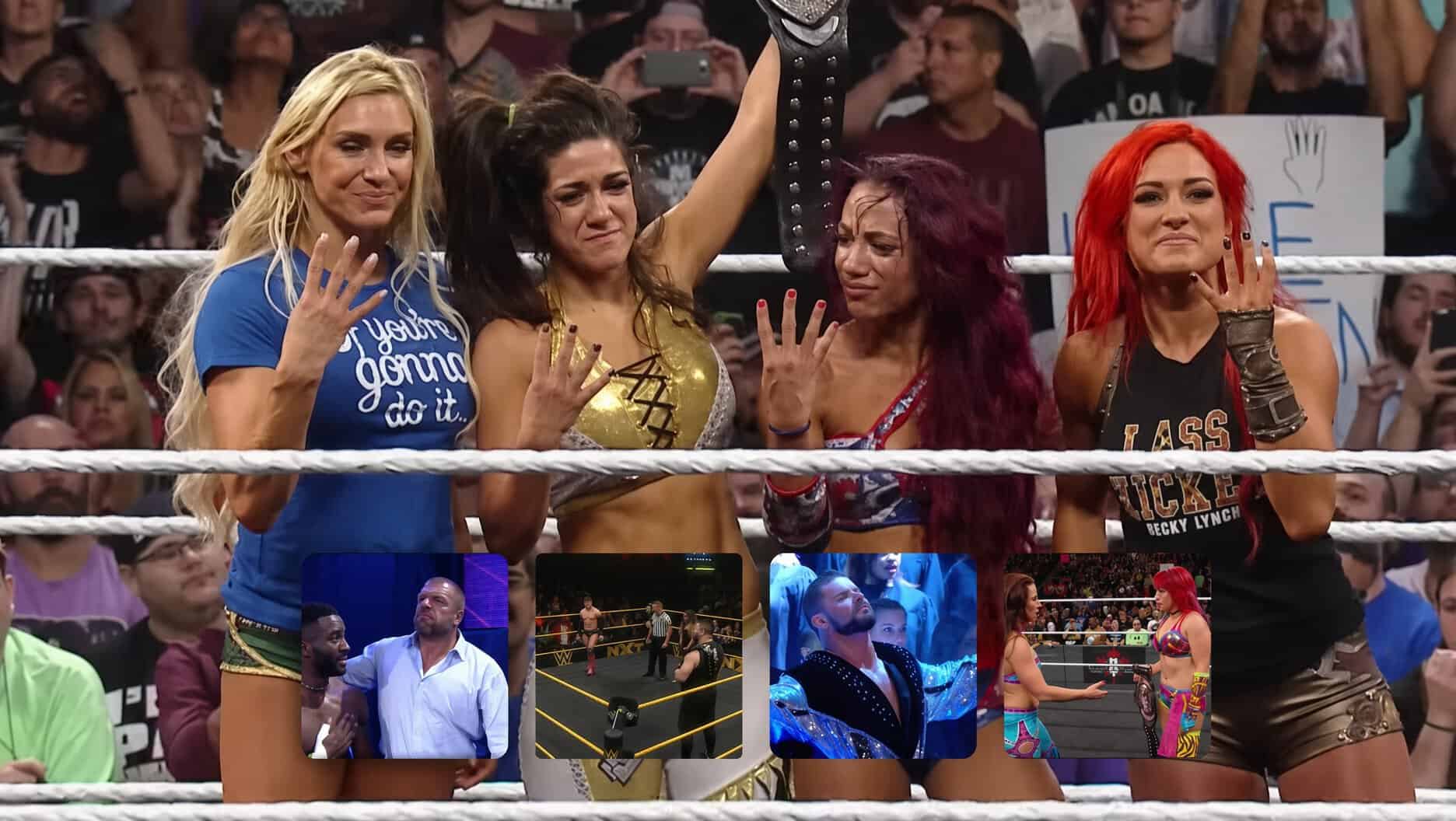
If you started watching wrestling in the last few years, you have probably seen older fans bring up “Full Sail” and the black-and-gold era of NXT. This is what that was, and why I think WWE should consider that presentation again.
Here is what Full Sail was. From 2012 to 2020, NXT taped at Full Sail University in Winter Park, Florida, in a soundstage that held 300 to 400 fans for TV tapings, with closer to 1,200 packed in for special events. The show did not tape weekly. WWE ran tapings roughly once a month, mostly on Thursdays, recording several episodes in one night, with occasional live specials in between. Episodes ran one hour and aired weekly on the WWE Network from its February 2014 launch, first on Thursday nights before settling into the Wednesday night slot in early 2015. The lighting was dark, the stage was minimal, and the same few hundred regulars carried the broadcast, singing entrance themes and building running chants into the show.
What I really want to talk about is the pacing and the booking, because that is what made it work.
https://youtu.be/9VRuYbXyyYI
The show took its time with things. You had squash matches, and sometimes the person getting squashed became a star later. People rose up the ranks, and fans were invested in their trajectory as the wins got bigger. Becky Lynch won her debut, then lost three straight to Charlotte Flair, and left the black-and-gold era without ever holding the NXT Women’s Championship, but you watched her climb week to week. She finally won that title in 2023, long after the era ended. Bayley lost for a long time before her chase meant everything. Losing was part of how the show told you where someone stood.
Names were changed to signal a fresh start. PAC became Adrian Neville. Kevin Steen became Kevin Owens. Mercedes KV became Sasha Banks. And when a name was already established and meant something, they left it alone: Shinsuke Nakamura walked in from New Japan with his name intact and debuted at TakeOver: Dallas as exactly who he was.
You did not see wild finishes all the time. Title reigns were dominant and champions were protected. Fans got to see Bobby Roode treated like a star from the day he took the championship from Nakamura at TakeOver: San Antonio. There were no long, drawn-out promo segments eating the hour. It was old school in its patience and its presentation, mixed with new school wrestling in the ring, and fans were invested. The crowds grew. TakeOver specials moved into arenas on WWE’s biggest weekends starting with Brooklyn in 2015, and it became a regular talking point that the Saturday NXT card had outperformed the main roster show that followed it.
The building even gave WWE its tournament era. The 2016 Cruiserweight Classic taped there, and it produced one of the most famous moments in the building’s history: after Cedric Alexander lost to Kota Ibushi, the crowd chanted “please sign Cedric,” Triple H came out to acknowledge him, and Alexander was signed after the tournament. The Mae Young Classic taped there in 2017 and 2018, with fields that included Kairi Sane, Rhea Ripley, Toni Storm and Meiko Satomura.
So that is what Full Sail was. Now here is what I think. The current product could use more of what that room forced NXT to be: patient, focused, and built around trajectories fans could follow.
Look at the reaction Zilla Fatu got this week. There are a lot of popular independent wrestlers and free agents that fans are following right now. Names like Big Trouble Ben Bishop, Joey Janela, Donovan Dijak, Sami Callihan, GCW World Champion Atticus Cogar and Bear Bronson on the men’s side, and Johnnie Robbie, widely regarded as the best unsigned women’s wrestler in the world, along with Allie Katch, Marti Belle, Allysin Kay, Janai Kai and Gabby Forza, and that is just a sample of what is out there. Promotions like GCW, Boca Raton Championship Wrestling, House of Glory, Pro Wrestling Symphony, Maple Leaf Pro in Toronto, West Coast Pro and DEFY have real followings. There is more awareness of the independents now than there has been in years. WWE clearly knows it too, because the ID program already has championships defended on independent shows, and the ID Showcase with GCW just happened this month. Lean into that harder. Not everybody is ready today, and some of these names might need more time on the indies, and that is fine. The point is the pipeline is loaded. Focus on scouting and signing from it. Watch the crowd reactions. Watch how natural the promos sound, because these wrestlers have been working on it every weekend on the indies. And phase out the overproduced talking segments while you are at it. It might take time, but I believe it can be done.
NXT got people invested because the show made you believe. When Bobby Roode came out and that song played, there was something about the way fans supported him. They were invested. He was treated like a champion. He was old school mixed with new school. That is the feeling to chase. Less overproduced, more organic is what gets fans to tune in. The one-hour format is not realistic right now, since NXT is locked into two hours with commercials on The CW, but the one-hour discipline is the part worth chasing. Book the two hours like the old one hour, where everything has a purpose. Squash matches are fine. Fans tune in for the main event segment or match, and the undercard showcases talent in squashes along the way. If WWE someday moves on from The CW, an actual one-hour show would be ideal. Champions who feel like champions. Wins and losses that tell you where everyone stands. The presentation does not need a soundstage to work, and wrestling had been taped in soundstages long before NXT. Full Sail is simply where it worked best for WWE, which is why I think a move back to Full Sail should at least be considered for NXT.
The black-and-gold era worked because WWE trusted patience, presentation and its own history. Wrestling could learn a lot from those years. You can discuss this on our Facebook page below. Drop your comments….WWE PC NXT or NXT at Full Sail?