


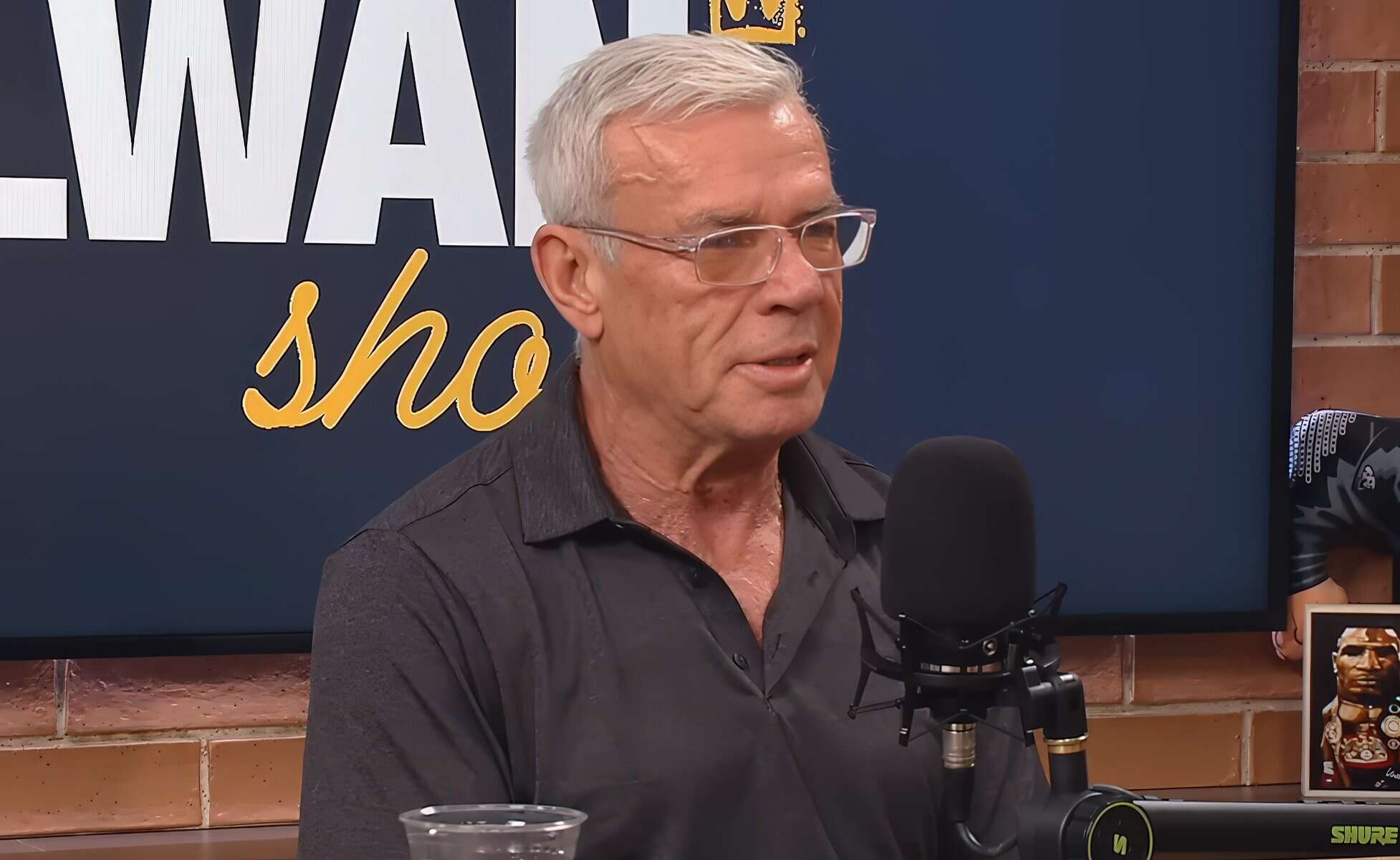
Eric Bischoff has weighed in on the New Day’s departure from WWE, describing the outcome as inevitable from a business standpoint while acknowledging the genuine financial awkwardness of renegotiating a contract signed just a year earlier.
Speaking on 83 Weeks, Bischoff was asked whether he was surprised by the New Day situation and offered an honest take.
“Nope. For all the reasons you just stated. I agree with everything that you just said, which is probably the reason why their time was essentially up. It had played itself out. The wrestling community audience can virtue signal their asses off. Oh my gosh, they’ve been with the company forever. They were so loyal. And I’m not discounting any of that, by the way, because all of it is true, but none of it guarantees you a job for life. What the hell?” Bischoff said.
He also offered a broader theory about why tag team wrestling specifically faces unique financial pressure under TKO’s ownership model.
“So if you’re going to commit to a tag team now, you’re committing to twice the labor costs for talent just to have a tag team division. From a mathematical point of view, it doesn’t work. Now, you can argue creatively that there’s something special about tag teams that still satisfies a certain niche in the audience. I’ll buy it. I probably not only buy it, would support that, agree with it, but is it a big enough part of the audience to justify it? What happens? You know, if you just run the math, what happens if it goes away, and maybe 3% of the audience, 1% of the audience, whatever the percentage is, it’ll be minimal because, ah, they don’t have tag team wrestling anymore. I’m not going to watch. I don’t think 1% would do that, but whatever, let’s say 1%, is it worth it? Probably to eliminate tag teams, because financially, it does not make sense. And the more TKO looks at the WWE as a property, the more you’re going to see those kinds of changes.”
On the question of morale within the WWE locker room following the pay cut requests, Bischoff took a measured view.
“I’m sure there are some who are greatly affected by it. I’m sure there are some that are kind of indifferent to it, and I’m sure there are some that are basically being professionals and going, okay, this is my decision. I don’t have to stay here. I can ask for my release if I don’t like it. I have options. Nobody’s putting a gun to anybody’s head to stay there. And I know that sounds really cold, because the families need bills. Well, guess what? We’ve all been fired or had to change careers unexpectedly. That’s life and more often than not, you come out better than when you started,” Bischoff said.
He also addressed the specific financial logic behind renegotiating a deal that was only a year old, acknowledging the awkward optics while defending the corporate reasoning.
“I don’t think any business, especially a publicly held company, the scope and size of TKO, operates on a month-to-month or year-to-year basis. I’m guessing at some point there was an internal audit. Somebody sat down with a financial team and said, Let’s play out the next five years based on what we know. And if you’re looking at a picture five years from now that suggests we can’t afford to continue with these type of agreements, you’re forced to. I don’t think anybody was excited to do it,” Bischoff said.
If you use any portion of the quotes from this article, please credit 83 Weeks with a h/t to WrestlingNews.co for the transcription.

