


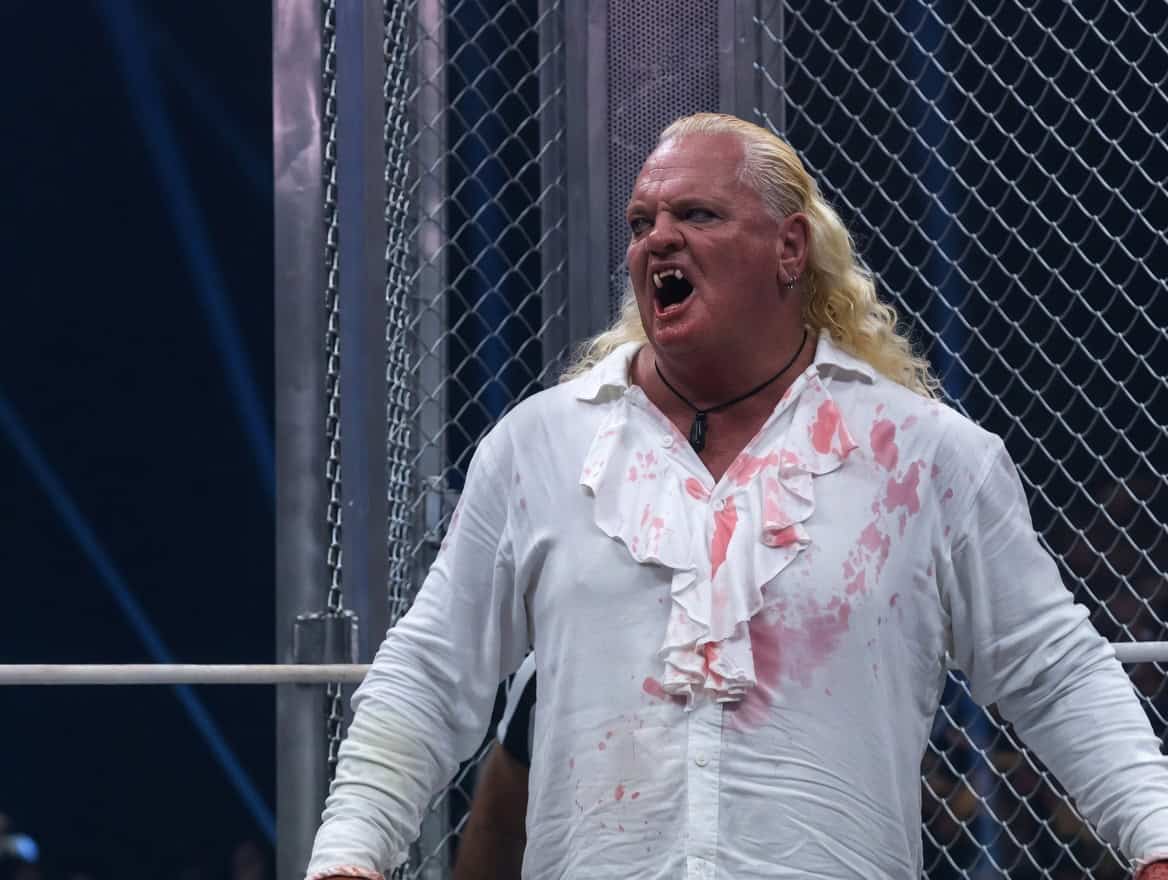
Nearly 40 years into his career, Gangrel has a phrase he lives by, and he says the modern product has lost sight of it.
Asked on Insight With Chris Van Vliet what has changed most since he started in 1987, Gangrel did not hesitate.
“Meaningful moves make memories. Memories make money. So there’s no meaningful moves anymore,” Gangrel said. “They’re wrestlers, not workers. They’re just coming out and they’re doing a lot of wrestling moves, high flying, a lot of cool stuff, but they’re not working into those moves, giving me a story and why you’re building up to why this move is so deadly and so important, because everybody’s kicking out of everybody’s finishes now.”
He said that would not have happened in any previous era.
“You wouldn’t have got that 40 years ago, or 20 years ago, or maybe even 15 years ago. Finishes were a lot more protected,” Gangrel said. “Even the attitude era, where it was the Wild West and they were gunslingers and they kicked out on everything, they still kind of protected finishes.”
When Van Vliet brought up a line from Nigel McGuinness, that wrestling is what happens in between the moves, Gangrel said that was exactly his point.
“It’s the devil in the details. It’s all the in betweens,” Gangrel said. “We need more workers that wrestle, not wrestlers that wrestle. We need more workers that wrestle that could tell the story between everything.”
On what made the Attitude Era work, Gangrel pointed to where the roster came from and how little the company interfered.
“You had a lot of freedom. I think 60, 70%, maybe even a higher ratio of the guys going into the attitude era were already in WWE at the time, but they came out of territories, so they knew how to work,” Gangrel said. “They knew how to grab the crowds, create those moments.”
The difference in process, he said, was total.
“A lot of it’s just scripted now. They go over every last detail. They rehearse matches. We never rehearsed matches,” Gangrel said. “An agent would come up to me, and I’m sure all the others, and they’d go, this is where they want the end, this is the deal. If it goes good, we take the credit. If it goes bad, we’re blaming you. And that was your agent thing. That was what you got.”
That hands-off approach only worked because of who was being handed the ball.
“They didn’t hold your hand through everything. They gave you that free rein. It was like the Wild West,” Gangrel said. “It was just a shootout at the corral every day.”
He said the competitive streak had a cost.
“Then it would start trying to top each other, and that’s where the injuries would come, because everybody was trying to top everybody,” Gangrel said. “But they still would work to those things. They didn’t just go out there and do them with no rhyme or reason.”
The other piece Gangrel credits is the shows that no longer exist.
“I think the attitude era was also special because you had the supporting shows like Shotgun Saturday Night and Sunday Night Heat. They were all a supporting cast to the Monday Night Raw, to the pay-per-views,” Gangrel said. “So everybody had a storyline on Shotgun Saturday Night. The guy who was over on Shotgun Saturday Night, or being built there, would move to Heat. They would eventually move to Raw, and then you would just keep elevating from there. You would climb your storylines, and you would evolve when your timing was right, and you’d fill in that slot, so they all built to each other.”
Gangrel, who now runs Catch Pro Wrestling Academy in Nashville with Miro alongside his own school in South Florida, said the foundation is what he tries to hand down.
“It’s not so much working anymore. It’s just wrestling,” he said.