


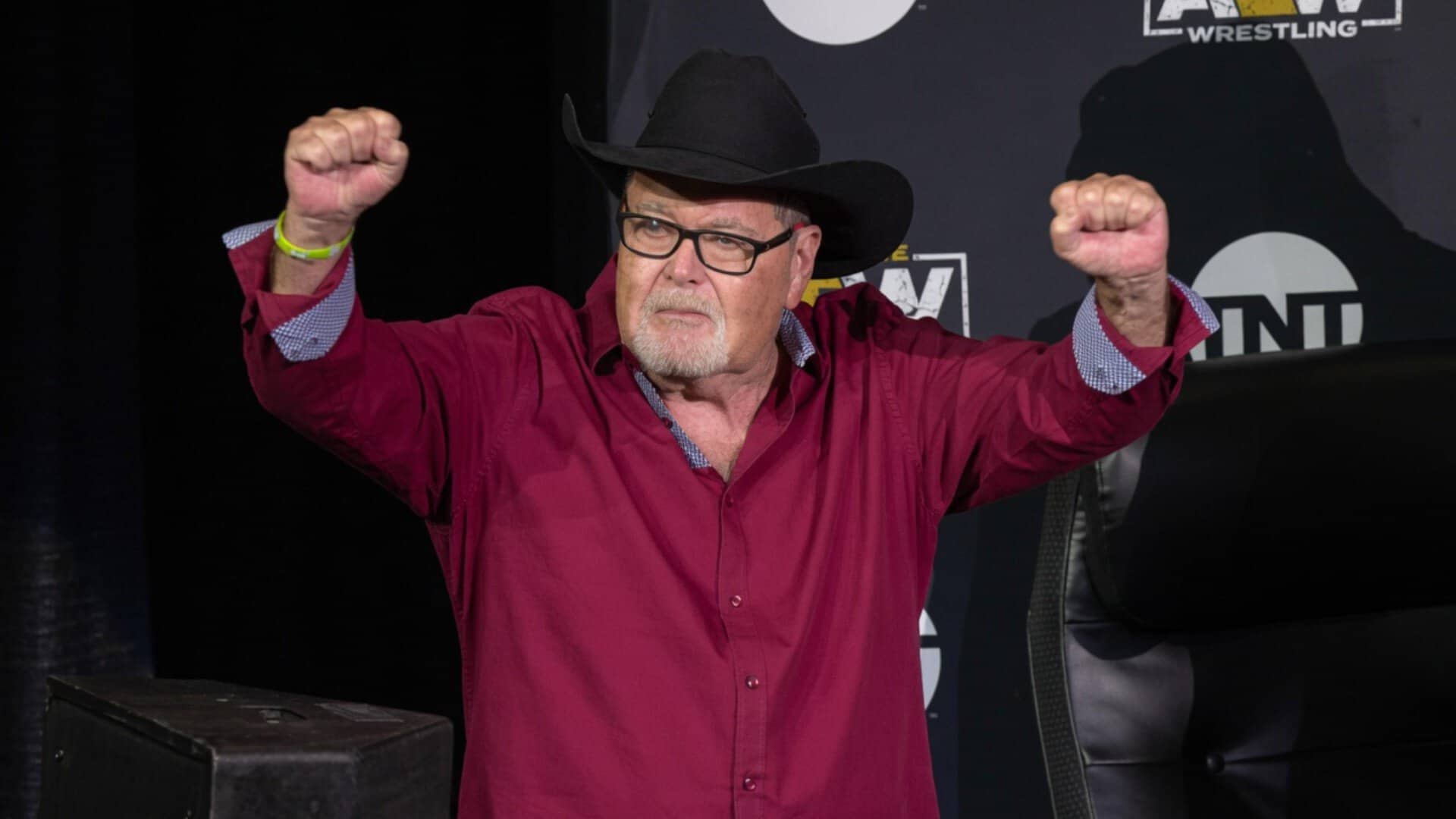
Jim Ross says the idea that you have to have wrestled to book wrestling is nonsense, and points to his own record and to Sam Muchnick.
Bret Hart said in an interview with Kenny McIntosh for Inside the Ropes that WWE’s problems come from having people telling wrestlers how to work who cannot work themselves, and named Bruce Prichard among them. Conrad Thompson put it to Ross on Grilling JR, noting that Tony Khan books AEW without having wrestled either.
“No, absolutely not. Not even close. That’s not even a close assumption,” Ross said.
His counter-example goes back decades.
“Sam Muchnick did pretty good in St. Louis, and I don’t remember Sammy ever putting on the tights,” Ross said. “If you understand the genre, and one has product knowledge, you can damn sure be a booker. I’ve booked some pretty successful cards, and made some fellows a lot of money, helped facilitate them making the money, and I never wrestled.”
He was hard on his own occasional appearances in front of the camera.
“In some of those skits that we did, I don’t call it wrestling. I was embarrassed to do them. I still am embarrassed to think back on some of the days where I got booked into an angle, not being in shape, not being trained,” Ross said. “The JR announcer character’s popularity was the only thing that made it work. I’m honest. It wasn’t my skills, for God’s sake.”
Where he does give ground is on what happens after the idea exists.
“Once the booker, who may not be a wrestler, creates the storyline, the torch needs to go to the wrestling people to lay out the match that you envision in your mind,” Ross said. “The value in having been a former wrestler really is all the money. It’s not creating the idea originally, it’s refining the idea.”
That distinction is the whole of his answer, and he did not soften the rest of it. “So no, that’s bulls***,” he said. “I don’t think you have to be a wrestler to book whatsoever.”
Ross was careful about Hart himself, and said he had not read the full quote.
“Bret believes what he said. He believes the issue that he identified and his description of it. He believes it in his heart,” Ross said. “Now, whether he’s right or wrong is up to somebody else hearing the message and agreeing or not.”
On Prichard catching the criticism, Ross was unbothered on his behalf.
“It’s not the first time he’s been criticised. He’s in a role where he will always be subjective and potentially nailed to the cross, because of who he reports to and what he’s doing,” he said. “Nothing new. It ain’t gonna end.”
The Muchnick comparison is the strongest card in his hand. Sam Muchnick promoted in St. Louis from the 1940s into the 1980s, served multiple terms as president of the National Wrestling Alliance, and ran what was widely regarded as the most credible territory in the country without ever having worked a match. St. Louis was the town other promoters pointed at when they wanted to explain what the business was supposed to look like.
Ross ran talent relations for WWE and booked in Mid-South and WCW without ever wrestling. He was in charge of hiring through the period that produced most of the roster WWE built its biggest years on. Prichard is WWE’s Senior Vice President of Talent Relations and hosts Something to Wrestle With, also with Thompson, which is the show JBL has been sitting in on recently.
Hart’s position is not a new one for him either. He has spent years arguing that WWE’s in-ring product suffers from being shaped by people who never had to take the bumps, and the Prichard reference is the latest version of an argument he has made about the company’s creative structure since long before Prichard held the job he holds now.