


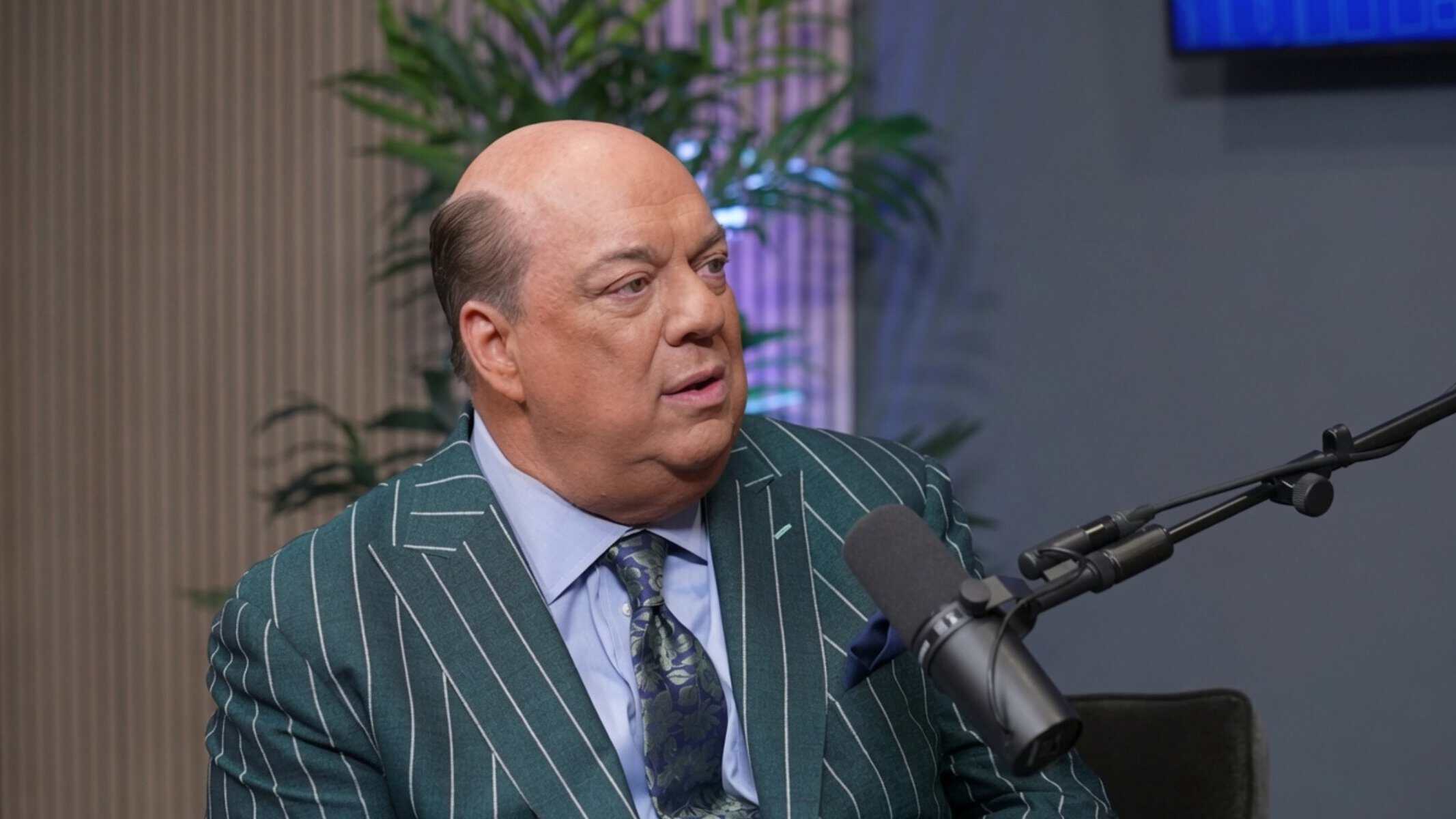
Paul Heyman says ECW worked because it functioned as a gang, and he uses the word approvingly.
Heyman took over creative at Eastern Championship Wrestling in the early nineties and turned it into Extreme Championship Wrestling. Speaking on Six Feet Under with The Undertaker, he explained that the direction came from reading the culture and where it was going, rather than from anything happening inside wrestling.
“I thought in ’91, ’92 that the business was evolving to the point where it needed to be more visceral. It needed to be more 18 to 34 male demographic. It had gotten too kiddie-friendly, and had lost a core audience.”
“In chasing the action figures and the Halloween costumes and huge market, it alienated that 18 to 34 male demographic. It just wasn’t cool. It wasn’t on the cutting edge. It had become a very conservative industry, and this is not a conservative art form. It’s a very liberal art form. I’m not talking politically. I’m talking just in terms of it being progressive.”
He said he was taking his cues from television rather than from wrestling.
“It had become even more so than in 1985, when WWE did the MTV relationship with Cyndi Lauper and Hulk Hogan and Mr. T and Roddy Piper. It had become very MTV-oriented, and not just the network MTV, but the entire concept of that style of television. It had become trash TV. Everything was going extreme, and no one really picked that up as a buzzword yet.”
He was also listening to music that was not getting mainstream airplay.
“MC Lyte was just the hottest female rapper in the world at the time. Roughneck could not get played on MTV except on Yo! MTV Raps. Onyx was just on fire. Wu-Tang Clan was coming out of the gate. You just look at all the different hip-hop artists who were breaking through in that community but couldn’t get any kind of wide mainstream cultural pickup. But they were going to.”
The name change stemmed from what he wanted to drop rather than what he wanted to say.
“That wasn’t my original intent of the name of the company when I first took over the creative end of it. I just knew I had to get out of the word Eastern. It was too limited.”
The other issue was who he could get. Heyman was honest that the wrestlers capable of working the classic style were unavailable to him.
“I was limited in the quality of workmanship I was going to be able to lure into ECW, because that type of classic, okay, here’s an arm, but we’re going to work the arm, work the arm, work the arm, get a submission on the arm, those guys were all signed, or they were signed to Japan. So I had to make something with smoke and mirrors.”
He described what he built instead in blunt terms.
“And I say this with deep respect for what we did. It’s a gang or a cult mentality. This is my family. These people accept me. I’m accepted here. How I envision pro wrestling to be is accepted here. It’s celebrated here. These are my people.”
“The Sandman is my guy. Raven is my guy. Rob Van Dam is my guy. Taz is my guy. The Public Enemy, the Dudley Boyz. These are my guys. I identify with them. They identify with me.”
His example of how the presentation worked is the Public Enemy, and it starts with a line he says he took from somewhere else.
“The first time I put Public Enemy on the air, I had Ted Petty, Rocco Rock, say, ‘ We are the first generation of American children more afraid of living than dying, which I stole from Newsweek magazine because there was an essay in Newsweek, and that was the line. And I was like, that’s brilliant. We have to use that.”
The act itself was largely invented.
“I wanted a hoodie tag team, and Teddy was 40, 41 years old, and Johnny was a Cajun from Lake Charles, Louisiana. We’re building them out of South Central LA. And people bought into it because, number one, they didn’t know who these two guys were, because Teddy had always worked under a mask, and Johnny had never been seen before because he didn’t really wrestle on that many independents in the north.”
He said the timing was the main thing.
“This was also the emergence of grunge, so this was the disenfranchised, 17, 18, 19 and beyond. That age group especially was looking for an identity, and while in music they found it through Nirvana and Pearl Jam and Soundgarden and Radiohead and Stone Temple Pilots, in wrestling they found it through us.”
Heyman ran ECW until it closed in 2001. WWE bought the tape library the following year and has revived the name twice since, first as a brand from 2006 to 2010, and later as the One Night Stand reunion shows. He was inducted into the WWE Hall of Fame in 2024.